Nagoya barely embraced the Asian Games. Then everyone turned up to say goodbye
Story continues below.
Subscribe to see fewer ads.
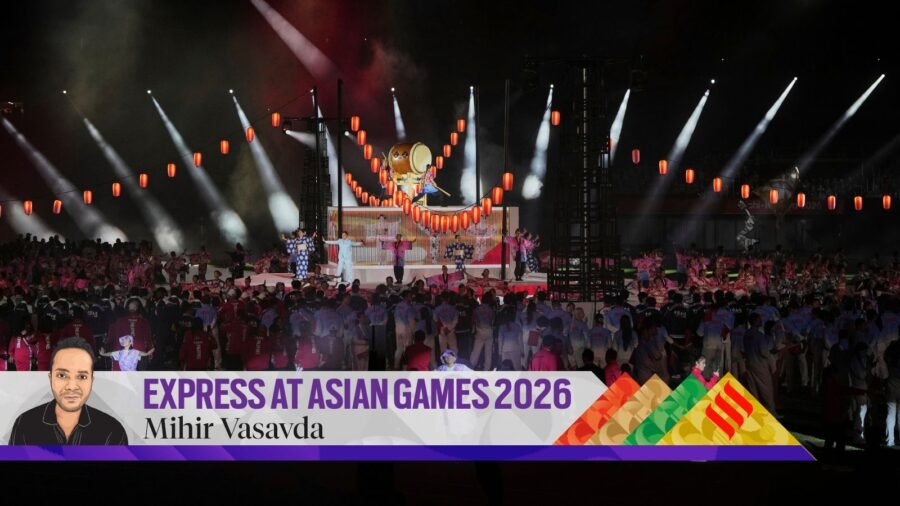
They sang and danced and clapped as the fireworks went off, bringing a short, crisp ceremony to a close.
Rocky start
For much of the fortnight, the Asian Games had felt like a guest Nagoya had agreed to accommodate rather than a party it had decided to throw.
That was partly by design. Aichi-Nagoya wanted to make a point about how major sporting events should be hosted in the future. There would be no grand new athletes’ village that would become a white elephant once the athletes left. No unnecessary stadiums. No attempt to reshape the city for a fortnight. Existing venues would be used, temporary structures would fill the gaps and money would be saved.
For a while, it looked like the experiment had gone badly wrong. The Games arrived amid a series of problems that were jarring in Japan. There were accommodation mix-ups, transport troubles, accreditation issues and complaints about temporary facilities. Athletes were moved around. Buses were late. The number of participants grew beyond what organisers had planned for.
Story continues below this ad
And then, slowly, almost imperceptibly, the Games got better. There was no great moment of redemption. No announcement that the crisis was over. But the buses began to arrive. The competitions ran. Athletes stopped talking about where they were sleeping and started talking about what they were trying to win. The noise around the organisation faded as the noise inside the arenas grew louder.
Nagoya fixed what had looked like a broken Games. “There are no Games without challenges. There is no Games without initial interruptions,” said Tayyab Ikram, chair of the coordination committee. “The way they were addressed should be more important to highlight. In future, we would like to see more sustainable solution, more improvement and innovation … but without compromising on the athletes’ conditions.”
The sport was good. Spectacular, sometimes. The compact venues could create an intimacy that enormous stadiums cannot. There were 54 world records, 11 junior records, and 89 Asian records.
But the empty seats told another story. They were most striking because the venues were often so small. A few hundred missing spectators could make an arena feel half-empty. There were sessions when the athletes had the strange experience of competing in front of more officials and volunteers than supporters.
Story continues below this ad
There were banners. There were mascots. There were athletes in tracksuits wandering through railway stations. However, the Asian Games never seemed to consume Nagoya in the way the Olympics can swallow a host city. People went to work. Trains ran. Shops opened. Life continued.
Perhaps that was another unintended success of the model.
The organisers had spent years trying to make sure the Asian Games would not overwhelm the city. They did not want to build a temporary Nagoya that would disappear after the closing ceremony. They wanted the Games to fit into the city that already existed. And it did. Perhaps, a little too well.
A major sporting event is not only about the buildings it leaves behind. It is also about the memories it creates while it is there. It needs people who suddenly become interested in sports they had never watched, strangers shouting together, restaurants filling up after the last event, a city discovering new heroes.
Nagoya had some of that. But never quite enough. An analysis of spectator movement by Kyodo, a Japanese news agency, suggested that the crowds were predominantly local, with Aichi residents accounting for more than half of the domestic spectators at several venues.
Story continues below this ad
Late goodbye
And then came the closing ceremony. The stadium was more packed than it had been at any point since the flame was lit. It was difficult not to smile at the timing. The biggest crowd of the Games had arrived when there was nothing left to watch.
Maybe they came to celebrate. Maybe they had finally become curious. Maybe they wanted one last glimpse before the circus packed up and left. Or maybe Nagoya, having spent two weeks politely living alongside the Asian Games, had finally decided it was time to say goodbye.

Mukesh Kumar and Akash Deep bowl Rest of India to Irani Cup title
By Sohail Khan · 4 Oct


Leave a Reply