Indian football’s model requires rebuilding from scratch
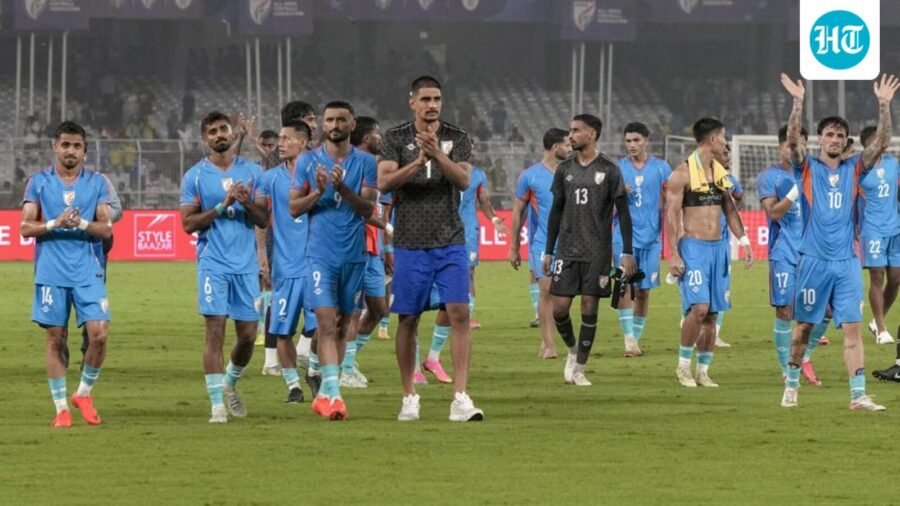
Footballers from 35 districts across mostly seven states have featured in more than 80 percent of game time in all of India’s professional matches in the last 11 seasons, writes Sharda Ugra
Published on: Oct 5, 2026, 19:42:51 IST
Prefer HTon Google
Share via
Copy link
The announcement that the Indian football team would not compete in the FIFA Asean Cup — for which they were on special invite — “due to our commitment with the Brazilian football federation” was one of those moments made either for head-shaking or an explosion of memes.
This was just an addition to the list of the surreal Indian football moments that have recently come upon us: the kind that not even someone under the influence of all manner of psychotropic substances could have thought up. Now, following a draw with Panama in Bangalore last week and the 0-4 defeat against Brazil, the match against Uruguay is upon us.
We have only just been given the schedule for the upcoming Indian Super League for men on September 29. About the Indian Women’s League, there is currently only a broad range of dates starting October 16 but no schedule. But more important than all that we know, however, is the AIFF’s proposal to change its name to the Football Federation of Bharat (FFB). Like Bollywood actors who change the spelling of their names in the hope of changing their fortunes.
The announcement of the India v Brazil friendly on October 3 in Kolkata is a classic bread and circus combo for which the ASEAN Cup is being given a pass.
Because Indian football will “learn a lot from such tough matches.” A friendly against Brazil is the answer to our problems and in any case Brazilian coach Carlo Ancelotti has pronounced that India has no footballing culture.
“I think it’s a problem of culture. India does not have a culture of football, but they are good in other sports. You have to work on this to build a new generation of players,” he said.
When up against such a withering comment, plus the AIFF/ FFB’s reformulated priorities, what chance do real supporters and grassroots champions of Indian football have of their identity being acknowledged and of receiving attention, never mind resources?
Someone should forward to Senor Ancelotti a copy of the most forward-thinking and incisive audit done of Indian football recently. Not by anyone currently occupying high office at the AIFF/FFB, but by a long time footsoldier of the Indian game.
“Our Talent Clusters – Indian football hotbeds and how to develop them” uses data to reinforce what has already been known in India: that the focus around player development and grassroots needs to be a part of the sport’s core. That we have 35-odd districts out of a total of 800 plus which the Talent Cluster report says, “command 80 percent of India’s professional minutes.”
Studying data from the last 11 seasons of Indian pro football until 2024-2025, the Talent Cluster says footballers from those 35 districts across mostly seven states – making up 7.4% of India’s total population – have featured in more than 80 percent of game time in all of India’s professional matches (I League, ISL).
In essence, an overwhelming majority of India’s leading pro footballers come from key districts and regions in only seven Indian states. These football districts cover the wider metro regions of Kolkata and its surrounds, south Goa talukas, north central Kerala, Mumbai Metro, Imphal Valley, north Punjab and Chandigarh, Aizwal and its four neighbouring districts. The report also identifies five of the top standalone districts outside the seven clusters – East Khasi Hills in Meghalaya, Delhi, Srinagar, Bengaluru Urban and Namchi in Sikkim – as a narrower slice of football hotbeds.
This absence of a pan-Indian spread is not a crisis, nor are talent clusters unusual as the man behind the report Bangalore-based Richard Hood points out. Hood is a consultant for high performance and player development for football and his report cites global talent clusters across sport, including football.
For example, more than 70 percent of Kenya’s distance runners come from a single province, tribe/ sub-tribe, 94 percent of Canada’s NHL pros come from 3 of its 12 provinces; and 83 percent of NFL players come from 10 of 50 US states. In football, 92 percent of Ligue 1 players come from 3 out of France’s 18 regions, and 73 percent of La Liga 1 and 2 players come from 7 of Spain’s 17 regions.
Hood’s report then shows that even in these hotbeds, there is a game-time deficit in our football from starter ages to the advent of adolescence. The standards of Indian football when compared to the rest of the world are not about the lack of money or infrastructure. The report argues, “What matters is not facilities alone, but density and intensity of engagement.”
It is this gap in “density of engagement” from the age of 6, the report says, where the enormous gap between India and other countries rests.
The report’s key recommendation is the maximisation of game experience between the ages of 4-13. Children in developed footballing nations have six to eight hours of formal/informal engagement with football every week for 45 weeks a year from these starter years. By the time an Indian footballer reaches 20, his game time quota adds up to not even 25 percent of what his peers of his age in strongholds have participated in.
Age 5-13 is vital because it is when repetitive, purposeful match experiences demanding “fast and precise responses in game situations” ensure the child’s growing brain develops and strengthens its football-driven neural pathways. It enhances physical conditioning, balance, co-ordination, speed, quality of decision-making, technical execution and spatial vision while working under game time stresses.
In the past, Indian footballing talent was identified from the age of 13 onwards and moved into residential academies far away from home, borrowing no doubt from the Chinese model which had enjoyed visible global success in individual sport. Organisations like the Tata Football Academy in Jamshedpur have served Indian football handsomely, but in today’s era given our results and the progress of other nations, Indian football’s model requires rebuilding from scratch.
The report says “India’s catch-up game in football will be won or lost at the district, taluka and neighbourhood level, not in nation v nation narratives”; the priority must be to “recreate dense game experiences” in India’s hotbeds and give access to matches where players live, “instead of stretching thin, pan-India, one-size-fits-all programs that dilute resources and development outcomes.” To summarise, delightfully and obviously, “fish where the fish are.”
The report recommends a scaled format of game time in frequency and duration in the country’s footballing clusters. Name changes and headline-management with events aren’t going to cut it.
See Less


Football: Time together can make India better
By Sohail Khan · 5 Oct
How a sports psychologist helped Pranavi Urs win an Asian Games gold
By Sohail Khan · 5 Oct
Leave a Reply