In the 1990s, tiny fire ants hitched a ride to Hawaii on nursery plants and built supercolonies that can threaten native animals
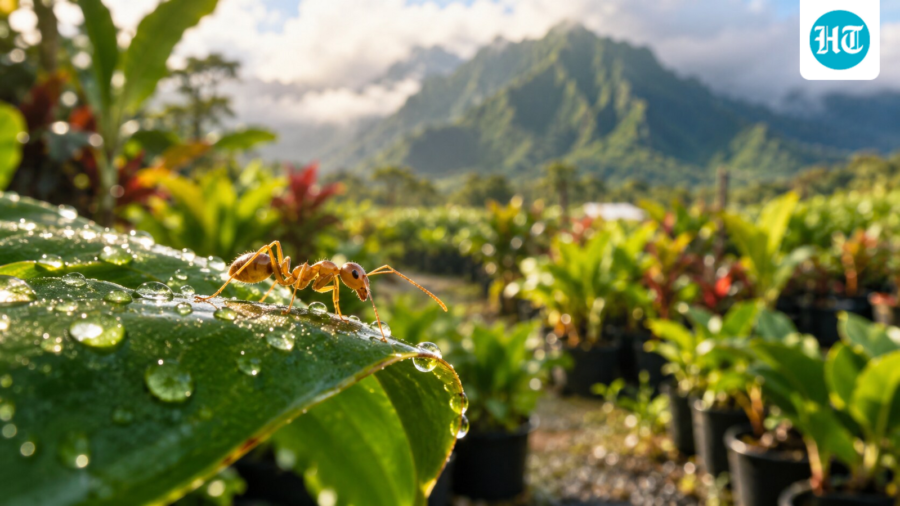
A tiny stinging ant hitched a ride to Hawaii on nursery plants. Its connected nests act like one supercolony, but the harm to native wildlife is unclear.
Published on: Oct 6, 2026, 09:20:25 IST
Prefer HTon Google
Share via
Copy link
Hawaii is famous for its beaches, volcanoes, and rare wildlife. But a tiny ant has become one of its most challenging pests. The little fire ant is just 1.5 millimeters long, but its sting packs a punch. In a 2016 paper by Casper Vanderwoude and colleagues published in Proceedings of the Hawaiian Entomological Society, the team traced its spread. First recorded in 1999, it was initially introduced and spread through the import and sale of nursery stock.
How a hitchhiker reached the islands
Hawaii has faced waves of invasive ants for more than a century, and the paper identifies the little fire ant as the most recent of them. In their 2003 review, ‘The Little Fire Ant, Wasmannia auropunctata: Distribution, Impact and Control,’ James Wetterer and Sanford Porter quote a state press release from October 1999 to show how quickly things were moving. State officials learned of the ant in March that year. It had found five sites with infestations by October, four on the Big Island and one on Kauai. Most were nurseries.
The release said the ants may have been on the Big Island for at least six years before anyone noticed them. If so, then they were in the neighborhood around 1993 or earlier. Officials think the Kauai ants arrived on palms shipped from a nursery on the Big Island. Vanderwoude's team said the ants are now found almost everywhere on the windward side of the Big Island and that they travel on non-farm goods, too.
One ant turns into a supercolony
Most ant colonies will defend their turf, but little fire ants don’t. Wetterer and Porter describe the species as unicolonial, meaning the species has no colony boundaries. So the nests connect and create one big network of workers, young, and queens, and in simple terms it works like one giant supercolony. Each colony also has numerous queens. So any piece of a colony that has at least one queen can start a new population somewhere else.
The ants are also easily disturbed. They nest in a wide variety of sites, from under rocks and logs to inside coconuts and man-made objects. Whole colonies, or pieces of colonies, readily move into new objects and get carried along when those objects are shipped. That makes nursery shipments an easy way for the ants to spread. The workers are relatively slow-moving and generally sting only when provoked, the review notes.
What it means for native wildlife and what can be done
Scientists urge caution. Wetterer and Porter say most reports of harm to animals are anecdotal, and the damage tends to be worst on tropical islands where the ant is not native. A 1972 report said its effect on land invertebrates seemed to be the most serious of any introduced animal in the Galapagos. Research in New Caledonia also connected the ant to injury to native reptiles. At most of the other invaded sites, Hawaii included, little was known about the impact when the review came out. Concern for Hawaii's wildlife is based on what the ant has done elsewhere.
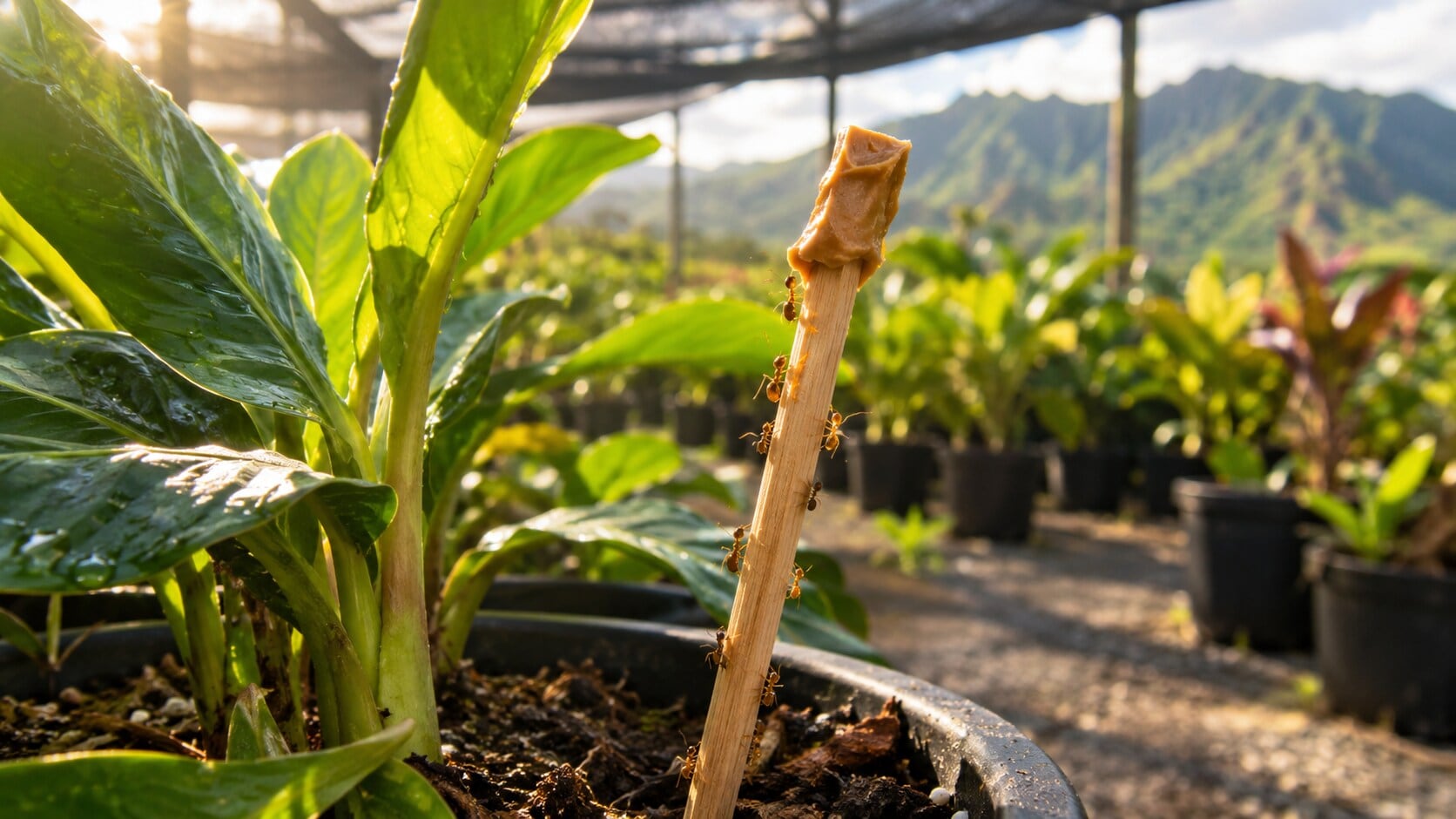
Early action matters most. A few hectares of infestations can be cleared quite easily with persistence. Infestations covering a few dozen hectares can still be cleared, but they require at least ten times more effort and money. Those covering hundreds of hectares are very difficult to eradicate. All rooted plants leaving the Big Island had to be tested at the time that review was written. Inspectors placed peanut-butter-coated chopsticks in the pots for 45 minutes, then checked for ants. Vanderwoude's team notes that several agencies now share the work of prevention and response.
See Less




Leave a Reply