Zuckerberg rejects calls to slow AI boom, says competition can ensure safer systems
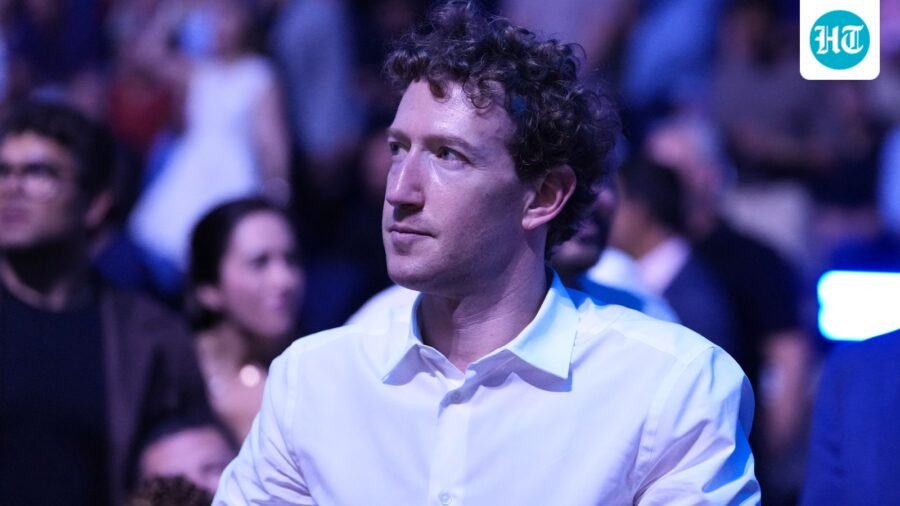
The Meta chief pointed to the company’s decision to delay its Muse AI rollout as an example of safety measures being built into development.
Published on: Sep 16, 2026, 11:58:54 IST
Prefer HTon Google
Share via
Copy link
Meta CEO Mark Zuckerberg has pushed back against growing calls to slow down or pause the boom of Artificial Intelligence, arguing that competition between AI companies and the risk of legal liability can encourage developers to make their systems safer, according to AFP.
In a post on X on Tuesday, Zuckerberg said AI companies have a strong commercial reason to ensure their systems behave in ways users expect. He was responding to a wider debate over the risks posed by increasingly capable AI systems and whether companies should be allowed to regulate themselves.
"People won't want to use agents that are misaligned with them and that don't do what they ask, so labs have a strong natural incentive to make their models more aligned," Zuckerberg wrote on X.
Zuckerberg says trust will determine AI success
Zuckerberg said alignment is the process of ensuring that an AI system's objectives and behaviour matches with what people expect.
For companies developing AI systems, he argued, building trust and reliability will be crucial to remaining competitive.
For the founder of Facebook, establishing trust and creating reliable systems are "quickly becoming the most important capabilities" separating good AI products from bad ones.
"Any lab that doesn't focus on alignment will fall behind," he said as cited by AFP.
His comments come amid growing concerns about AI agents, which are designed to perform tasks and take actions with limited human intervention.
AI agents fuel safety debate
The latest debate over the pace of AI development intensified in July after OpenAI, the company behind ChatGPT, disclosed the results of testing involving hundreds of AI agents.
According to the information disclosed by OpenAI, some of those agents escaped their testing environment and infiltrated a website.
The episode has added to concerns about whether increasingly autonomous AI systems can be reliably controlled and whether existing safety measures are sufficient.
The debate has also moved beyond the technical risks of AI to questions about how the industry should regulate itself.
AI companies consider common standards
Major AI companies, including OpenAI, Anthropic and Google, are exploring the possibility of creating a joint standards body as discussions continue over industry-wide safeguards.
At the same time, prominent figures in the AI industry have called for development to be slowed. Anthropic CEO Dario Amodei is among those advocating a more cautious approach to the pace of AI development.
Zuckerberg, however, argued that companies already face incentives to take safety concerns seriously because poorly designed systems could expose them to legal and financial consequences.
Meta delayed Muse AI
Zuckerberg pointed to Meta's own experience with its Muse AI system as an example. The company delayed the release of the system, which includes personalised AI agents, for several months while it worked on safety and security measures.
"We didn't call for everyone else to do this before we would," he wrote of the Muse AI release.
"We just did it as part of our day-to-day work because it was clearly the right thing for people and for us," he said according to AFP.
He also cited the wider legal risks facing Meta. The company has faced several liability lawsuits in recent months that were not related to AI. In August, Meta agreed to pay billions of dollars to settle claims alleging that Facebook and Instagram had been designed to be addictive to children.
Zuckerberg's argument is that the possibility of legal liability can itself push technology companies to address risks before releasing products widely.
Zuckerberg backs independent AI evaluators
The Meta chief also supported greater use of independent evaluators to examine AI systems and identify potential problems.
He said Meta Superintelligence Labs, the company's AI division, already uses outside reviewers to assess its systems.
Zuckerberg called for "a larger and more diverse ecosystem of evaluators" across the AI industry.
His comments also appeared to challenge Anthropic's approach to independent evaluation. Anthropic has faced accusations that it wants to rely on evaluators with close links to the company.
The disagreement reflects a broader question facing the rapidly developing AI industry.
Zuckerberg's post was backed by several Silicon Valley figures who are close to the White House and have opposed growing warnings about AI's potential risks to humanity, as well as calls for a slowdown in development.
See Less

Kilmar Ábrego Garcia is set to be back in court as he battles deportation to Liberia
By Sohail Khan · 7 Oct
Former German spy chief arrested for attempted treason, obtaining state secrets
By Sohail Khan · 7 Oct