‘You are a Muslim’: Censor stopped Dilip Kumar from saying ‘Hey Ram’ until Nehru stepped in
Filmmaker Tigmanshu Dhulia recently spoke about the history of censorship in Indian cinema and how filmmakers have negotiated political restrictions—from the freedom struggle to his own experience with Raag Desh.
Speaking at an event organised by The Wire on the “State of Media and Film Industry”, Dhulia said filmmakers during the freedom movement were able to convey political messages through their films in ways that often escaped the British authorities.
“When the freedom struggle was going on, our filmmakers made films in such subtle ways that the British could not understand what was really happening. Society was different then,” he said.
He cited Chal Chal Re Naujawan, directed by Gyan Mukherjee, as an example. The 1944 film had Saadat Hasan Manto as one of its writers and music by Ghulam Haider, and starred Ashok Kumar.
“There was such a cosmopolitan culture. The British could not understand what was going on,” Dhulia said.
The hidden message in Kismet song
He then recalled Kismet, the 1943 Ashok Kumar-starrer, which featured the popular patriotic song “Door Hato Ae Duniya Walon, Hindustan Hamara Hai”.
“The Second World War was going on. The British thought the song was against the Japanese because Japan had attacked Burma from the east. They did not understand that the song was actually directed at them. Films were advancing politics in this way.”
Story continues below this ad
Balraj Sahni’s jail-to-set routine
Dhulia said the relationship between filmmakers, the government and political dissent remained complicated even after Independence.
He recalled the case of actor Balraj Sahni, who was arrested while Hulchul was being made in the early 1950s. Sahni, who was associated with the Indian People’s Theatre Association (IPTA), played a jailer in the film.
“Balraj Sahni was giving a speech and he was arrested and put in jail in Mumbai,” Dhulia said.
Story continues below this ad
The arrest created a problem for producer K. Asif because the film’s set was already built and Sahni’s absence could cause financial losses.
“Asif went to the Governor. Look at the leniency of the government at that time. They told Balraj Sahni that his nine o’clock morning shift would be allowed. He would leave jail, go to the set and return in the evening. So Balraj Sahni would leave jail every morning, go to the set, wear the jailer’s costume, act and then return to jail in the evening. That was the society we lived in,” Dhulia said.
When the censor board objected to ‘Hey Ram’
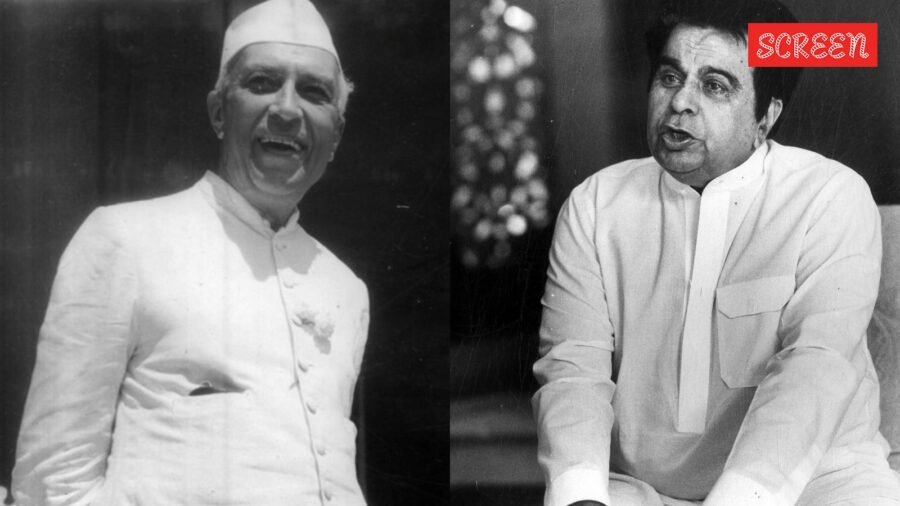
He also recalled the controversy around Dilip Kumar’s Ganga Jamuna and the censor board’s objection to a line in which Kumar’s character says “Hey Ram” while dying.
“The censor board stopped the film and gave a very strange reason. They said, ‘How can you say Hey Ram? You are a Muslim.’”
Story continues below this ad
Dhulia said the makers gave the argument that Dilip Kumar was playing a Hindu character named Ganga.
“The argument was, ‘The character’s name in the film is Ganga. He is a Hindu. He can Hey Ram.’ But the censor board did not agree.”
According to Dhulia, the matter eventually reached Prime Minister Jawaharlal Nehru, who watched the film and said there was no problem with it.
“But then there was another issue. If all the other films stuck with the censor were not passed, people would say Dilip Kumar got his film passed because he knew the Prime Minister. So all the other films were cleared as well,” Dhulia said.
Story continues below this ad
Dhulia’s experience with Raag Desh
Dhulia then compared those experiences with his own encounter with censorship while making Raag Desh in 2017. The film, presented by Rajya Sabha TV, was based on the Indian National Army trials and featured the cases of INA officers at the Red Fort.
He said, “When a film goes to the censor board, the director has to be present. When I showed Raag Desh, the censor board members hugged me. They did not ask for a single cut. I had made the film after doing a lot of research. The censor board actually hugged me and said, ‘What a film you have made.’”
“After that, the film was stopped,” he said.
Dhulia said he also faced a long wait for his payment.
“I did not get my money either. I got it six or seven years later. I had to plead with people here and there.”
Story continues below this ad
Talking about the release Dhulia said, “The film was released in a hurry. They could have aired it on Doordarshan, but to this day, they haven’t put it out anywhere.”
Raag Desh was eventually released in July 2017.