Will Trump’s crypto bill become law despite opposition from Democrats and banks?
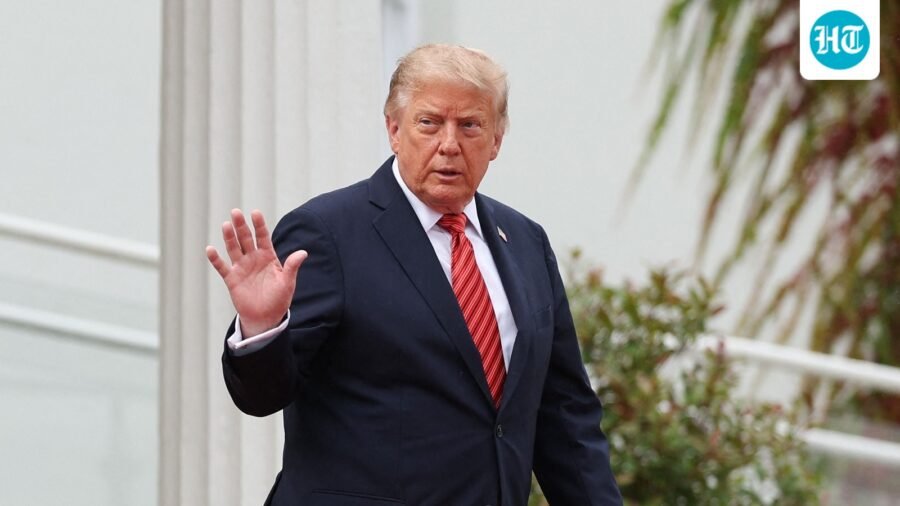
Trump's crypto bill faces opposition from Democrats and banks as the Senate prepares to vote on the Clarity Act and new US crypto regulation rules.
Updated on: Sep 15, 2026, 18:20:41 IST
Prefer HTon Google
Share via
Copy link
The Senate is expected to hold a procedural vote on Tuesday on the Digital Asset Market Clarity Act, also known as the Clarity Act. The bill is one of the biggest efforts yet to create a clear set of rules for the cryptocurrency industry in the US.
The Clarity Act is more than 600 pages long and would create the first broad legislative framework specifically for the crypto industry in US history. NPR described it as a possible game changer for the sector, but said the bill faces strong opposition before it can become law.
Crypto regulation could change
The main goal is to make it clearer which regulator controls crypto companies. The bill would divide responsibility for the crypto market between the Securities and Exchange Commission (SEC) and the Commodity Futures Trading Commission (CFTC). However, the CFTC would get most of the regulatory power under the proposal.
That shift is one of the biggest reasons critics are worried. The CFTC is much smaller than the SEC. Critics argue that giving the CFTC greater control could allow crypto companies to face less strict oversight. Crypto executives reject that argument, while regulators under Trump have defended the current approach to the industry.
Will the Senate pass the bill?
The Tuesday vote is not the final vote on the bill. The Senate needs 60 votes for the legislation to clear the procedural hurdle. That means all 53 Republicans would need to support it, along with at least seven Democrats or independents.
That support is not guaranteed. The bill has faced major disagreements in the Senate for months. The Tuesday vote is therefore an important test of whether Republicans can get enough support to move the legislation forward.
What happens if it passes?
Even a Senate victory would not immediately send the bill to Trump. The Senate has made changes to the legislation since the House passed its version last year. Because the two chambers now have different versions, they would first have to agree on one final bill.
Why Democrats oppose it
Democrats are mainly worried about conflicts of interest involving politicians. One major dispute is over an ethics provision designed to stop presidents and other elected officials from making money from the crypto industry while they are in office.
Sen. Elizabeth Warren and other Democrats say the ethics protections are too weak. They argue that the bill does not go far enough to prevent elected officials from using their political positions to benefit their own crypto businesses, according to NPR.
Trump's crypto money under focus
Democrats also object to who would enforce the ethics rules. The bill would give the Department of Justice (DOJ) responsibility for enforcing the ethics provision. Democrats question whether the DOJ would act as a strong check on a sitting president.
The concern has become bigger because of Trump’s own crypto businesses. Trump disclosed that he and his family made about $1.4 billion from their crypto ventures last year, according to a financial disclosure reported by The New York Times. That has increased concerns among Democrats about whether the proposed ethics rules would be strong enough.
New rules for Trump and officials
Republicans have proposed new language to try to win Democratic support. Under the changes, federally elected officials and their spouses would be barred from creating their own cryptocurrencies. This could stop Trump from continuing his $TRUMP meme coin, which he launched early last year. Trump has agreed to follow the proposed restriction.
Critics still say the new ethics rules have loopholes. They argue that the language around financial interests is not strict enough and could potentially allow the president to avoid some of the restrictions.
Why banks oppose the crypto bill
Democrats are not the only group fighting the bill. Parts of the banking industry, particularly community banks, are also strongly opposed to the legislation.
Stablecoins are at the center of the banking industry's concerns. Stablecoins are cryptocurrencies designed to maintain a stable value, usually by being linked to assets such as the US dollar. The Clarity Act would allow crypto companies to offer financial incentives, including interest-like payments, to people who keep money with them.
Banks say this could give crypto companies an unfair advantage. Traditional banks argue that crypto companies could attract customers' deposits with these rewards while not facing all the same rules and requirements that banks face.
Banks fear losing customers
Community banks are especially worried about losing customers' deposits. They say local deposits are important because banks use that money to provide loans to small businesses, farmers and other local customers.
Will Trump's crypto bill become law?
The crypto industry has been pushing Congress hard to pass the bill. The biggest question is whether Republicans can get enough Democratic support. With 60 votes needed, Republicans cannot pass the bill on their own. They need at least seven Democrats or independents to join them. So, will the Clarity Act become law? The answer is still unclear. The bill must first survive the Senate's procedural vote, then pass further Senate consideration, and finally be reconciled with the House version before it can reach Trump's desk.
Even if the bill survives Tuesday, its future remains uncertain. Opposition from Democrats over ethics rules and resistance from banks over stablecoins could continue to slow the legislation. With the midterm elections approaching, lawmakers also have a limited window to reach a final agreement.
For now, Tuesday's vote is the key moment. If the Clarity Act fails to get 60 votes, the legislation could be delayed again. If it passes, the crypto industry will move one step closer to getting the nationwide regulatory framework it has wanted for years.
See Less

Kilmar Ábrego Garcia is set to be back in court as he battles deportation to Liberia
By Sohail Khan · 7 Oct
Former German spy chief arrested for attempted treason, obtaining state secrets
By Sohail Khan · 7 Oct