Why did Coforge chairman O P Bhatt resign? What the audit and shareholder vote reveal
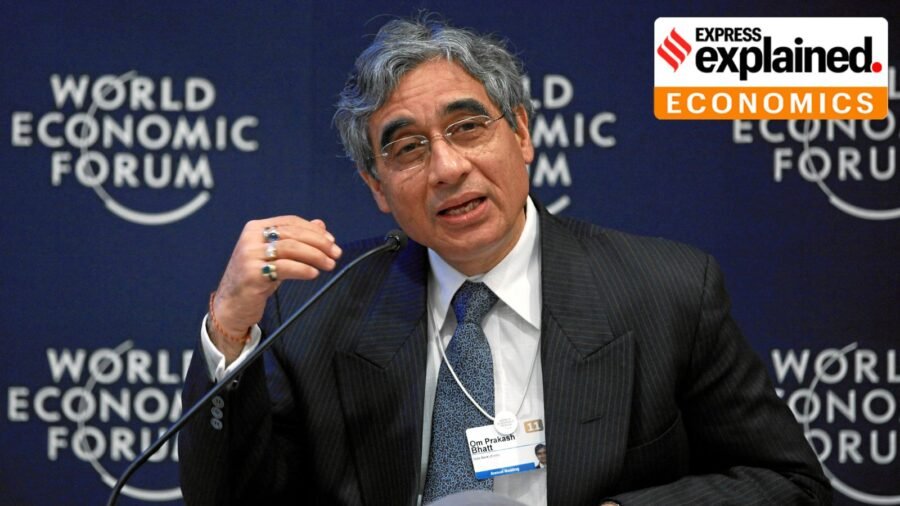
Om Prakash Bhatt, the chair of IT services company Coforge Ltd, on Tuesday resigned from the company’s board with immediate effect. The resignation follows concerns raised by an internal audit over the way the board evaluation exercise was handled and presented.
But there is a larger backdrop: shareholders had recently voted against Bhatt’s reappointment as an independent director. Advent Funds, one of the largest shareholders in the company, had recently voted against Bhatt at the annual general meeting, effectively blocking his reappointment when his current tenure ends in May 2027.
What exactly happened? Does it point to a deeper tussle between Bhatt and the board of $1-billion Coforge, formerly known as NIIT Technologies Ltd? Or did the voting against his continuation on the board lead to his exit? Or both?
What happened at Coforge this week?
Gurugram-registered Coforge, an AI-native engineering services company operating in 33 countries, announced on September 9 that O P Bhatt, former State Bank of India chairman, had resigned as its non-executive independent director and chairman, effective immediately. The company said there was “no other material reason” for his resignation apart from the reason contained in his resignation email dated September 8.
Bhatt’s resignation came after an internal audit review of the company’s Board Evaluation Exercise and the resulting Board Evaluation Report (BER). The review was part of Coforge’s internal audit plan for the second quarter.
According to the company, which has a market capitalisation of Rs 81,800 crore and reported revenue of Rs 9,572 crore in FY2026, the audit identified concerns about how the Board Evaluation Report had been dealt with and presented to the board. In particular, certain material information contained in or relating to the evaluation, including information concerning the chairman’s performance, had not been fully disclosed to the board when the report was presented.
The board then raised its concerns with Bhatt and sought an explanation. It was still considering his response and had not taken a final decision when he resigned on September 8.
Why is the recent shareholder vote against Bhatt significant?
Story continues below this ad
There is, however, another important angle to the story. At Coforge’s 34th annual general meeting on August 24, shareholders were asked to approve Bhatt’s reappointment as an independent director. The special resolution did not pass, as he did not get the stipulated 75 per cent of votes.
According to voting data reported from the scrutiniser’s report, about 65.47 per cent of votes were in favour and 34.53 per cent against. This fell short of the threshold required for a special resolution. This was significant because Bhatt had turned 75, making the continuation of his tenure subject to shareholder approval.
The vote also exposed differences among shareholder groups. Institutional investors were substantially more supportive, while public or non-institutional shareholders voted overwhelmingly against the proposal. The public-shareholder category voted almost 99.9 per cent against his continuation.
Advent International, the private-equity firm that became a significant shareholder in Coforge after the company acquired Encora, was among those that opposed Bhatt’s reappointment. Encora holds an 8.60 per cent stake in Coforge. Advent Funds indirectly hold a majority stake in AI Altius Parent (Cayman) Limited, which in turn holds 13.27 per cent in the company.
Story continues below this ad
Analysts tracking the company said the voting against his reappointment may have contributed to the resignation.
Bhatt’s defence
Bhatt’s own explanation is important because it differs in emphasis from the company’s description of events. In his resignation email dated September 8, Bhatt said he had carefully considered the matters raised concerning the board evaluation process, his response and the circumstances that followed.
Continuing on the board while there remained a disagreement over the nature of his actions in the evaluation process would not be conducive to the effective functioning of the board, he said in the mail.
Bhatt also maintained that he had acted in “good faith” and had sought to discharge his responsibilities independently, objectively and in the interests of the company and its shareholders.
Story continues below this ad
“I believe that continuing on the Board while there remains a disagreement considering the characteristics of my good faith actions in the Board evaluation process would not be conducive to the effective functioning of the Board. The matters referred to above are the material reasons for my resignation, and I confirm that there are no other material reasons for my resignation,” Bhatt said in the resignation letter.
However, he did not mention the vote against his reappointment in the resignation letter.
What exactly did the internal audit flag?
The Board Evaluation Exercise is a corporate-governance mechanism through which the functioning and performance of the board, its committees and individual directors are assessed. At Coforge, the exercise was conducted under Bhatt’s guidance, and the resulting Board Evaluation Report was presented by him to the board.
The internal audit subsequently examined the process. Its concern, according to Coforge, was that some material information in or relating to the report — including information concerning Bhatt’s own performance — was not fully disclosed to the board when the report was presented.
Story continues below this ad
Bhatt’s resignation letter points to a clear disagreement between the chairman and the board on this issue. “The board considers it important to clarify that the Chairman’s resignation followed the concerns identified in the internal audit review and the subsequent process undertaken by the board to seek and consider his explanation in relation to those concerns,” Coforge said, without elaborating on the nature of the concerns.
Who is O P Bhatt?
Bhatt is a veteran banker who served as chairman of the State Bank of India from 2006 to 2011. He joined Coforge’s board as an independent director in May 2024 and became its chairman after the completion of Basab Pradhan’s tenure. His appointment had initially been presented as part of the company’s effort to strengthen its board with experienced independent directors.
Bhatt also remains an independent director at Wockhardt, where he serves on the Audit Committee, Stakeholders’ Relationship Committee and Capital Raising Committee, according to Coforge’s disclosure. He has also served as an independent/non-executive director on several Tata group company boards, including Tata Motors, Tata Steel and TCS.
What happens next at Coforge?
Vivek Sharma will serve as interim chairman until January 31, 2027. The immediate question for Coforge is therefore not only who will permanently replace Bhatt, but also how the company resolves the governance questions raised by the internal audit.
Story continues below this ad
For investors, the key question is whether the episode remains confined to boardroom governance or begins to affect the company more broadly. An analyst said it was surprising that the company had not explained the “concerns” identified in the internal audit review.
The abrupt exit of a chairman following an internal audit and a recent failed reappointment vote inevitably puts the company’s board dynamics under greater scrutiny.

Aid may be dead. Long live international development
By Sohail Khan · 1 Oct
The cartoon, a mirror and the Mahatma
By Sohail Khan · 1 Oct