West Asia on boil, sherpas try to bridge divide within BRICS
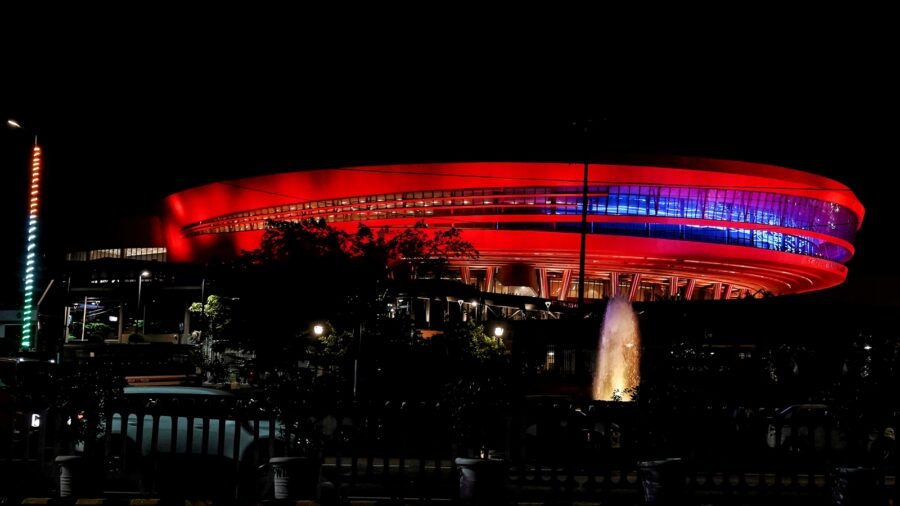
With the war in West Asia flaring up following the exchange of strikes between the US and Iran, the BRICS Sherpas, the most senior negotiators from the 11 member countries of the grouping, are burning the midnight oil to try and hammer out a joint declaration for the New Delhi summit of the leaders on September 12-13.
The key point of discord, it is learnt, is the formulation over the war in West Asia given that Iran, the UAE and Saudi Arabia are expected to be at the summit table.
While Russian President Vladimir Putin’s attendance has been confirmed, officials are also preparing for the participation of Chinese President Xi Jinping, Iranian President Masoud Pezeshkian, South African President Cyril Ramaphosa and Indonesian President Prabowo Subianto. Brazil’s President Luiz Inacio Lula da Silva is not going to be at this gathering since he attended the AI summit in New Delhi in February this year, and will send a top government representative.
Prime Minister Narendra Modi’s bilateral meetings with Putin and Pezeshkian on Friday have been confirmed by officials.
With the UAE and Iran, new members of the BRICS since 2024, part of the negotiations, Indian officials, along with the Russians, Brazilians and Egyptians, are working to bridge the gap between the warring parties.
Ever since the start of the war on February 28 when the US and Israel attacked Iran, Tehran has targeted US bases in the Gulf region including in the UAE. This has had the Emiratis and the Iranians at loggerheads over the last six months.
Sources told that Indian officials are trying to hold separate meetings with officials of the UAE and Iran, and bring them on the same page for the Delhi declaration.
Story continues below this ad
“We would like to have a BRICS’ Delhi declaration, which is a consensus document, in all the paragraphs. Efforts are underway to achieve that outcome. We are optimistic we can accomplish that,” a senior Indian official said.
In May this year, when Foreign Ministers of the BRICS met in New Delhi, Russia’s Sergey Lavrov told the UAE and Iranian ministers to hold direct talks.
At that time, India was unable to bridge the diplomatic gap within the BRICS and could not come up with a joint statement after the two-day meeting of the Foreign Ministers.
ExplainedShifting geopolitics
Hosting the BRICS summit at a time of rapidly changing geopolitics gives India the room to push for a multipolar order in which the Global South’s priorities and concerns are addressed. Balancing ties between its Western allies and the grouping’s non-Western members will require some tightrope walking.
Instead, Delhi had issued a chair statement and an outcome document, trying to reflect the divergences between Iran and the UAE over the war. The statement had underlined “differing views among some members” over the West Asia situation, and that BRICS members had expressed their “respective national positions”.
Story continues below this ad
With the crisis in the key Strait of Hormuz affecting economies and sending energy prices soaring, Delhi is keen that it reflects in the joint declaration after arriving at a common position and language.
Officials in Delhi are confident that the summit agenda is robust, dealing with the burning issues of the time – from food security to climate change, energy security to the economic impact.
According to the Ministry of External Affairs, the summit will begin Saturday with a closed-door session for BRICS member countries themed ‘Inclusive Global Governance and Strengthening Multilateralism’.
Following the session, leaders will tour the ‘Bharat Innovates Exhibition’, assemble for a family photo, followed by a joint tree-planting ceremony.
Story continues below this ad
The first day’s engagements will conclude with a dinner hosted by Modi.
On Sunday, leaders from BRICS member states, partner nations and outreach invitees will gather for the open session, titled ‘Resilience, Innovation, Cooperation and Sustainability: Shaping the Future for Inclusive Global Growth’.
According to officials, India’s BRICS chairship is guided by the theme ‘Building for Resilience, Innovation, Cooperation and Sustainability’, reflecting its vision of a people-centric approach rooted in the spirit of “humanity first”. In addition to these areas, leaders will exchange views on strengthening intra-BRICS cooperation on common priorities and share perspectives on global and regional matters of mutual importance, according to the MEA.
India’s chairship is centred on the four pillars of the theme: Resilience, Innovation, Cooperation and Sustainability. Under the Resilience Pillar, the chairship focuses on strengthening collective resilience in areas such as health, agriculture, food, energy, disaster risk reduction and supply chains. Under the Innovation Pillar, it seeks to promote cooperation in the field of startups, MSMEs, science, technology, entrepreneurship, research and development, Digital Public Infrastructure and Artificial Intelligence.
Story continues below this ad
Under the Cooperation Pillar, the chairship places emphasis on strengthening multilateralism,
advancing reforms of global governance institutions and fostering practical cooperation on developmental issues across the tracks. Under the Sustainability Pillar, the chairship focuses on promoting clean and renewable energy, climate action and adaptation, nature-based solutions and sustainable consumption.
Among the outcomes expected during the summit will be smart grids and energy storage, urban infrastructure and MSME cooperation portal.
Officials said that this year’s BRICS will be very different from the past summits India hosted: the 2012 summit took place in a luxury hotel in Delhi, the 2016 summit took place in a hotel in Goa, and the 2021 summit took place virtually because of the Covid pandemic.
Story continues below this ad
This is also India’s turn to host the expanded BRICS grouping. Originally comprising Brazil, Russia, India, China and South Africa, it expanded in 2024 to include Egypt, Ethiopia, Iran, the UAE and Saudi Arabia, with Indonesia joining in 2025.
Belarus, Bolivia, Kazakhstan, Cuba, Malaysia, Nigeria, Thailand, Uganda, Uzbekistan and Vietnam became BRICS partner countries last year.
The BRICS has emerged as an influential grouping as it brings together 11 major emerging economies of the world, representing around 49.5 per cent of the global population, around 40 per cent of the global GDP and around 26 per cent of global trade.
CEC Gyanesh Kumar postpones 2-day Chhattisgarh visit
By Sohail Khan · 7 Oct
Rahul, Priyanka Gandhi detained after hours-long anti-CEC protest, released later
By Sohail Khan · 6 Oct
4.9 Magnitude earthquake hits Uttarakhand, tremors felt in Delhi-NCR
By Sohail Khan · 6 Oct