Uttarakhand voter-deletion puzzle: Why 4 plains districts account for 85% of Form-7s
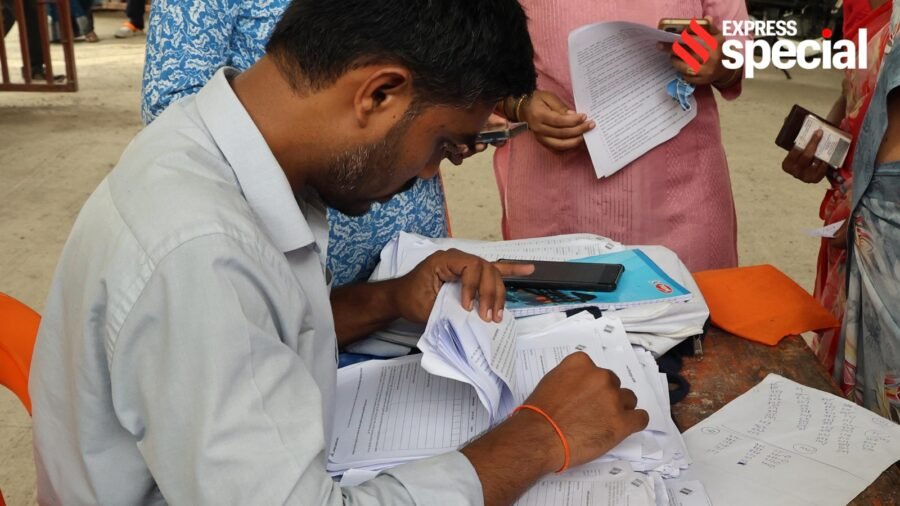
Over 85% of the Form-7 applications seeking deletion of names from Uttarakhand’s electoral rolls have come from just four districts — Udham Singh Nagar, Haridwar, Dehradun and Nainital — putting the spotlight on why voter-deletion requests are so heavily concentrated in the state’s plains.
reported on Tuesday that these four districts together account for more than 85% of the 1,30,382 Form-7 applications filed during the claims-and-objections period of the SIR. Udham Singh Nagar accounts for 43,878 applications, followed by Haridwar with 29,369, Dehradun with 19,402 and Nainital with 18,301. The concentration is striking not only because of its scale, but due to the sharp contrast with the state’s hill districts. By comparison, Pauri Garhwal received 5,424, Pithoragarh 3,044, Almora 2,999, Chamoli 1,702, Champawat 1,723 and Tehri Garhwal 1,431. Uttarkashi received 2,109, while Bageshwar and Rudraprayag recorded just 618 and 382 respectively.
The BJP’s explanation is that these are Uttarakhand’s most populous and mobile parts, with substantial movement of people across the state’s borders. Meanwhile, the Congress has pointed to the relatively large minority populations in these districts and questioned whether their demographic profile could be relevant to the pattern of deletions.
Khajan Dass, Uttarakhand’s Minister for Minority Affairs and BJP MLA from Dehradun, attributed the concentration principally to migration and the movement of people across Uttarakhand’s borders. “These are the big cities of our state,” Dass told , referring to Dehradun, Haridwar, Udham Singh Nagar and Nainital. “There has been a lot of movement of people here.” Migration and Uttarakhand’s border geography meant that people could move while retaining electoral records at their previous locations. “The biggest problem here is people coming and going,” Dass said.
He rejected the suggestion that the concentration was connected to the state’s minority population. “It is not that any minority is being targeted,” he said.
The Congress, however, disagrees. Suryakant Dhasama, senior vice-president of Uttarakhand Pradesh Congress Committee, said the party was not opposed to the SIR, but questioned the manner in which the deletion process was being carried out. “Our biggest objection is the intention of the Election Commission,” Dhasama said, alleging the poll panel was acting in the interests of the BJP. “These four districts are happening in most of the seats where Muslims, minorities, poor people, SC, ST are there. They are targeting them because they are the vote base of the Congress Party.”
An Election Commission official, however, cautioned against drawing conclusions about why Form-7 applications were concentrated in particular districts simply from the numbers. “This is the fact. The forms are received. There can’t be an opinion about this,” the official said, adding that the data reflected only the applications received during the claims-and-objections period. The numbers could vary significantly from one district to another depending on how actively individuals examined the electoral rolls.
Story continues below this ad
The concentration of Form-7 applications has also translated into a substantial administrative burden. Of the 1,30,382 Form-7 applications received between July 14 and August 13, only 44,132 had been disposed of as of September 7, leaving 86,250 under process. Udham Singh Nagar has 34,903 applications under process, followed by Haridwar (17,554), Nainital (11,498) and Dehradun (11,262).
The Election Commission has now extended the claims-and-objections deadline from September 9 to September 28. The final electoral roll will be published on October 3.
CEC Gyanesh Kumar postpones 2-day Chhattisgarh visit
By Sohail Khan · 7 Oct
Rahul, Priyanka Gandhi detained after hours-long anti-CEC protest, released later
By Sohail Khan · 6 Oct
4.9 Magnitude earthquake hits Uttarakhand, tremors felt in Delhi-NCR
By Sohail Khan · 6 Oct