Sonia Gandhi’s ‘Belonging’ | What is the controversy over its publication in India?
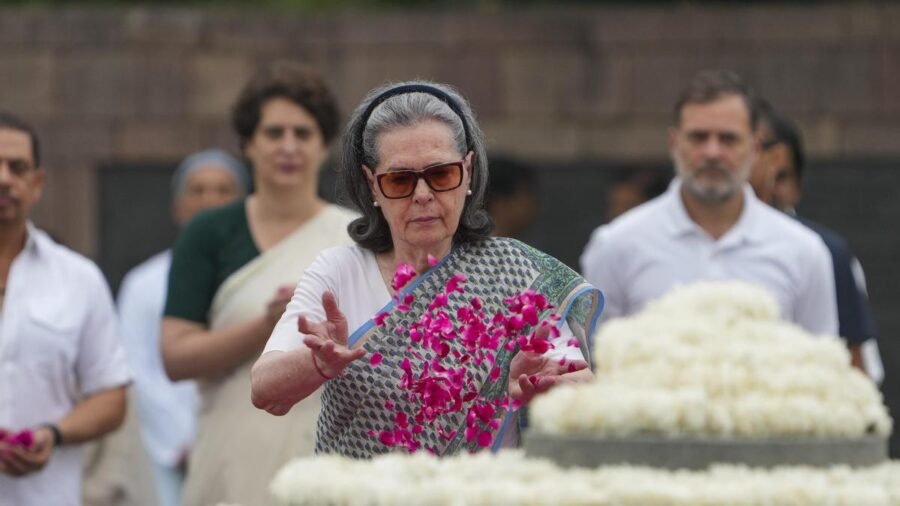
The story so far: Congress Parliamentary Party chairperson Sonia Gandhi’s memoir, Belonging: A Journey of Love, will be published in India by HarperCollins India on November 10, ending the uncertainty over its domestic release.
The book was initially expected to be published in India by Penguin Random House India (PRHI). However, PRHI announced on August 28 that it was not the publisher of the memoir in India. The announcement followed an impasse between the publisher and representatives of Ms. Gandhi over the manuscript.
The memoir is being published internationally by Alfred A. Knopf, an imprint of Penguin Random House, on the same date. The international edition was announced by Knopf on August 18.
HarperCollins describes Belonging as a personal account of Ms. Gandhi’s life and an insider’s view of India’s political journey. It begins with her childhood in post-war Italy and traces her meeting with Rajiv Gandhi in Cambridge in 1965, their marriage, her arrival in India and her efforts to adjust to Indian life, including learning Hindi and adapting to Indian customs.
The memoir also recounts the deaths of Sanjay Gandhi, Indira Gandhi and Rajiv Gandhi, and covers Ms. Gandhi’s political journey, including the Congress-led alliance’s victory in the 2004 Lok Sabha election, after which she declined the Prime Minister’s post and led the Congress and the United Progressive Alliance government.
What is the controversy?
The uncertainty over the Indian edition arose from differences between PRHI and Ms. Gandhi’s representatives over portions of the manuscript.
Publishing-industry sources told that some sections dealt with Prime Minister Narendra Modi’s handling of India-China relations, Ms. Gandhi’s impressions of Mr. Modi from official meetings held since he became Prime Minister in 2014, and the Rashtriya Swayamsevak Sangh and its activities.
Sources said these sections became the subject of scrutiny during the publishing process, including legal scrutiny. They said recommendations were made to alter or remove portions relating to Mr. Modi, the RSS and Ms. Gandhi’s assessment of India-China relations.
According to the sources, Ms. Gandhi declined to make the suggested changes, maintaining that the book was an account of her life and that altering these sections would amount to self-censorship and interfere with the narrative.
PRHI, however, has rejected any suggestion that it dropped the book because Ms. Gandhi refused editorial changes. In an official statement, it said fact-checking and making recommendations to authors were part of the normal publishing process.
What does PRHI say?
PRHI has said it is not the publisher of Belonging in India and that any suggestion that it decided against publishing the memoir because the author declined editorial changes “does not accurately reflect the circumstances”.
The publisher has also said that it was both its prerogative and responsibility to fact-check a manuscript and make recommendations in the interests of the book.
In a clarification issued after reports about the book’s publication status, PRHI said its editorial discussions with the author’s representatives involved both agreements and disagreements.
“On some, they agreed to changes and on others, we accepted the author’s position. Unfortunately, and ultimately, an understanding could not be reached on a particular issue,” PRHI said.
The publisher did not identify the issue, citing the confidentiality of its discussions with the author. It also denied that external pressure had influenced its position and said it had been keen to publish the memoir.
The precise nature of the disagreement therefore remains undisclosed by the publisher.
Congress alleges pressure from government
Congress leaders have alleged that the publisher was under pressure to remove or alter sensitive portions.
Senior Congress leader and former Rajasthan Chief Minister Ashok Gehlot said in a post on X on August 28 that Penguin’s international arm was ready to publish Ms. Gandhi’s book in its original form, while PRHI wanted changes to the Indian edition.
“After all, what is the reason or what pressure is there that what is being published across the world cannot be published in India?” Mr. Gehlot asked.
“The real issue is that pressure was put on Penguin India to remove the portions related to Modi, the RSS, and the occupation of Indian territory by China during Modi’s rule. This is the murder of democracy,” he said.
Mr. Gehlot also questioned whether the government was seeking to influence publishers and asked if the Modi government would “alter even the facts by pressuring publishers”.
PRHI, however, has not confirmed that the references to Mr. Modi, the RSS or India-China relations were the “particular issue” over which an understanding could not be reached.
What happens to the Indian edition?
With HarperCollins India taking over the book, the memoir will now be available to Indian readers at the same time as its international edition on November 10.
The move also means that sections reportedly at the centre of the differences with PRHI are expected to be part of the edition available in India.
The development has thus removed the possibility of Indian readers having to rely on the international edition, which would have been available at an international price had the book not found another domestic publisher.
Is this an isolated case with PRHI?
The episode comes amid earlier controversies involving books that faced difficulties during the publishing process in India.
Former Army Chief General Manoj Mukund Naravane’s memoir, Four Stars of Destiny, which was also to be published by PRHI, remained unpublished amid reported differences over portions dealing with the Galwan-related events. PRHI subsequently asserted its rights over the manuscript and said the book had not gone into publication.
Earlier, hard copies of the book and digital versions of the manuscript became available, leading to further controversy over its publication status.
Graphic novelist Joe Sacco’s The Once and Future Riot, based on the 2013 Muzaffarnagar riots, was also withdrawn by PRHI. The publisher cited concerns over an inaccurate map of India. Mr. Sacco later alleged that the map issue was being used as a pretext and linked the decision to the political climate in India.
Publishing-industry sources have described legal scrutiny of politically sensitive manuscripts as an increasingly significant stage in the publication process.
The dispute over Ms. Gandhi’s memoir has brought that question into focus again: where should a publisher draw the line between fact-checking and editorial responsibility, and an author’s right to retain politically contentious assessments in a memoir?


Journalists’ union demands special law on safety, restoration of Working Journalists Act
By Sohail Khan · 3 Oct
Colombia reports expansion of mostly illegal alluvial gold mining
By Sohail Khan · 3 Oct