SIR violates promise made by Constituent Assembly
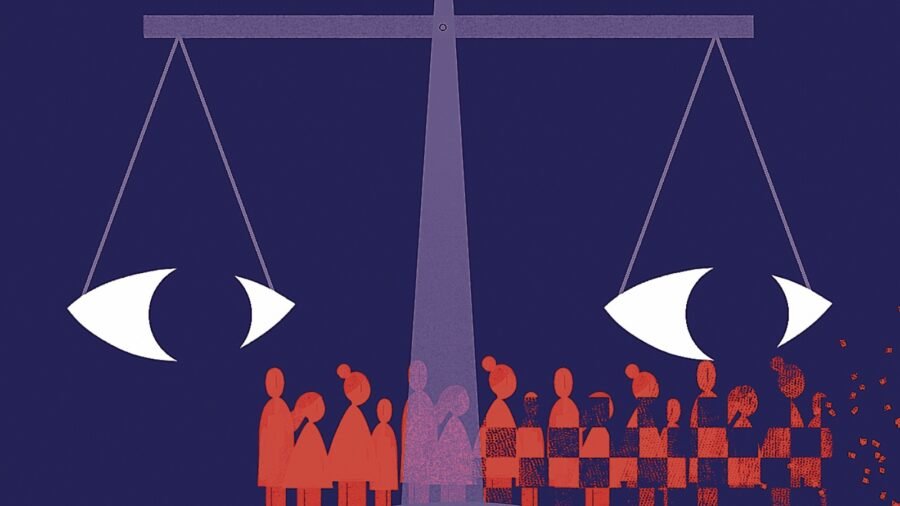
The Special Intensive Revision (SIR) of electoral rolls (ERs) is actually a Special Intensive Exclusion (SIE). How else can the Election Commission of India (ECI), emboldened perhaps by the Supreme Court’s endorsement, explain the exclusion of 13 crore citizens? Shockingly, 48 lakh and 2 crore electors were removed from existing ERs in Delhi and Maharashtra alone. It is a constitutionally and legally flawed exercise.
Our Constitution’s framers gave us democracy founded on adult suffrage. According to Article 326, every person who is a citizen of India and not less than 21 years of age (now 18), and is not otherwise disqualified under the Constitution or any law made by the legislature only on grounds of non-residence, unsoundness of mind, crime or illegal practice, is entitled to be registered as a voter. Voting is thus not merely a statutory right. Ascertaining citizenship is not difficult when a vast majority of citizens possess at least one of several documents, such as Aadhaar, a driving licence, a voter card, a passport, a ration card, a birth certificate, or a secondary school certificate. Surely, the ECI cannot say that the 13 crore people are foreigners, because they were not identified as citizens by the Modi government in more than a decade.
Advertisement
Equality guaranteed to “any person” under Article 14 makes the entire exercise arbitrary and discriminatory. Those excluded were “electors” and were on the ER as per law. The Representation of the People Act, 1950, provides, inter alia, for the qualification of voters. Its Part III deals with the preparation of the ER, which must be prepared in accordance with the Act by the ECI. Section 16 disqualifies a person from registration in an ER if he is not a citizen of India, is of unsound mind, or is disqualified from voting for corrupt or other practices. Section 21 deals with revision of rolls based on the existing Census (the last available being 2011). Section 22 deals with correction of entries by the ERO if he is “satisfied after such inquiry as he thinks fit” and only if he finds that any entry in the ER is erroneous or defective. If a person is dead or has ceased to be a resident of the constituency and moved to another constituency, an entry can be deleted. This section also gives the person the right to be heard before deletion.
So how and why have 13 crore citizens been excluded? How, when and where will they reclaim their right? Vital statutory safeguards seem to have been ignored. BLOs have deleted names, and the ECI has put up lists, shifting the burden onto citizens. The uncertainty and resultant loss of entitlements like passports, ration cards, free rations and other benefits are now real. Who will protect them? Should they be forgotten by the nation? Meanwhile, elections to the Bihar and West Bengal assemblies took place. The impact of the exclusion of millions on their outcomes can only be ascertained by experts.
The Constituent Assembly, on June 15 and 16, 1949, demonstrated the unconstitutionality of the exercise. R K Sidhwa said, “I do not think that there are two opinions… that elections should be fair, pure, honest and impartial.” K M Munshi said, “If there is going to be democracy, the sovereign people of India must be in a position to elect their representatives in a manner which is above suspicion. Corrupt practices do not necessarily apply to candidates. There may be corrupt practices by the government.” Ambedkar put it candidly: “The House will realise that franchise is a most fundamental thing in a democracy. No person who is entitled to be brought into the electoral rolls on the ground which we have already mentioned in our Constitution… should be excluded merely as a result of the prejudice of a local government, or the whim of an officer.” Yet, 13 crore citizens stand excluded. Sadly, the SC endorsed this by its May 27 decision. Two constitutional bodies have paved the way for shrinking democracy, leaving citizens to fend for themselves and each other.
The writer is former president, Supreme Court Bar Association

‘Sham’ contracts, inflated revenues: Charges against Man City, penalties it could face
By Sohail Khan · 1 Oct
Amitabh Bachchan, 83, suffers knee injury after fall: ‘I had trouble standing up’
By Sohail Khan · 1 Oct