Satya Niketan, Hauz Rani, Vivek Vihar – making Delhi’s buildings safe needs a regulatory reset
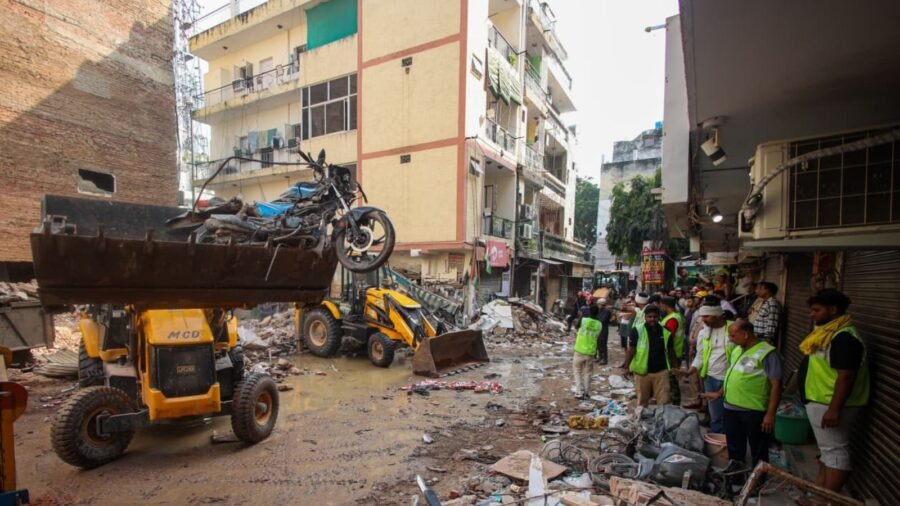
The recent collapse of a building in Satya Niketan and similar incidents in Saidulajab, Hauz Rani, Tughlakabad Extension, Palam and Vivek Vihar raise concerns about building safety in the Capital.
In Delhi, planned development coexists with informal growth — slums and unauthorised colonies. Both are plagued by all-round building violations along with a lack of oversight and enforcement.
Advertisement
Illegal construction violates Delhi’s Master Plan, the Unified Building Byelaws, the Delhi Fire Service Act, DD Act and DMC Act, 1957 and stresses transport, services and civic amenities. Frequent fire incidents and structural failures in illegal constructions have endangered lives. Delhi falls in Seismic Zone IV, where earthquakes may be severe.
Ensuring safety is a fundamental imperative, and safety is a basic human right.
The city cannot afford unsafe buildings, irrespective of the type of development, land ownership or land use. Every building without a structural and fire safety certificate should be sealed, and a safety-related warning should be displayed.
Advertisement
Various courts, commissions (such as those headed by G T Nanavati and Baleshwar Prasad), and high-level committees (such as the one headed by Tejendra Khanna) have underlined building safety, but with very little impact.
Delhi faces severe challenges from haphazard development and weak monitoring systems, resulting in inefficiencies, delays and loss of accountability. To combat this, the city introduced an online single-window system for building proposals. It utilised the Automated Development Control Regulations (Auto DCR) and Building Plan Approval Management System (BPAMS) to verify mandatory documents. Once the documents are submitted, the system issues a scrutiny fee challan for online payment and sends an SMS informing the building inspector and architect with details of the site visit. These documents are then scrutinised for compliance with building bye-laws and development control (DC) rules. Auto DCR creates entities such as plots, building layouts, and roads from drawings derived from layers, geometrical mapping and reports. AutoCAD and other software are used to analyse the compliance of building plans with the DC Regulations, and the status is available online. These are examined for approval.
However, the reform has not been successful. Unauthorised constructions are left out, and the software needs to be updated to handle modern urban planning complexities, such as those related to redevelopment, green buildings, transit-oriented development, approvals under mixed land use and buildings in heritage conservation zones.
It is time to consider whether the regulatory function of buildings can be made independent of the political apparatus and can be “demunicipalised”.
Building departments mainly deal with the plans they receive — massive illegal and risky constructions in vulnerable areas are left out. This calls for radical reforms to ensure that structures in informal settlements, urban villages and resettlement colonies receive attention. Artificial intelligence, drone surveillance and new technology can help in this task. Geospatial AI with high-resolution satellite imagery and LiDAR can continuously monitor and detect unauthorised construction. Spatial data-driven Real-Time Morphological Tracking can change the approval processes of building and layout plans and improve compliance with building bye-laws, the Fire Services Act, and land-use stipulations with minimum human interface, thereby reducing subjectivity and corruption.
The writer worked as Commissioner (Planning), Delhi Development Authority, and UN Habitat

At Nagoya, promises kept, a winning arc
By Sohail Khan · 1 Oct
With Central Vista, a library without a home and a larger absence
By Sohail Khan · 1 Oct
40 years ago, October 1, 1986: First-ever Asiad gold for Usha
By Sohail Khan · 1 Oct