RAKSHA: India’s 10-year blueprint for defence diplomacy and global strategic partnerships
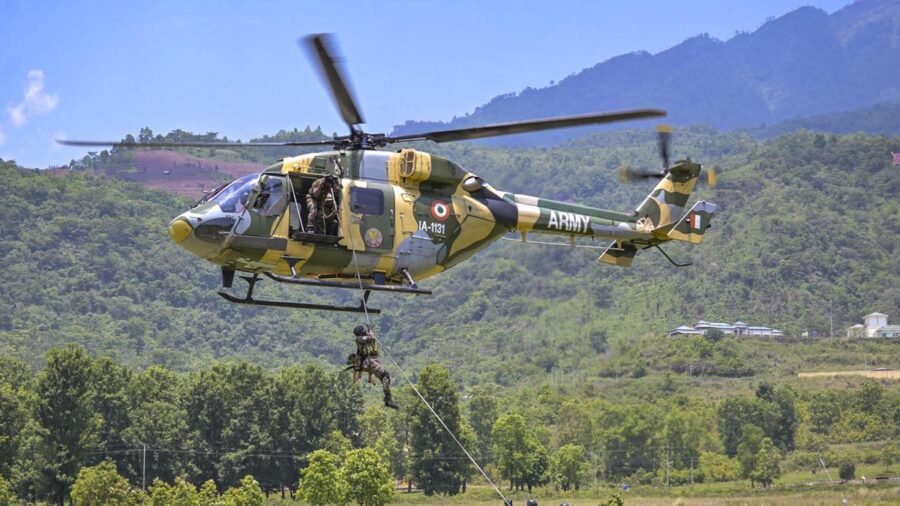
India unveiled an ambitious new framework to guide its defence diplomacy over the next decade, signalling a more structured and proactive approach towards building strategic partnerships across the world.
The document, titled ‘RAKSHA’, lays down a comprehensive roadmap for strengthening India’s military engagement, defence industrial cooperation and global security partnerships in line with its long-term national interests.
Released by Defence Minister Rajnath Singh in New Delhi on Thursday (September 3, 2026), the strategic blueprint seeks to integrate defence diplomacy more closely with India’s wider foreign policy, economic interests and national security objectives. At a time of growing geopolitical competition, regional conflicts and rapidly changing military technologies, the framework underlines New Delhi’s effort to emerge as a more influential and dependable security partner.
Deepening strategic partnerships beyond ceremonial exchanges
A senior Defence official informed that the central idea behind RAKSHA is that defence diplomacy can no longer remain limited to ceremonial military exchanges, high-level visits and joint exercises. Instead, India is seeking to build long-term, outcome-oriented partnerships that contribute to regional stability, strengthen military capabilities, expand industrial cooperation and promote Indian defence products in global markets.
One of the key pillars of the framework is the deepening of strategic partnerships. India has significantly expanded its defence engagement in recent years with countries across the Indo-Pacific, Europe, West Asia, Africa and other regions. RAKSHA provides a broader direction for these engagements by identifying areas where India’s strategic interests and those of partner countries converge. Recently, India signed an agreement with Indonesia to deliver BrahMos supersonic cruise missile system and Astra Mk-1 beyond the visual-range air-to-air missiles.
The blueprint also places strong emphasis on capacity building and military cooperation. Training programmes for foreign military personnel have traditionally been an important component of India’s defence diplomacy. Going forward, cooperation is expected to expand through joint training, military education, exercises, professional exchanges and institutional partnerships. Such initiatives are aimed at developing long-term relationships between armed forces and improving interoperability with friendly nations.
A major dimension of RAKSHA is defence industrial cooperation, reflecting the transformation underway in India’s defence manufacturing sector. With the government pushing self-reliance under the Atmanirbhar Bharat initiative, India is increasingly seeking partnerships involving co-development, co-production, technology transfer and supply-chain integration rather than remaining dependent primarily on imports.
This industrial push is also closely linked to India’s rapidly growing defence exports. India’s defence exports touched a record ₹38,424 crore in FY 2025-26, reflecting the growing international acceptance of Indian-made military platforms, equipment and technologies. The country has moved steadily from being one of the world’s largest defence importers towards becoming an emerging exporter of defence products.
Indian defence companies are now supplying a range of equipment to friendly countries, including artillery systems, missiles and ammunition, patrol vessels, radars, electronic systems and other military platforms. Defence diplomacy can play a crucial role in accelerating this growth by opening doors for Indian companies, facilitating government-to-government engagement and building confidence among potential international buyers.
RAKSHA is therefore expected to make defence exports an important instrument of India’s foreign and strategic policy.
The framework also highlights the importance of maritime security and regional stability. As a major power in the Indian Ocean region, India has steadily expanded naval cooperation through exercises, maritime domain awareness, capacity building and humanitarian assistance.
RAKSHA is expected to reinforce India’s role as a security partner in the Indo-Pacific and strengthen cooperation with countries facing common maritime security challenges.
Plan for India’s global engagement through defence
The Indian armed forces have increasingly played a prominent role in responding to natural disasters and emergencies in the region, helping project India as a reliable first responder and trusted security partner.
The document represents an effort to bring greater coherence and long-term planning to India’s engagement with the world through defence. By linking strategic partnerships, military cooperation, capacity building, defence manufacturing and exports, RAKSHA seeks to create a comprehensive framework for the next phase of India’s global rise.
If effectively implemented, the 10-year blueprint could strengthen India’s position not only as a major regional security provider but also as an increasingly important global defence manufacturing and exporting power.


For the first time, Jammu-Srinagar Vande Bharat hits 100 kmph on Chenab and Anji Bridges
By Sohail Khan · 2 Oct