Padmaavat writer defends jauhar scene after Swara Bhasker’s comments: ‘Reality of those times’
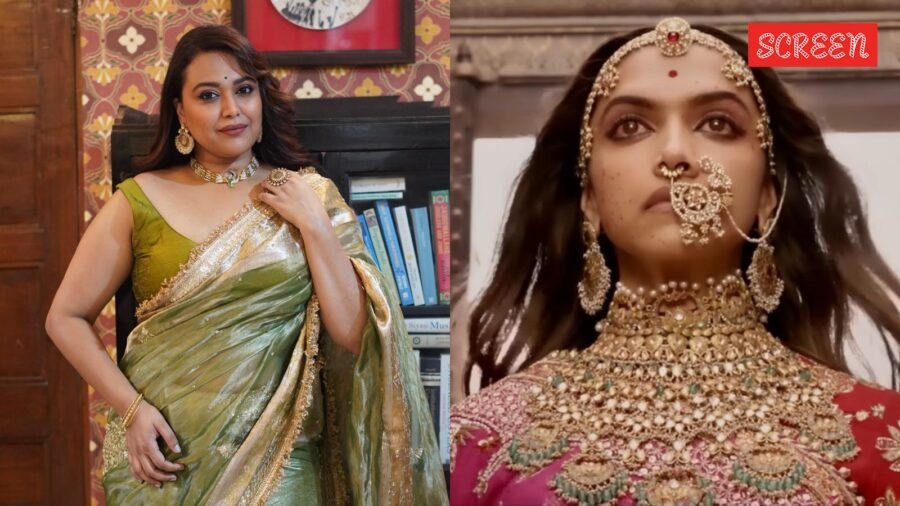
Sanjay Leela Bhansali’s Padmaavat faced significant controversy when it released back in 2018, and eight years later, conversation about the film is still creating controversy. Recently, Swara Bhasker spoke about the film’s jauhar ( (collective mass self-immolation by women in medieval India to avoid getting captured by the invading army) scene and called it “problematic”. Now, Padmaavat’s co-writer Prakash Kapadia has defended the scene and said that jauhar was the “reality of those times”. The film starred Deepika Padukone, Ranveer Singh and Shahid Kapoor.
Padmaavat’s co-writer Prakash Kapadia defends the Jauhar scene
In a recent interview with , Prakash said, “We made the film according to our research and what is written in history books. Every person interprets the film differently. What we showed, including the jauhar scene, was the reality of those times; it cannot be changed now. The situation was that of ‘do or die’.”
Story continues below this ad
Prakash also shared that he found the controversy around Swara’s comment unnecessary and added, “It depends on the person’s mood; even if it’s a good film and you watch it with a bad state of mind, you will find it bekaar (worthless). It’s also about intention; whether you are going as a viewer, or watching it to find something controversial, or to find negativity… With Padmaavat, people had raised objections even before watching the film and had protested on the streets. The same conversation is continuing years later, so what can I say? Let people say what they want to.”
What did Swara Bhaskar say about Padmaavat?
Swara Bhaskar recently attended an event organized by the India International Centre in Delhi. At the event, she recalled the controversy surrounding her open letter to Sanjay Leela Bhansali after watching Padmaavat. Swara Bhaskar said, “I’m watching this, these 800 women committing jauhar, and I was like, yaar, if I had been, God forbid, if I was a rape survivor, what is this film telling me? I would feel like a coward, that I didn’t kill myself to save my honour. Is that what you want to tell in a society like ours, where I feel like there’s anyway a rape epidemic? Is this what we want to tell our survivors, that you didn’t deserve to live? That if you actually had been honourable and brave women, you would have killed yourself. Are we saying that rape is the end of a woman’s life?”
Swara Bhaskar speaks about her letter to filmmaker Sanjay Leela Bhansali on the scene of Jauhar in the movie Padmavat pic.twitter.com/6X4Z0SvFtC
— Yeshi Seli (@YeshiSeli) August 31, 2026
Referring to a close-up shot of a pregnant woman in that scene, Swara added, “And then there was that one shot; it made me so mad, I was like, chiii, in the audience loudly. There is a close-up of a pregnant woman’s belly. And she is going, so you’re saying that a foetus that might be female doesn’t deserve to be born, because she might be raped by a Muslim ruler? And then I came out and I was like this is terrible. And normally people think that I do these things out of rage. But I waited for five days. And I was like, let me check if I still feel like this. And then at the end of five days, I wrote this letter.”
Swara Bhasker defends her comments
While Swara received lots of backlash for her remarks, she took to Instagram and clarified, “This morning, a clip of mine has been going viral on social media. It was from an event yesterday, where I was asked why I had sent an open letter to Sanjay Leela Bhansali after watching Padmaavat. While explaining what my issue was, I said something that is now being completely mistranslated and spread falsely, claiming that I had said that Rani Padmaavati and the other women who committed jauhar were cowards.”
View this post on Instagram
A post shared by Swara Bhasker (@reallyswara)
“I want to make it absolutely clear that I did not say that Rani Padmaavati was a coward or that the other women in the palace were cowards. Those who want to abuse me, go ahead, but at least abuse me for the right thing. What I had said was that while watching the climax, I thought, God forbid, if I were a rape survivor, I would feel like a coward for not having taken my own life; that if I had survived after being raped, I would feel like a coward. This is the reality of our country. Should we be making films that send the message that a woman’s purity is more valuable than her life? Should we be telling a rape survivor that it would have been better if she had died, and that surviving the assault was a bad thing?”