Nepal floods demand a new disaster compact for the Himalayas
By Ranjan Datta
The catastrophe unfolding across Nepal is no longer only a national disaster. It is a warning for the Himalayas — and for mountain regions worldwide.
Advertisement
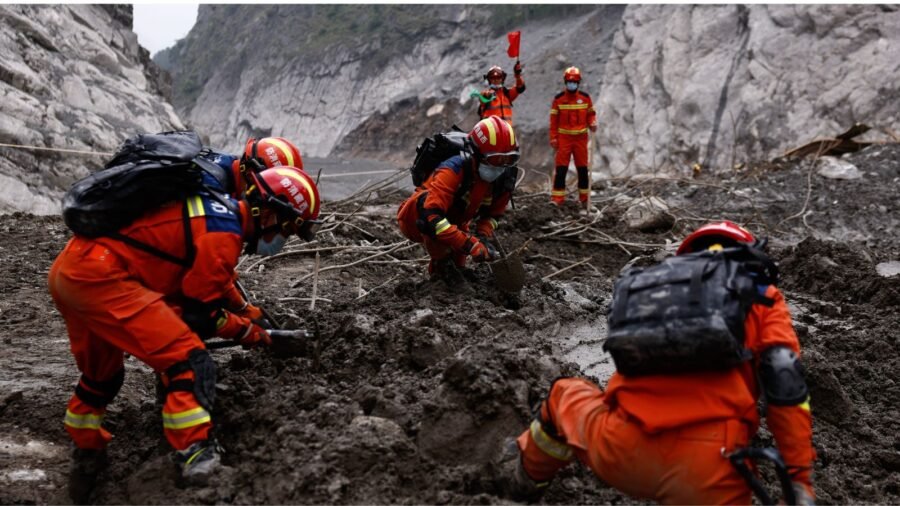
On August 26, a glacier collapse near the Nepal-Tibet border unleashed a devastating torrent of ice, rock, mud and water through interconnected river valleys. Roads, bridges, hydropower and health infrastructure have been destroyed or disrupted, showing how an event beginning high in the mountains can rapidly become a crisis far downstream.
It is tempting to ask only what triggered the flood. Scientists must investigate glacier instability, warming, snow and ice conditions, geomorphology and cascading river processes. But disaster research requires another question: why does a hazard become a catastrophe, and who is responsible for reducing the conditions that turn environmental change into mass loss?
That question matters far beyond Nepal. Mountains store snow and ice, feed major rivers and sustain societies far beyond their slopes. From the Hindu Kush Himalaya to the Andes, Alps and Rocky Mountains, warming is altering glaciers, snowpack, permafrost and water flows. Environmental change in the highlands can cascade into downstream social, economic and health crises.
Advertisement
My perspective comes not only from studying disaster policy, but from fieldwork with disaster-affected communities in Nepal. I work directly with communities to understand lived impacts, recovery, preparedness failures and locally identified priorities. In Kharapani in the Pokhara Valley, I have sat with flood-affected elders, women, men and local leaders and listened to their experiences of the Seti River flood. They described not simply rushing water, but a long relational disaster: loss of relatives, homes, livestock and businesses, alongside grief, disrupted livelihoods and frustration with institutions. They also described inadequate warning, limited preparedness and delayed recovery support.
Yet communities were not rejecting science or technology. They wanted functioning warnings, local flood-information centres, communication technologies, rescue equipment and preparedness training. Their message applies across mountain regions: a warning that does not reach people, is not trusted, or is disconnected from evacuation and response plans cannot provide meaningful protection.
My field research on earthquake recovery in Kathmandu points in the same direction: communities called for better information, training, community-led preparedness and stronger roles for women. They are not merely victims waiting for experts; they are knowledge holders and leaders.
This is where a responsibility perspective changes the conversation. Community leadership cannot mean transferring responsibility to vulnerable mountain populations. It must be matched by governmental, scientific, institutional, private-sector and international responsibilities.
Five responsibilities deserve urgent attention.
First, mountain hazards require transboundary monitoring and data sharing. Glaciers, rivers, landslides and flood pathways do not respect political borders. Nepal, India, China, Bhutan and other Himalayan countries need faster sharing of upstream observations, satellite information, river conditions and warnings. Scientific cooperation should be treated as life-saving regional infrastructure.
Second, warnings must be community-centred. Sensors and models are only part of preparedness. Information must reach people in trusted languages and forms; warnings must be tested; communities must know where to go; and women, elders, youth and marginalized groups must have meaningful authority in preparedness decisions.
Third, preparedness must become a permanent public responsibility. Local information centres, evacuation plans, shelters, community response teams, health-system continuity and rescue equipment require sustained investment before disaster strikes.
Fourth, mountain development must become ecosystem-sensitive. Roads, tourism, hydropower, mining and settlement bring benefits, but poorly planned development can amplify exposure in steep, dynamic landscapes. Resilience cannot mean rebuilding vulnerability into changing slopes and river corridors.
Fifth, mountain adaptation requires international climate responsibility. Nepal has contributed only a tiny share of historical emissions yet faces profound risks from a changing cryosphere. Climate finance, loss-and-damage support, scientific capacity and locally controlled adaptation are matters of justice, not charity.
Not every flood or landslide can automatically be attributed to climate change. Scientific attribution matters. But the broader mountain signal is clear: glacier retreat, declining snow cover, permafrost thaw and changing water flows are reshaping risk. What happens in mountains rarely stays in mountains.
India therefore has a particular stake in Nepal’s catastrophe. Himalayan rivers connect countries ecologically, economically and politically. An upstream disruption can rapidly become a downstream emergency. Regional resilience cannot be built country by country.
A new Himalayan disaster compact should connect science with responsibility: upstream monitoring with downstream communities; technology with trusted local leadership; infrastructure with ecosystems; emergency response with long-term recovery; and national preparedness with international climate justice.
The measure of preparedness is not simply whether we can see the next hazard coming. It is whether knowledge reaches people in time, communities have the authority and resources to act, and institutions remain accountable long after the cameras leave.
Nepal’s catastrophe is telling us something larger: mountains are not remote margins. Protecting them — and respecting the leadership of communities who live with their risks — must become a shared regional and global responsibility.
The writer is Canada Research Chair in Community Disaster Research, Mount Royal University, Calgary, Canada

40 years ago, October 1, 1986: First-ever Asiad gold for Usha
By Sohail Khan · 1 Oct
India’s elderly women need better social security cover
By Sohail Khan · 1 Oct