Musk director Alex Gibney on Elon Musk’s legal threat: ‘He wasn’t interested in talking’
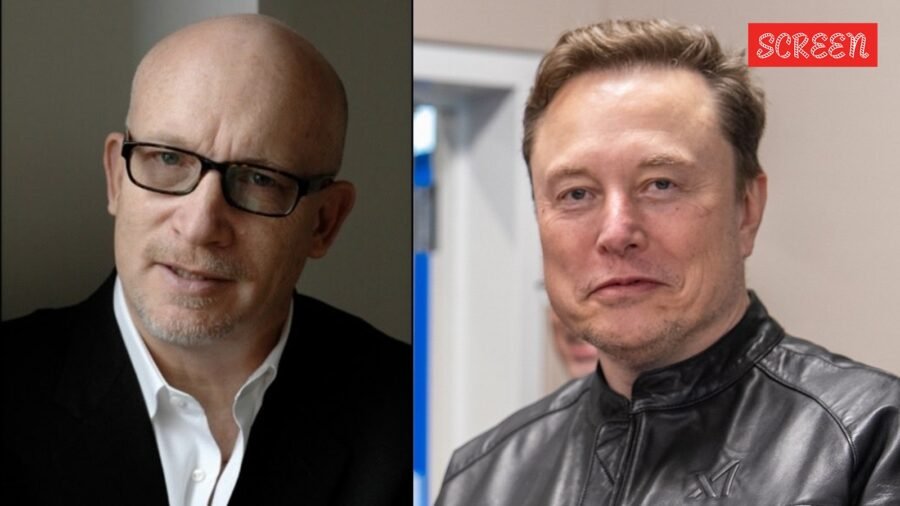
Oscar-winning documentary filmmaker Alex Gibney has publicly responded to a legal threat issued by Elon Musk’s attorneys over his new documentary film Musk, telling an audience at the Toronto International Film Festival (TIFF) on Sunday that he repeatedly tried to engage with the tech billionaire during the making of the movie but was met with silence.
“I reached out immediately. But he clearly wasn’t interested in talking. We made so many formal outreaches to him, and with the exception of his remarks on Twitter, we received nothing back,” Gibney said during a keynote conversation at TIFF.
The nearly four-hour documentary, which examines the career and influence of the man behind Tesla, SpaceX, X (formerly Twitter) and the Department of Government Efficiency (DOGE), had its world premiere at the Venice Film Festival before screening at TIFF.
Story continues below.
Subscribe to see fewer ads.
The legal threat
Shortly after the Venice premiere, attorney Alex Spiro, representing Elon Musk, sent a letter to Alex Gibney and his production team at Jigsaw Productions alleging the documentary film misrepresented facts about the tech mogul. The letter, confirmed by The Hollywood Reporter, specifically took issue with what Spiro described as an insinuation in the film that Musk used his Starlink satellite network to influence the 2024 presidential election in favour of Donald Trump.
Musk himself responded on X, calling the documentary a “boring hit piece.”
Gibney, however, expressed full confidence in the film’s accuracy. He told the TIFF audience that the documentary was extensively fact-checked by independent reviewers and that the production team had consulted legal counsel throughout the process.
Story continues below this ad
Gibney’s production company Jigsaw Productions issued a formal statement after receiving the legal letter from Musk, defending the film’s journalistic integrity. The statement noted that Gibney’s body of work has been internationally recognised for rigorous, fact-driven examinations of powerful figures and institutions, and pointed out that The Times of London had recently described his approach as the “gold standard for fearless journalistic integrity.”
The statement also invoked the First Amendment, arguing that the right to conduct fact-based examinations of powerful public figures is constitutionally protected. It pointedly noted that this principle should be recognised by “all Americans, including the associates of Elon Musk, who has proclaimed himself to be a free speech absolutist.”
Beyond the legal battle, Gibney raised a broader concern about whether the film will reach its intended audience. Bleecker Street is set to release the documentary theatrically in October, with HBO Max holding the streaming rights. However, Gibney expressed worry about the ongoing takeover of Warner Bros. Discovery, HBO Max’s parent company, by Paramount, which is backed by tech figures with close ties to Musk.
He specifically named Larry Ellison, the Oracle co-founder who is cited in the documentary and was one of the investors in Musk’s acquisition of Twitter. Ellison’s son, David Ellison, is leading the Paramount side of the takeover. Gibney suggested David has shown a willingness to accommodate the political interests of those in power.
Story continues below this ad
“I do worry about the storm clouds on the horizon and the fact that they are in the midst of a takeover battle by Paramount,” Gibney said. “Larry Ellison, who is cited in the film, is one of Elon’s friends and one of the investors in his takeover of Twitter. And his son David Ellison has shown he’ll twist whatever facts are at his disposal in order to please the head of state.”
He added: “The consolidation of the media and the aggressive editorial takeover of the media by the tech barons is really deeply concerning.” Despite these worries, Gibney said the film is still expected to land on HBO Max either later this year or in early 2027.
On DOGE and financial markets
During the keynote, Alex Gibney went beyond the documentary film Musk and spoke about Elon Musk’s role in government. He discussed the DOGE initiative, the sweeping federal spending cuts that Musk oversaw in his advisory role, and the devastating impact those cuts had on USAID, the United States’ primary foreign aid agency. Gibney argued that the consequences of those cuts extended far beyond bureaucratic restructuring.
Story continues below this ad
“When you’re into hundreds of thousands of people who are affected by performative cruelty, it’s really a staggering moral stain on Elon Musk and the federal government,” he said.
The filmmaker also addressed what he characterised as Elon Musk’s exploitation of financial markets, including allegations of stock manipulation and the securing of government subsidies and energy credits. His language was blunt. “You’ve got a con artist who has put in the White House another con artist, and they just keep running bigger and bigger cons, because there’s no Department of Justice or FBI to tell them to do otherwise,” he told the audience.
Gibney also discussed another project screening at TIFF this year: Edward Said: Between Worlds, a documentary about the late Palestinian-American scholar and public intellectual Edward Said, which he produced. He described Said as a deeply compelling figure and drew a connection between Said’s work and the current situation in Gaza.
Story continues below this ad
“This is one of the great global scandals of this moment, the genocide in Gaza and the horrific things that are happening on the West Bank,” Gibney said, adding that he found Said’s humanism and intellectual engagement particularly relevant at a time when he sees a scarcity of public intellectuals willing to engage with such issues.
About Alex Gibney
Alex Gibney is one of the most prolific and decorated documentary filmmakers working today. His career has been defined by investigations into powerful institutions and individuals. His filmography includes the Oscar-winning Taxi to the Dark Side (2007), which examined the US military’s use of torture, as well as The Last Gladiators, Mea Maxima Culpa: Silence in the House of God (about sexual abuse in the Catholic Church), The Armstrong Lie (about Lance Armstrong’s doping scandal) and Citizen K (about Russian oligarch Mikhail Khodorkovsky). Musk is the latest entry in a body of work that consistently takes on subjects most filmmakers would consider too powerful or too legally dangerous to touch.