Mumbai monsoon enters final stretch. BMC turns focus to new problem – Pollution
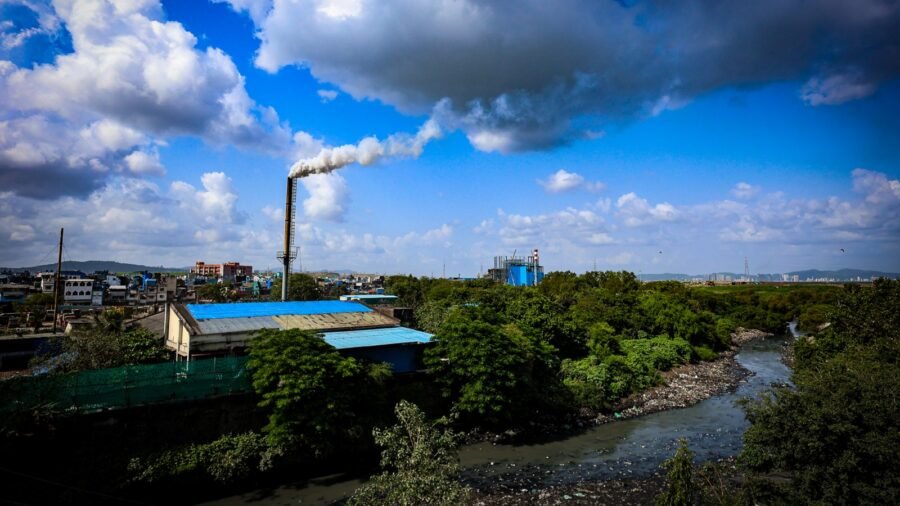
As Mumbaikars prepare for the withdrawal of the monsoon, prompting fears of deterioration in air quality in the city, the Brihanmumbai Municipal Corporation (BMC), with the Automotive Research Association of India (ARAI), has commenced field research in Mumbai to develop a high-resolution inventory of pollution emissions across the Mumbai Metropolitan Region (MMR). The study seeks to identify pollution hotspots across Mumbai, Navi Mumbai, and Thane to develop an early warning system for air quality in the region.
“The study has been launched across some wards of Mumbai to identify the at-grade level sources of pollution. Our atmosphere is dynamic, and sources of pollution are fast evolving. In order to devise a fresh mitigation plan, it is critical to identify the sources of emission. Gradually, the examination will commence in other parts of MMR as well,” a senior BMC official told .
The inventory will be used by the civic body for the proposed Air Quality Early Warning System (AQEWS) and Decision Support System (DSS), being developed by the Indian Institute of Tropical Meteorology (IITM) in Pune.
Previously, in 2019, the BMC had commissioned a study to analyse the sectors and sources which emit greenhouse gases into the atmosphere. The study found that residences were the highest contributors of pollutants, followed by commercial and institutional buildings and on-road vehicular transportation.
The BMC roped in Pune-based ARAI in October 2025 to identify fresh sources of emission given the city’s rapid deterioration over the past four years. According to officials, the data collection will include vehicle counts, residential fuel use, etc.
“Furthermore, this time, we will be examining the sources of pollution across the Mumbai Metropolitan Region, which encompasses not only Mumbai but also the cities in its periphery. In the past, the sources were only identified for Mumbai. However, the MMR falls share a common airshed, and pollutants from one geographic location can disperse to another quickly. Therefore, the study will use an air-shed based approach to regulate air pollution,” added a senior BMC official.
To understand seasonal shifts, the study will be conducted for over a year to analyse the shift in emission patterns across summer, winter and monsoon.