More tourists are choosing Ladakh. What’s driving the rise?
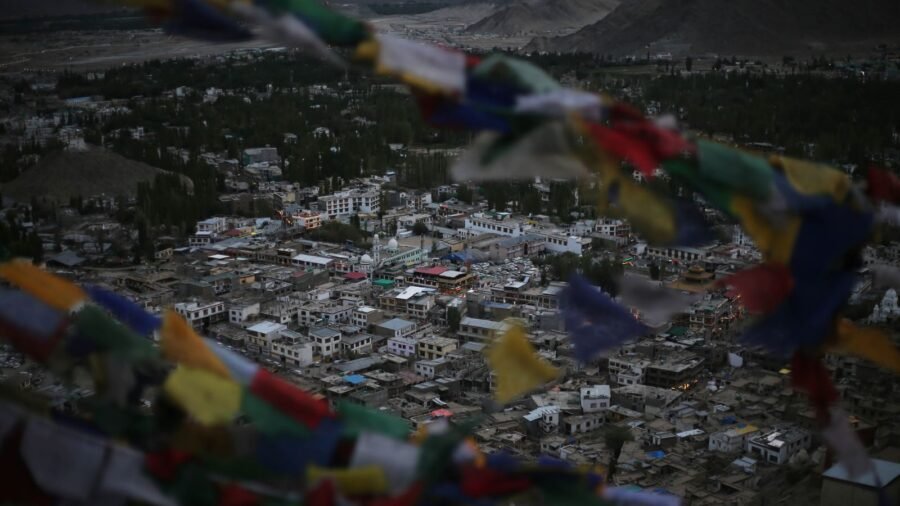
The Ladakh administration on Wednesday released tourism numbers for the Union Territory that showed a marked increase in numbers this year. Between January and August, over 4.5 lakh tourists visited the region — higher than the cumulative figure for last year.
In the first eight months of 2026, the total tourist footfall has exceeded the total tourist arrivals recorded in 2025 by 20.61 percent.
The growth has been recorded across both domestic and foreign tourists. Between January and August 2026, Ladakh received over 3 lakh domestic tourists and 33,346 foreign tourists, compared to 2,44,308 domestic and 25,082 foreign tourists during the corresponding period in 2025.
August recorded the highest foreign tourist footfall recorded in any month so far this year, with 10,075 foreign tourists visiting Ladakh, officials in the administration said. This is also considerably higher than the 8,148 foreign tourists recorded in August 2025.
Ladakh Lieutenant Governor Vinai Kumar Saxena termed the growth in tourism numbers “significant”, and attributed it to the Centre’s sustained push for infrastructure development in Ladakh as well as the prime minister’s appeal to citizens to visit tourist places in India and promote domestic tourism.
“The fact that Ladakh has already crossed its entire 2025 tourist footfall in just eight months of this year is a very encouraging sign. Our focus, however, is not merely on increasing tourist numbers, but on building a sustainable, responsible and year-round tourism economy that benefits our people,” Saxena said.
The UT has hosted several festivals, sporting events and cultural programmes that help the government expand the tourism calendar beyond the traditional summer season and bring visitors to Ladakh during the shoulder and off-seasons.
Story continues below this ad
“This creates more sustained livelihood opportunities for our youth, entrepreneurs, homestays, artisans, transporters and local communities. At the same time, visitors will also have the advantage in terms of cheaper air fares, hotels and less crowd,” LG Saxena said.
By developing a calendar of festivals, sporting events, cultural programmes, adventure activities and other experiences, the stated aim of the administration is to encourage visitors to travel to Ladakh during the shoulder and off-seasons as well.
In the month of August, major festivals like the Changthang Nomadic Festival, the first-ever Black-necked Crane Festival, the Suru Summer Festival and the Ladakh Book Festival added new attractions to Ladakh’s tourism calendar, and attracted a large number of tourists.
The first edition of the Black-Necked Crane Festival alone saw the participation of more than 10,000 people from India and abroad. These festivals showcased the region’s unique culture, nomadic traditions, wildlife, and natural heritage.
Story continues below this ad
The tourism calendar remains active in September as well, with a series of major events lined up, including Ladakh Bike Week, Ladakh Festival, Zanskar Festival, and the Ladakh Marathon. The marathon, in particular, attracts runners from across the country and beyond, with many participants travelling to Ladakh with their families, thereby generating wider benefits for hotels, homestays, restaurants, transport operators, guides, local businesses and other tourism-related services.
The tourism growth assumes greater significance and coincides with a major and rapid transformation in Ladakh’s connectivity infrastructure since the formation of the Union Territory.
According to government estimates, nearly 55 percent tourists visiting Ladakh arrive by road. Of this, nearly 36 percent enter Ladakh through the Kashmir route, while 19 percent arrive through Himachal Pradesh’s Manali.
The total road network in Ladakh has also increased from 1,799 km in 2019 to over 4,200 km in 2026, while the number of bridges has increased from 19 to 72.
Story continues below this ad
The period of seasonal disruption on key routes has also reduced substantially — Zoji La, the mountain pass that’s the gateway to Ladakh from Kashmir, which earlier remained closed for around 127 days annually, now remains closed for only 16 days.