Meena Kumari classic Pakeezah gets a facelift, set for world premiere in October
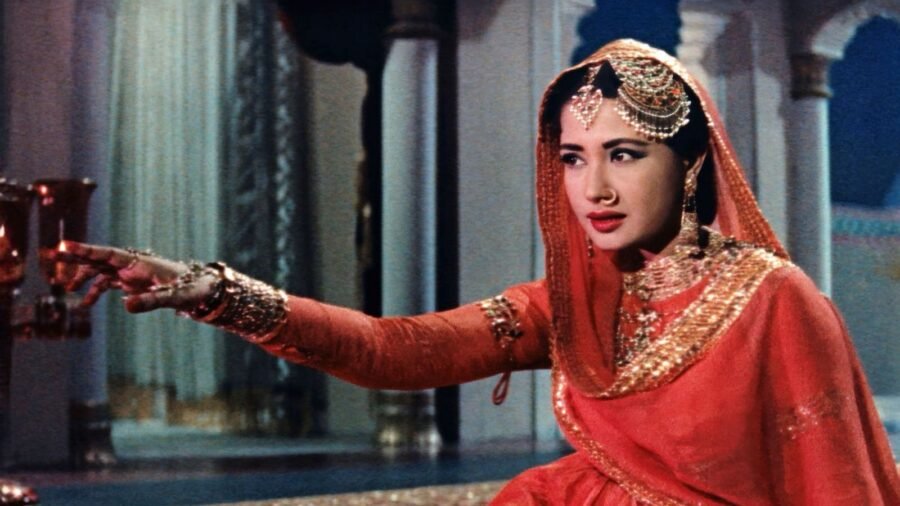
Nearly 54 years ago, the film cans for Pakeezah’s premiere arrived at Mumbai’s Maratha Mandir in a palanquin and the screening was attended by its director Kamal Amrohi, lead actor Meena Kumari and many prominent film personalities.
After a two-year restoration process, spearheaded by the Film Heritage Foundation (FHF), the cinematic masterpiece will have the world premiere of its restored version at France’s Festival Lumière in Lyon in October, followed by another special screening during the BFI London Film Festival.
The Indian classic was conceptualised in the mid-1950s as a grand tribute to the beauty of Amrohi’s wife and muse, Meena Kumari.
Story continues below this ad
Set against the exquisite backdrop of Lucknow’s twilight era of nawabs, Pakeezah showcases a career-defining performance by Meena Kumari as the tragic courtesan Sahibjaan.
Due to a number of technical and personal reasons as well as budgetary constraints, the film remained in production for 15 years.
Filming began in black-and-white in 1956 before shifting to Eastmancolor in 1958. Production slowed due to casting shifts, script revisions, and Amrohi’s perfectionism that proved expensive.
In 1964, the film’s production stalled when Amrohi and Kumari separated due to personal differences.
Story continues below this ad
The project suffered a major blow when Kumari was diagnosed with liver cirrhosis in 1968.
A year later, the project was miraculously revived when actors Sunil Dutt and Nargis viewed the existing footage and convinced an ailing Kumari to complete the shoot.
The production faced further tragedy when legendary cinematographer Josef Wirsching died in 1967.
A rotating collective of India’s top cinematographers stepped in to complete the work and meticulously match his visual aesthetic.
Story continues below this ad
Similarly, music composer Ghulam Mohammed passed away in 1968 after composing the film’s iconic songs.
Legendary Naushad was brought in to compose the final background score.
“Pakeezah finally hit theaters on February 4, 1972, arriving just as Indian cinema was shifting away from the refined, Urdu-inflected studio melodramas of the mid-century toward gritty, urban action blockbusters,” says a press note by the FHF. Kumari passed away on March 31, 1972.
Following her tragic death and overwhelming critical acclaim, the film emerged as a box office sensation.
Story continues below this ad
Recounting the process of its restoration FHF director Shivendra Singh Dungarpur says: “When I went to inspect the original camera negative, I saw that it had almost melted. The other film elements we had to work with were not in good condition, with faded colours, scratches and mould … During our research, we discovered original film stills which helped a great deal.”
The restoration team collected an interpositive (IP) and a CinemaScope print found at the Ramnord Lab. They also secured access to a colour reversal internegative preserved by the NFDC-National Film Archive of India.
These materials helped in the restoration of the 153-minute film. Pakeezah’s restoration was carried out by FHF in association with the Amrohi family.

Rihanna, Jennifer Lawrence and a Paris runway full of bras: Dior comes undone in mist
By Sohail Khan · 30 Sep

Ayushmann Khurrana: Stardom used to be an exclusive club, but not anymore
By Sohail Khan · 29 Sep