Marriage isn’t the problem. The fear of losing myself is
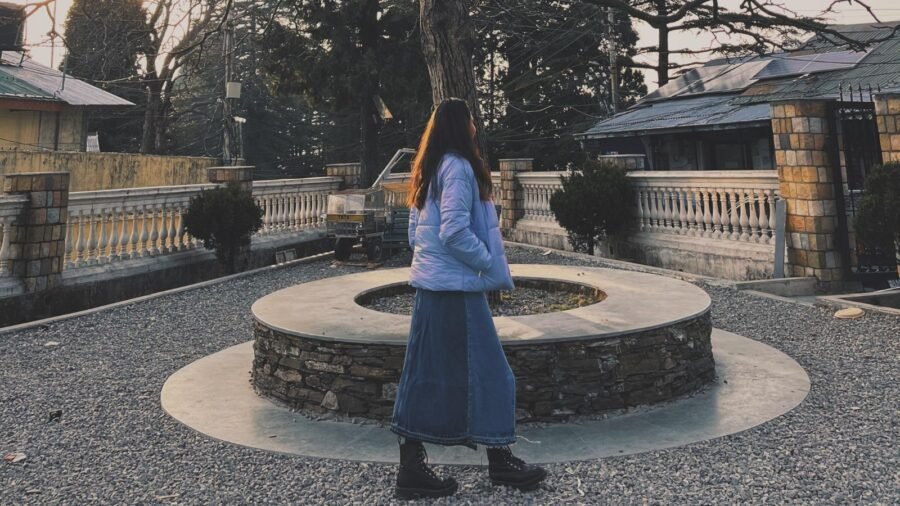
My usual morning routine begins with me asking Alexa to play ‘Have You Ever Seen the Rain?’ by Rod Stewart or ‘Video Killed the Radio Star’ by The Buggles, because apparently waking up quietly is not dramatic enough for me. I lie in bed for a few minutes, listening to the music, negotiating whether to get up. Eventually, I leave the bed, walk to the balcony, and stand there for a while.
How long I stay there depends on the neighbours. There is something strangely vulnerable about being seen first thing in the morning. I am barely awake, and my face has not yet remembered how to be presentable. Standing on my balcony in that state makes me conscious of being watched. So sometimes I retreat sooner than I would like.
Then I go to the kitchen, drink water, and decide what I want for breakfast. And that is perhaps my favourite part. There is no performance. No one is waiting for me to wake up. No one is asking what I am doing. No one needs anything from me. It is just me, in my house, in the moment.
I can hear my own thoughts without interruption. I think I have come to value that more than I realised.
A space of my own
Because living alone, for me, has never meant just having an empty house. It has meant having a space where I can exist without having to explain myself. I can be quiet when I want to be quiet. I can be restless when I am restless. I can eat what I want, sleep when I want, shower at whatever ridiculous hour I want and spend an entire Sunday doing absolutely nothing without having to justify it.
There is a particular kind of freedom in knowing that every decision in your day belongs to you.
My evenings are equally ordinary. I come back to an empty flat. Nobody is waiting for me at the door, and nobody is wondering why I am late. Depending on the weather, I make myself an iced latte, sit on my couch, and scroll through Instagram. Sometimes, I take a 15-minute nap. Then I go to the gym.
Story continues below this ad
Afterwards, I buy vegetables from the local vendors depending on what I feel like eating that night. I come home, cook dinner, eat, and watch an episode of something, a movie, or, occasionally, read. That’s it. There is nothing particularly extraordinary about this life. And yet, I love it.
On weekends, I make plans with myself. Sometimes those plans involve doing something exciting. Sometimes they involve bed rotting for an entire afternoon. More often than not, they involve violently disrespecting my bank balance at cafés and restaurants.
When one becomes two
I have built a life around my own rhythms. And now, I am getting married. Late this year, I will move into a home with my husband—still processing it. I am excited. But somewhere underneath the excitement is a small, persistent voice asking: What happens to this version of me?
I know this sounds dramatic. Maybe it is. Maybe this is what people call pre-wedding jitters. Maybe every woman who has lived alone for a while experiences some version of this strange emotional arithmetic—adding a person to a life meticulously organised around one.
Story continues below this ad
For years, I have been my own roommate, my own decision-maker. I have become accustomed to making every decision myself. What time I sleep. What time I wake up. Whether I want to go out or stay in. What I want for dinner. Whether I want the lights on or off. Whether I want to talk or be left alone.
And then there are the very specific things I know I don’t want. A coil of hair in the washroom drain. An unwashed dish sitting in the sink. Someone moving my things and not putting them back. A pair of scissors that has mysteriously travelled from the drawer where it belongs.
From me to us
I am the kind of person who uses a pair of scissors and puts them back exactly where I found them. My house is an extension of my brain. I like things a certain way. I like the aesthetics of my space. I like knowing where things are. I like the feeling of coming home to something that looks and feels like me.
And marriage, I know, requires making space for another person’s version of home. Which means that suddenly, my aesthetics are no longer the only ones in the room.
Story continues below this ad
There will be another person’s things. Another person’s routines. Another person’s idea of where the cushions should go. Another person’s interpretation of what constitutes a clean kitchen. Another person’s idea of when it’s appropriate to sleep.
There will be compromise. And, strangely, that is what scares me. Not the marriage. Not the idea of loving someone enough to build a life together.
It is the tiny, everyday loss of absolute autonomy that I am trying to process.
Now I have to live with a boy
For women of my generation who grew up watching characters like Carrie Bradshaw live alone in her impossibly cute New York apartment, solitude became more than a lifestyle aesthetic. It became a symbol of independence.
Story continues below this ad
Carrie could come home to her apartment and close the door on the world. She could sit on her bed and think. She could eat cake for dinner. She could make questionable decisions about men and then return to her own little universe.
 Monica Geller, played by Courteney Cox, in F.R.I.E.N.D.S.
And then there was Monica Geller, who once essentially summed up the horror of adulthood in one sentence: Now I have to live with a boy. I understand her completely. Just like Monica, I am the one choosing the boy. And that makes all the difference.
I don’t want this article to become an argument against marriage or some declaration that women are better off alone. I don’t believe that. I am not afraid of sharing my life with my husband. I am afraid of accidentally abandoning parts of myself while doing it.
There is a difference.
Building a shared life
I have spent years learning who I am when nobody is watching. I have learned what silence feels like when it isn’t awkward. I have learned that sometimes I need an evening where I speak to absolutely no one. I have learned that doing something alone isn’t necessarily lonely.
Story continues below this ad
Living alone has taught me an intimacy with myself that I don’t want to lose. And perhaps marriage isn’t supposed to make me lose it. The real challenge is learning that intimacy with another person doesn’t have to come at the cost of intimacy with yourself.
 A couple
Maybe there can still be mornings when I stand on the balcony alone. Maybe there can be evenings when my husband knows that I need my couch, my iced latte, and 20 minutes of mindless Instagram scrolling. Maybe there can be weekends when we make plans together and weekends when we don’t.
Maybe there can be two sets of aesthetics in the same house. His things can occupy some space without mine disappearing.
And maybe, eventually, I will learn that someone leaving their things somewhere does not mean they are invading my carefully constructed life. It might simply mean that we are building a shared one. That is the part I am trying to remember.
Story continues below this ad
Finding a new balance
Marriage, at least the kind I want, isn’t supposed to be the end of individuality. It is supposed to be an expansion of it. I am aware that I am not moving from my life into his life. We are creating an entirely new thing.
Still, I think it is okay to mourn something even when you are not losing it entirely.
I will miss the absolute quiet of my flat, making dinner based solely on what I feel like eating. I will miss having a home that is entirely, unapologetically mine.
And perhaps acknowledging that doesn’t make me less excited about marriage. It makes me honest about the magnitude of the change. Because marriage is not just about gaining a husband. It is also about changing the shape of your everyday life.
Story continues below this ad
For someone who has lived alone for a while, that change can feel enormous. I think I am allowed to be excited and anxious at the same time. I can want a shared home and still want a corner that belongs only to me. I can love the idea of us without giving up the importance of me. I just have to learn a new choreography.
From autonomy to interdependence
Marriage can trigger anxiety in a woman who has lived happily and independently because it represents a major change in how she experiences autonomy, explained Dr Rimpa Sarkar, psychologist, PhD, Sentier Wellness, Mumbai. “It may not necessarily be about fear of the relationship, but about uncertainty around whether the person will still have the same freedom, privacy and control over everyday choices,” she said.
When independence is an important part of someone’s identity, negotiating decisions that were previously entirely personal can feel threatening. Dr Sarkar added that for someone accustomed to making every decision independently, sharing a home can feel emotionally overwhelming because it introduces constant negotiation into everyday life.
“Sleep schedules, personal space, finances, social plans and even seemingly small choices now involve another person,” Dr Sarkar said. “The challenge is not necessarily the presence of the partner, but the psychological adjustment from complete autonomy to interdependence.” She adds that this transition can take time and does not necessarily indicate that the relationship is unhealthy.
There is also a psychological difference between wanting to be with a partner and wanting to live with them, the psychologist points out. “Loving someone and wanting to share a life with them does not automatically mean being comfortable sharing physical space and routines all the time,” she said. “Someone can be deeply emotionally connected to their partner while also valuing solitude, privacy and personal space.”
Dr Sarkar highlighted that cohabitation requires a different kind of adjustment, where intimacy and individuality have to coexist.
The pressure of expectations
Women, in particular, may worry that marriage could change the freedom they have built for themselves because of the traditional expectations that have historically accompanied marriage. “Marriage has historically involved greater expectations around caregiving, household responsibilities and adjustment from women,” she explained.
“For someone who has built a life on her own terms, there can be a legitimate concern that marriage may gradually make her responsible for more than she wants.”
The important distinction, she shared, is between normal pre-marriage adjustment anxiety and a deeper fear that the relationship may compromise one’s autonomy. “Normal adjustment anxiety usually allows room for excitement, discussion and problem-solving,” Dr Sarkar said. “A deeper autonomy concern may involve feeling that she will have to give up important parts of herself or that her partner will not respect her boundaries.”
She emphasised that the key question is whether a woman feels she can remain herself within the relationship.
For a woman who feels, “I love my partner, but I also really love the person I am when I am alone, and I’m scared marriage will change that,” the psychologist offers reassurance. “Loving your partner and loving yourself independently are not competing forms of love,” she said. “A healthy marriage should ideally give you a relationship while allowing you to remain a whole individual.”
She added that marriage does not have to mean giving up solitude, interests, friendships or a personal identity. “The goal is not to move from independence to dependence, but from independence to interdependence, where two people choose to share their lives without losing themselves in the process,” Dr Sarkar said.

40 years ago, October 1, 1986: First-ever Asiad gold for Usha
By Sohail Khan · 1 Oct
India’s elderly women need better social security cover
By Sohail Khan · 1 Oct