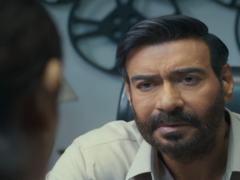
Mandaadi movie review: Soori, Suhas are extraordinary on water, the film drifts when on land
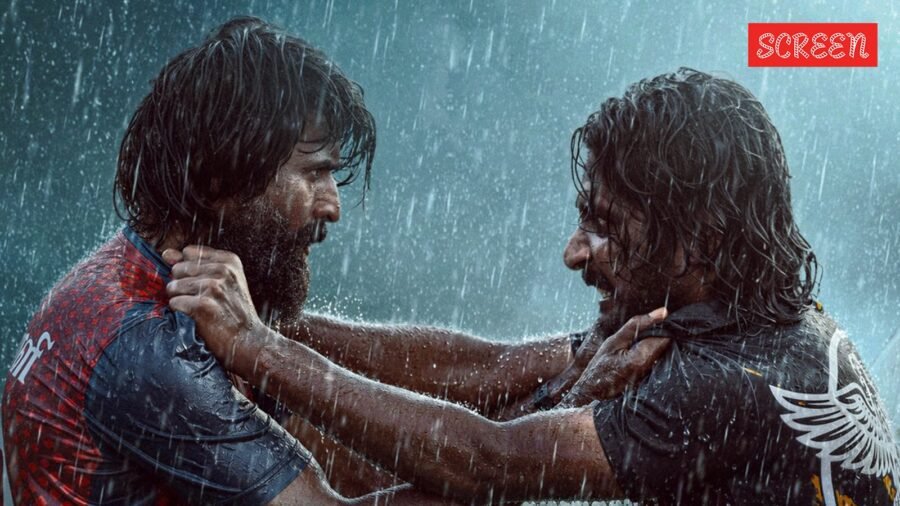
Mandaadi review and rating: Every great sports film has a moment when the sport stops being the heart of the story and the sportsperson takes over. When Soori is on the water, gripping the mast of a twin-hulled boat as the sea tries to drag him under, you understand the film is no longer about who wins the race. It is about a man from a fishing community whose entire identity, his livelihood, his dignity, his place in a world that is being taken from him, rides on whether he can stay on that boat longer than the man next to him. In those moments, Mandaadi is as good as any sports film India has produced. The problem is what happens when he gets off the boat.
Mandaadi is set in the coastal fishing communities of Tamil Nadu, where catamarans, the traditional twin-hulled boats that fishermen have used for centuries, are not just vessels but a way of life. The word “catamaran” itself is Tamil, derived from “kattumaram,” meaning logs tied together. The film follows a young fisherman, played by Soori, whose life revolves around the sea, his community and the catamaran races that serve as both sport and cultural tradition in his village. When a conflict arises that threatens both the protagonist’s livelihood and his community’s way of life, the catamaran race becomes the arena where everything is settled.
The film works because the cast does not let the screenplay’s weaknesses define their performances. Soori does not play a fisherman, he looks like he has spent his life on the water. His hands grip the mast like they have done it a thousand times. His body moves with the catamaran rather than against it. The physical demands of the racing sequences are enormous, and he handles them with conviction. If anyone still introduces him as a comedian, they have not been paying attention.
Story continues below.
Subscribe to see fewer ads.
Suhas, making his Tamil debut after building a strong reputation in Telugu cinema, does not just hold his own against Soori, he matches his energy. The character could have been a one-note rival, the man standing between the hero and victory. Suhas refuses to play it that way. He finds humanity in the competition, the respect buried under the aggression, the awareness that the man on the other boat is fighting for the same things as he is. It makes you wonder why Suhas is not being cast in more films across more languages. He has the talent for a much bigger career than his filmography currently reflects.
Mahima Nambiar is functional in a role the screenplay does not develop beyond necessity. She is present and she is competent. She is not given enough to make a lasting impression. The film’s emotional energy belongs to the men and the sea.
Mandaadi lives and dies by the sea. When it is on the water, it is one of the most viscerally exciting sports films Indian cinema has produced in years. When it steps onto land and tries to be a drama, the screenplay loses the current that was carrying it and starts drifting.
Story continues below this ad
The catamaran racing sequences are the film’s reason for existing. Shot on actual water with a combination of practical work and carefully deployed CGI, the races have a raw, physical quality that most Indian sports films, with their over-edited montages and inspirational background scores, cannot match. The camera does not watch the race from the shore. It sits on the water, low enough that you feel the spray on your face. You sense the instability of the boat beneath you. The sound design is half the experience: the creak of wood under pressure, the slap of water against twin hulls, the wind tearing across the frame, the shouts of racers who know that a split-second mistake means the sea wins.
What makes the racing work beyond the spectacle is the rivalry underneath it. The relationship between Soori and Suhas is not built on hatred; it is built on recognition. Two men who do the same thing, love the same water and need the same victory, looking at each other across a starting line and understanding that the man opposite them is the only person in the world who knows exactly what this race costs. The film takes its time letting that complexity breathe rather than rushing to declare one the hero and the other the obstacle. It is patient work, and it pays off.
The problem is everything between the races. When the film leaves the water and becomes a land-based drama about power, exploitation and survival, the screenplay loses the specificity that made the sea portions so compelling. The conflicts on land feel borrowed from a dozen other Tamil rural dramas.
Story continues below this ad
When the racing returns for the climax, it delivers. The final race is staged with the same ferocious energy as the first-half sequences, and by this point the emotional stakes are high enough to make every wave, every tilt of the boat, every near-capsize feel like it matters. But the journey from the interval to the climax is not as clean as it should be. The ending, when it arrives, works. It is satisfying without being predictable. But it arrives after a second half that tested your patience.
The cinematography is the film’s crowning technical achievement. The sea is shot in natural light with long lenses and low-angle compositions that make you feel the size and power of the water. The catamaran racing sequences, with the camera mounted on the boats themselves, water spraying across the lens, the horizon tilting on turns, are genuinely exhilarating.
The sound design deserves special mention. During the racing sequences, the natural sounds of the sea, the wood, the wind and the racers’ shouts, are layered into a soundscape that is as responsible for the immersion as the visuals. The decision to let the ocean breathe rather than drowning it in background music is one of the most disciplined sound choices in a Tamil film this year.
Mandaadi is a film that earns respect for what it attempts and forgiveness for where it falls short. Here is the thing, the strongest material in Mandaadi, the racing, the sea, the community, the physicality, is strong enough to carry the film past its weaknesses. You will remember the water long after you have forgotten the land. You will remember Soori on the catamaran long after you have forgotten why he was fighting. Go for Soori. Go for the sea. Go for the racing. Accept that the land portions will not match the water, and hope that whatever Mathimaran does next gives him the screenplay his visual instincts deserve.
Mandaadi movie cast: Soori, Suhas, Mahima Nambiar, Satyaraj
Mandaadi movie director: Mathimaran Pugazhendhi
Mandaadi movie rating: 3/5