Lucknow’s air cleanest, Indore among top 3 in Centre’s annual survey
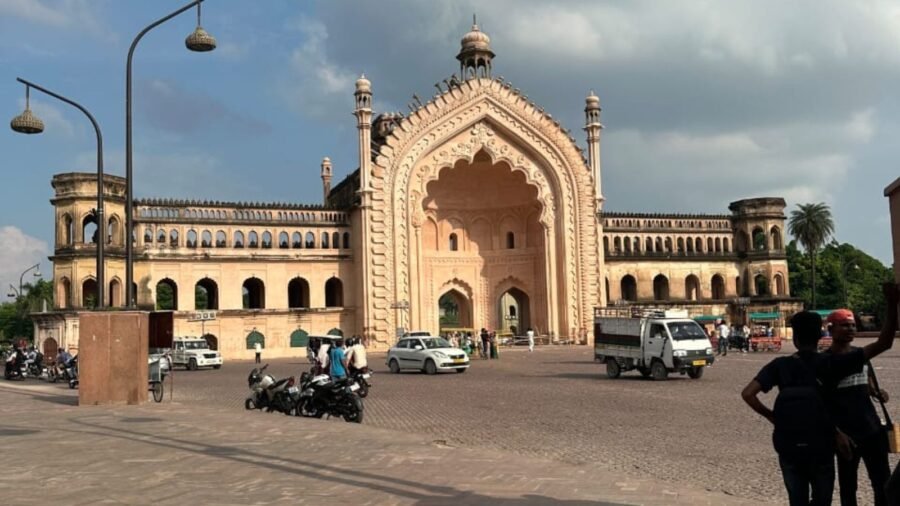
Lucknow, the capital of Uttar Pradesh, topped the million-plus population category in the 2026 ‘Swachh Vayu Sarvekshan’ for its efforts to improve air quality. The city’s measures included adding electric vehicles to its waste collection fleet, deploying mechanised sweepers to control road dust, and managing legacy waste.
Indore, India’s cleanest city, secured the second spot, while Jabalpur finished third in the million-plus cities category. Meanwhile, Chennai, Jamshedpur, Kota, Kolkata, and Madurai ranked in the bottom five in this category, while Delhi and Mumbai ranked 30th and 37th, respectively.
Although it won the top prize in the million-plus cities category, Lucknow has yet to meet the PM 10 annual ambient air quality standard of 60 ug/m3 (micrograms/cubic metre) prescribed under the national standards, as per the NCAP portal. However, since the programme began, annual PM10 concentrations have declined from 250 ug/m3 in 2017-18 to 137 ug/m3.
Jabalpur’s achievements included a waste-to-energy plant, 100 per cent waste collection and scientific disposal, mechanised street sweeping, and promotion of electric vehicles.
Last year, Indore topped the million-plus population category, followed by Jabalpur, while Agra and Surat jointly secured third place.
In the category of cities with a population between 3-10 lakh people, Rourkela topped, followed by Firozabad and Guntur in joint second place, and Amravati in third place. In category 3 – cities with less than 3 lakh people – Kalinga Nagar won the first position, Angul the second, and Talcher got the third place.
Key parameters
The rankings were declared in the national capital Monday, and National Green Tribunal (NGT) chairperson Justice Prakash Shrivastava conferred the honours on all winning cities and towns. Awards were also conferred for the first time for municipal wards that have improved their air quality.
Story continues below this ad
Efforts in waste management, road dust control, dust management from construction and demolition waste, and reductions in vehicular and industrial pollution are key parameters used to assess cities for final ranking. Improvements in the reduction of particulate matter 10 concentrations are given only a 2.5 per cent weightage.
Cities and towns are divided into population-based categories: million-plus cities, cities with 3-10 lakh population, and cities with population under 3 lakh. A cash prize and mementoes are awarded to the top three cities or towns.
A state-level monitoring committee assesses the cities and towns, the Central Pollution Control Board evaluates them, and independent committees verify them in the field.
The National Clean Air Programme was launched in January 2019 and covers 130 cities. The target for these cities is to reduce particulate matter (PM) 10 concentration by up to 40 per cent by 2025-26 compared with 2019-20 levels.
Story continues below this ad
Multiple sources of funding disbursed through the Union Environment Ministry, 15th Finance Commission grants, and additional convergence of funds through the Ministry of Housing and Urban Affairs and the Ministry of Heavy Industries are used to improve air quality.
Of the 130 cities covered under NCAP, only 14 met National Ambient Air Quality Standards in the first target period between 2019 and 2025-26. Of the 131 cities covered under the NCAP, 47 fall in the million-plus city category, 44 in the 3-10 lakh population category, and 40 in the 3 lakh population category.

Hotels, roads and the race against time: Inside Ujjain’s Simhastha 2028 makeover
By Sohail Khan · 5 Oct
This building in Bastar used to house a security camp. Now, it is home to 150 students
By Sohail Khan · 5 Oct