Lucien Smith cause of death: What happened to 37-year-old New York City artist?
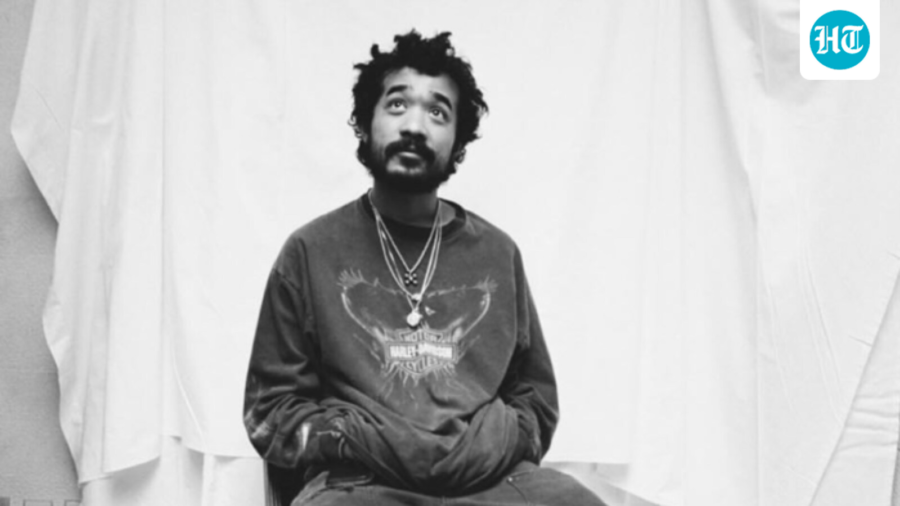
New York artist Lucien Smith, 37, died unexpectedly, shocking the art community. His cause of death remains unknown after he recently completed new paintings.
Updated on: Sep 10, 2026, 04:22:14 IST
Prefer HTon Google
Share via
Copy link
Lucien Smith, a New York City artist whose art career had stagnated after a sudden rise to fame in the early 2010s, died at the age of 37. The death has come as a surprise to many, given he had recently finished a new collection of paintings and was focusing on a restaurant he opened in 2025.
His death, announced by friend and gallerist Bill Powers in an Instagram post, shocked many in the art community- particularly in New York City, given that he had been embedded in the downtown art scene for over 15 years. A cause of death has not been announced.
What Is Zombie Formalism And Why Was His Career Controversial?
Lucien Smith’s career took off in the early 2010s when he was still a student at The Cooper Union for the Advancement of Science and Art in NYC. However, he soon became dubbed as one of the prime faces of a phenomenon called “zombie formalism,” coined by the late artist and critic Walter Robinson.
The term is used by art critics for works that look like examples of a particular style or movement but are essentially repeating its visual formulas without any original idea. In the context of artists like Lucien, Oscar Murillo, Jacob Kassay and others, the term meant speculative buying of paintings solely to flip them later at an exorbitant profit.
Lucien himself criticized the practice. But it has been a hallmark of his career since his Cooper Union days. For instance, while still at college, he sold his 2011 painting Hobbes, Hobbes, The Rain Man, and My Friend Barney / Under the Sycamore Tree for $10,000. But the piece was flipped almost 39× its original price, at $389,000.
Such was the demand for his works for the sole purpose of later flipping them that he said he would “sell out of work before getting a chance to even sign them" in the early 2010s.
Life After Zombie Formalism
But this speculative art economy only lasted a few years, collapsing around 2015 following the initial boom cycle. By then, paintings acquired for hundreds of thousands of dollars became difficult to sell again. Prices also fell.
But Lucien was both aware and critical of the pitfalls of the practice. He had admitted in an interview that he knew it was unsustainable beyond a few years and put his money in the “right places” – part of which was the restaurant FOOD.
“I knew it was unsustainable. Luckily I put my earnings in the right places so I would be comfortable,” he had said in an interview with Kenny Schachter on Artnet News pubslihed on July 7, 2021.
See Less