Kenyan President vs Tata Chemicals: Why Kenya wants Tata firm’s operations halted
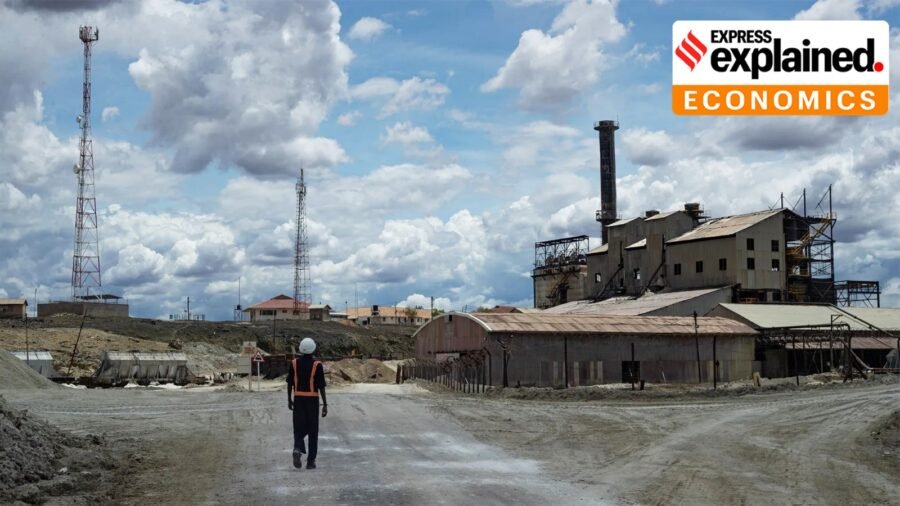
Kenyan President William Ruto’s order to halt Tata Chemicals’ operations in the African nation has put the Tata Group company on the defensive, with the firm saying on Friday (September 4) that it remained committed to resolving the dispute through “constructive engagement”.
This is the second major dispute between Kenya and an Indian entity after it cancelled the Adani Group’s Nairobi airport project.
The current dispute centres on Tata Chemicals Magadi Ltd (TCML), which operates a soda ash plant at Magadi in Kenya’s Kajiado County. TCML is Africa’s largest producer of natural soda ash, used in a range of industries, such as glass manufacturing. It has been operating the facility for decades and says it remains fully compliant with regulatory requirements.
Here is what the dispute is about, what the Kenyan President has alleged, and what Tata Chemicals has said it plans to do.
What is the Kenyan President’s allegation?
Ruto has criticised Tata Chemicals over what he said was a lack of investment and development in Kajiado, where the Magadi operation is located. “That Tata company… had that contract for 100 years. They have not built anything in Kajiado, they have not built any factory in Kajiado,” Ruto said.
He said the government would bring in two new companies to take over Tata Chemicals’ operations.
Ruto’s main accusation is that Tata has extracted Kenya’s mineral resources without providing enough economic benefit to the local area or country. Specifically, he says Tata has operated under a very long-term contract but hasn’t built sufficient local industrial facilities. It has largely exported soda ash rather than creating more value-added manufacturing in Kenya. It hasn’t generated enough local jobs, investment and industrial development relative to the resources it extracts and has failed to meet what the government considers adequate obligations towards the local community.
Story continues below this ad
Tata Chemicals, however, has said that the Magadi operation has played an important role in the Kenyan economy since it acquired the plant in 2005.
What is the dispute about?
The immediate issue is a dispute between TCML and the Kenyan Ministry of Mining, Blue Economy and Maritime Affairs over matters relating to the company’s operations and regulatory compliance. TCML said it has acknowledged an official communication from the ministry dated July 28, 2026, and has submitted a comprehensive response to the matters raised by the government.
According to the company, it provided all the required information, reports and documentation to the ministry on August 11. “TCML is fully compliant with the regulatory requirements,” the company said in an exchange filing on Friday. The company is now awaiting the ministry’s review of its submissions and further direction.
Tata in Magadi: Legally strong position, politically sensitive context
The dispute escalated after Ruto publicly said that he had ordered Tata Chemicals to stop its operations and indicated that the Kenyan government would bring in two new companies to take over its operations. Ruto’s opponents allege the government’s real motive is control of the area’s other mineral resources.
Story continues below this ad
Magadi is in Kajiado County, where questions surrounding land, mineral wealth, employment and community benefits are politically sensitive. Tata’s legal position is considered strong because its rights stem from a 1928 lease granted by the Kenyan government and subsequently extended in 2004. The lease provides Tata with extensive rights over the Magadi deposits and runs until 2053. This context underpins Ruto’s claim that Tata has exercised control over “100 years,” despite the more complicated legal history underlying that assertion, say reports from Kenya.
A major dispute between Tata and Kajiado County came up earlier, too, over payments. The county demanded billions of shillings in alleged land rates and royalties, while Tata challenged the claims, arguing that the relevant mineral rights and payments were governed by its agreement with the national government rather than the county. In October 2025, Kenya’s Court of Appeal substantially sided with Tata, according to reports from Kenya.
According to the National Council for Law Reporting (Kenya Law), the court ruled that the county’s demand of about Kenyan shillings 17.45 billion was not payable as claimed and found that the county’s closure of Tata’s operations had breached Tata’s lease and its constitutional property rights.
When did Tata Chemicals take over the Magadi operation?
Tata Chemicals’ association with the Kenyan soda ash business dates back to 2005, when it acquired the Magadi plant. The company has since operated the business through TCML.
Story continues below this ad
The history of the business goes back further. In 1991, Brunner Mond Holdings Limited, which was originally set up in the UK in 1873, was formed, including the Kenyan soda ash business that had come from ICI. Tata Chemicals subsequently acquired a 100% stake in Brunner Mond, following which Magadi Soda became Tata Chemicals Magadi Limited. The Magadi operation is therefore not a new investment for the Tata Group but a business with a long history in Kenya’s soda ash industry.
TCML operates the Magadi soda ash business and is Africa’s largest producer of natural soda ash. Soda ash, or sodium carbonate, is an important industrial chemical used in products and industries.
What does Tata Chemicals plan to do?
For now, Tata Chemicals says it will continue to engage with the Kenyan authorities through the established legal and regulatory process. The company said it has already provided a comprehensive response to the issues raised by the ministry, including information relating to its compliance with applicable regulatory requirements.
It is now awaiting the ministry’s review of those submissions and its further direction. “We respect the authority of the Government of Kenya and remain committed to constructive engagement through the appropriate legal and regulatory channels to resolve the outstanding matters,” the company said.
Story continues below this ad
The company also said its priority remained the well-being of its employees, the Magadi community and other stakeholders in Kenya, as well as continued economic development in the country.
Tata Chemicals has also pointed to recent investments at its Magadi operation, particularly in cleaner and more efficient production technology. In July 2025, TCML commissioned a state-of-the-art 10-tonnes-per-hour electric calciner, which it described as the first of its kind in the global soda ash industry. The company also commissioned a 5-MW solar photovoltaic (PV) plant at the site.
The investments are aimed at shifting the plant away from Heavy Furnace Oil (HFO)-based calcination towards renewable and lower-carbon technologies. Tata Chemicals said the projects form part of TCML’s expansion programme and are intended to strengthen its position in sustainable industrial practices. The company has also said the move brings the Magadi operation closer to Tata Group’s target of achieving carbon neutrality by 2045.
And why was the Adani Nairobi airport plan cancelled?
Earlier, the Adani Group proposed a long-term concession for Jomo Kenyatta International Airport (JKIA) in Nairobi, valued at roughly $2.5 billion. Under the proposal, Adani would finance major airport upgrades and operate the facility for an extended period. However, the deal quickly became controversial over concerns about transparency and due process.
Story continues below this ad
The proposal was privately initiated rather than subjected to a competitive tendering process recommended by consultants, while critics also argued that the public had not been adequately consulted.
The proposal triggered strong protests across Kenya, with concerns ranging from airport sovereignty and user fees to employment and whether the government was offering Adani excessively favourable terms. The controversy intensified following bribery allegations against Gautam Adani and others in the US in 2024 — allegations Adani denied. President William Ruto subsequently cancelled the airport deal, and in February 2026, the Kenya Airports Authority formally confirmed the cancellation in court.

Surveillance is not the only privacy issue
By Sohail Khan · 30 Sep
Silver lining: on the Samarkand Chess Olympiad and India
By Sohail Khan · 29 Sep
State of anticipation: on Jammu and Kashmir and Statehood
By Sohail Khan · 29 Sep