India’s opportunity to put BRICS back together
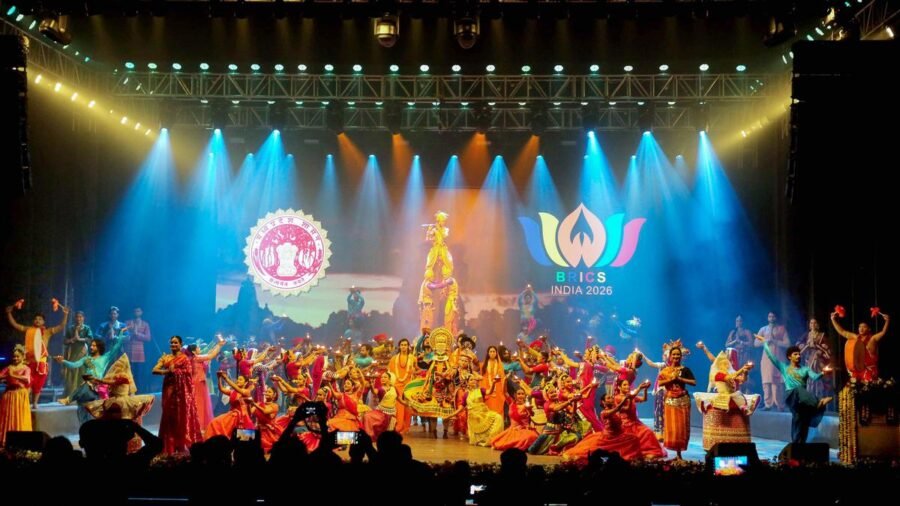
BRICS has strayed quite far from where it started. To be held this weekend (September 12-13, 2026) the 18th BRICS Summit, in New Delhi, gives India a huge opportunity to bring coherence back to the expanded group and give it direction if it is to be an effective body in shaping global events.
BRICS was formed to give a greater voice to Brazil, Russia, India, China and South Africa, the emerging economies, in global governance and institutions, particularly financial and economic institutions, and to aim for a more equitable multilateral order. India was initially an enthusiastic participant, seeing the group as a vehicle for genuine reform of multilateral institutions. The first summit hosted by India (the fourth BRICS summit), in 2012, focused on the theme “Global Stability, Security and Prosperity,” tacitly reflecting a much broader geopolitical canvas. The Indian presidency helped lead to the establishment of the BRICS Bank, the New Development Bank. Other Indian initiatives followed, including the integration of a counter-terrorism architecture into BRICS’ work.
The emergence of the China challenge
However, China had other plans. At the time, even if it was not anti-West, China saw BRICS as a counterpoise to western domination — a view that India also initially shared in the context of reform. More importantly, China needed a group such as BRICS, consisting of emerging economies, to amplify its global ambitions, given that BRICS countries accounted for nearly 20% of world GDP in 2010. Further, China wanted to use BRICS mechanisms such as BRICS-Plus and BRICS Outreach to reach out to the Global South and consolidate their profile as a second pole in a future bipolar world.
Suddenly, India not only had a reform agenda on its hands but also had to act as a counterweight to China’s larger designs on BRICS. India, Brazil and South Africa soon realised that Chinese support for the reform of multilateral institutions was selective. For example, China resisted supporting the three countries’ bid for permanent seats on the United Nations Security Council. Consequently, India started focusing more on BRICS consolidation and intra-BRICS matters to resist Chinese grandstanding. In fact, this year’s theme for India’s chairship has four pillars — Resilience, Innovation, Cooperation and Sustainability — and draws on Prime Minister Narendra Modi’s vision of “Humanity First” and a “people-centric” approach to BRICS cooperation.
In addition, there was a real danger that the principle of consensus, which had kept BRICS a cohesive group, would be bypassed and that BRICS would go the way of the Shanghai Cooperation Organisation (SCO), where the majority can bulldoze their views through. India and Brazil resisted these efforts. The 2019 BRICS Summit in Brasilia was held without any other invited guest countries — just the five original members. But in 2020, under the Russian presidency, probably the first non-consensus chair’s statement on COVID-19 was issued, bypassing the sacred principle of consensus. If non-consensus documents are increasingly resorted to, as we saw at the BRICS Foreign Ministers’ meeting in May 2026 in New Delhi due to the inability of the new members to agree, then BRICS will cease to be effective.
Membership expansion tests BRICS cohesion
But then, it was difficult to resist the Chinese juggernaut. China pushed for the expansion of the New Development Bank and then for the expansion of BRICS itself. India resisted, as did Brazil. But that was not to be, and BRICS now has 11 members, following the addition of Egypt, Ethiopia, Iran, Saudi Arabia, the United Arab Emirates and Indonesia, as well as 10 partner countries.
India’s sagacity has now been vindicated, as the new members of BRICS have started fighting among themselves. While the original five have their differences, some of them serious, they know how to address them with maturity for the greater good of the group. The new members do not have any such compunctions and are subverting BRICS through their bilateral conflicts. BRICS should not go the way of the South Asian Association for Regional Cooperation (SAARC), with bilateral disputes paralysing the group.
In addition, the tussle over the direction BRICS should take has begun. India has tried to keep BRICS as a “non-West” group, as opposed to the increasing pressure from some members to turn BRICS into an anti-West group. An anti-West slant is becoming increasingly difficult to avoid, with China competing with the United States for global leadership, Russia at war with Ukraine with the full backing of Europe, and Iran being bombarded by the U.S. and Israel. It becomes even harder to maintain the “non-West” line when Brazil and India have been subjected to punitive tariffs by U.S. President Donald Trump, and the U.S. Congress is considering legislation that would give the President the power to levy punitive tariffs on countries importing Russian oil. The question being asked is: how can India stop BRICS from becoming anti-West at a time when the Quad (Australia, India, Japan, the U.S.) is being emasculated by the U.S., India-U.S. relations are under great pressure, Pakistan is being courted by the U.S. at India’s expense, and global institutions are being made dysfunctional by the West? The more erratic the U.S. is vis-à-vis BRICS, the greater the chances of BRICS going in the wrong direction. Fortunately, India’s effort to prevent an anti-western drift is shared by many other BRICS members, since they too have much to gain by engaging with multiple actors from different camps in their national interest. They want change, but not geopolitical realignment with China and Russia. This is the direction of BRICS’s future.
But there is a much larger question. Both the U.S. and China are enunciating parallel visions of the world and playing by their own rules, rather than internationally negotiated ones. Both are, in effect, challenging existing international norms and global institutions and setting up parallel structures and standards in emerging areas such as Artificial Intelligence, digital and Internet governance, data ownership, state control, 5G/6G and telecom, satellite navigation, and electric vehicles. Neither is looking for reform of existing institutions. China has just set up a new World AI Cooperation Organisation in Shanghai, in addition to other parallel initiatives such as the Asian Infrastructure Investment Bank, the Belt and Road Initiative and the Digital Silk Road, which challenge the Bretton Woods institutions and their governance and financing models. They see BRICS as one of the vehicles through which to pursue their broader goals. For example, the push for de-dollarisation through the establishment of a parallel BRICS currency is receiving a lukewarm response, since many members are uncomfortable with a renminbi-dominated currency and would prefer merely interlinking payment systems, central bank digital currencies and national-currency transactions. Nevertheless, after the success of its pilot project, China is formally launching its ambitious mBridge, an alternative financial payment system. The last thing India wants is an alternative Bretton Woods system dominated by China.s
India can course correct BRICS
The 2026 Summit in Delhi provides an opportunity for course correction, and India has worked hard to persuade the new members to overcome their political differences. In a world in flux, India has to revive the original raison d’être of BRICS and shape the expanded grouping into a vehicle for reform and stability, while stopping others from hijacking it.
At the 2018 BRICS Summit in South Africa, Mr. Modi first articulated his vision of “reformed multilateralism” at the leaders’ retreat. By 2019, this vision had found its way into the BRICS Summit document in Brasilia, with India, Brazil and South Africa pushing for it. The time has come to revive this agenda and make BRICS a strong voice for the “non-West” middle powers — and, by extension, for the Global South.
In Davos, the Canadian Prime Minister spoke about broadly West-centric middle powers coming together. A Global South middle power is very different. And if there is a credible organisation of Global South middle powers, it is BRICS. It has its problems. To begin with, China is hardly a middle power and has disproportionate influence within BRICS. India and China need to find greater synergy on emerging global issues, even as their bilateral differences are being contained. Further, some middle powers that ought to be there are not represented in BRICS. However imperfect its composition may be, it is clear that BRICS has great geopolitical and geo-economic potential.
At a time when the profile of BRICS is only increasing, with many countries wanting to join it, India should proactively embrace the BRICS reform agenda to serve its larger interest of multi-alignment. If India does not, others will take BRICS in a different direction.
T.S. Tirumurti is Chair, Steering Committee, Deccan Centre for International Relations, former Permanent Representative of India to the United Nations, New York, and former Sherpa of BRICS

What do we tell a girl who asks ‘was it me?’
By Sohail Khan · 4 Oct
Inside Track: Lessons From Past
By Sohail Khan · 4 Oct
A confrontation that reshaped the Election Commission
By Sohail Khan · 4 Oct