India has to act on its ‘sugar’ problem
This week, the Food Safety and Standards Authority of India (FSSAI), prodded by the Supreme Court, proposed a simple but overdue idea. Packaged foods high in fat, salt, or sugar should carry a bold red warning on the front of the pack, not buried in fine print on the back. Someone picking up instant noodles, a breakfast cereal, or a “health drink” will finally be told, at a glance, that it is not as wholesome as its advertising claims. This is a welcome step. It is also, on its own, nowhere near enough.
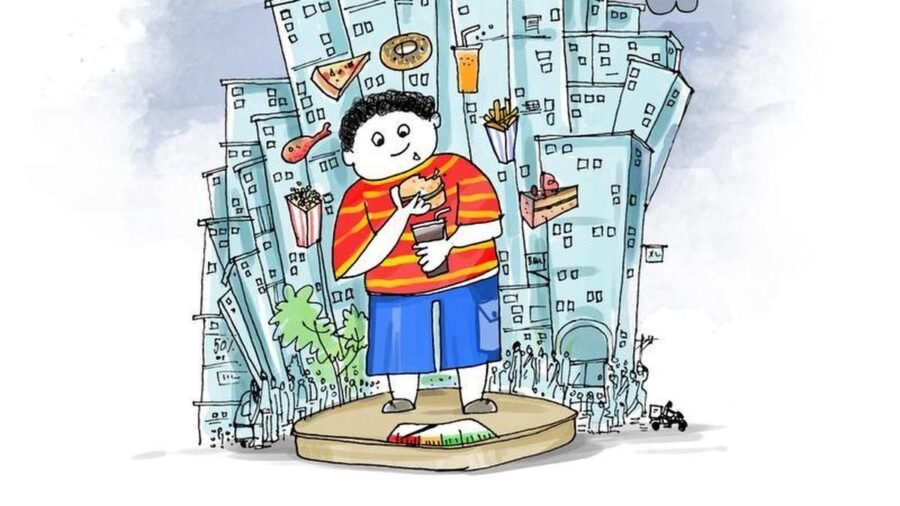
The number of children presenting with morbid obesity and diabetes has climbed sharply within just a few years. The World Obesity Atlas 2026 bears this out — 41 million Indian children and adolescents aged 5 to 19 are now overweight or obese. This is not just because children are eating more; it is about what they are being sold. Breakfast cereals, sweetened yoghurts, and “health drinks” are marketed to parents as filling gaps in a child’s diet, emphasising “energy” and vitamins while saying little about the sugar content inside. In 2024, a leading multinational was found adding sugar to infant food sold in India and other lower income countries; sugar was left out of the same product in Europe. When a health drink, popular in Indian homes, turned out to be nothing more than flavoured sugar syrup, it took a social media storm, and not a regulator, to force the company to prescribe a 15% cut in its added sugar.
The problem is worse around schools and colleges, where studies show that the cheapest, most easily available snacks are also the least healthy. A popular “energy drink” among teenagers, priced at just ₹20, packs close to 17 grams of sugar, caffeine, and artificial colour into a single bottle. Its label says it is not meant for children, yet nothing stops a child from buying it. This is the market pricing unhealthy calories to fit within the range of a child’s pocket money.
Need for enforcement
None of this is a secret. What has been missing is enforcement. The FSSAI and the Central Board of Secondary Education (CBSE) have long recommended what schools should not sell, but optional rules get treated as optional, and canteens stock whatever sells cheapest. A red warning label only works if it is actually enforced.
Moreover, the new rule stops at the edge of organised retail. Most of India’s sugar, salt, and trans fat is eaten unbranded, from street stalls, dhabas, and sweet shops that make up the unorganised sector, none of which is required to declare anything. A red label on a biscuit packet does nothing about the jalebi sold loose beside it. Regulation that reaches only packaged food leaves the unregulated half of the plate untouched.
Then there is the conversation India keeps avoiding — a tax on sugar. When the U.K. introduced its soft drinks industry levy, sugar consumption among both children and adults fell. Manufacturers reformulated their drinks to slip below the tax threshold rather than raise prices. A well-designed sugar tax does not just discourage people from buying a product, it pushes the industry to make the product itself less harmful.
India already taxes sugary drinks heavily; just not usefully. Since September 2025, aerated and sweetened beverages, sugar free versions included, were folded into one 40% GST slab — so a ‘normal’ cola and its zero-sugar counterpart pay the same tax, leaving manufacturers with no reason to cut sugar. The U.K.’s levy worked differently, taxing drinks in tiers by sugar content, so that companies could lower their bill by reformulating the product. India could tax products in the same way so that manufacturers have a reason to cut sugar.
The standard objection — that such a tax would hit the poor the hardest — is not wrong, but it is only half the argument. Unregulated, cheap sugar already extracts a heavy price from the poor, who bear the brunt of the diabetes, hypertension and childhood obesity epidemic that sugar heavy diets drive, with the least means to treat it. Doing nothing is not neutral; it is a slower, costlier tax, paid in ill health rather than rupees at the till. The answer is to design the tax calibrated to sugar content so that it nudges reformulation, with part of the revenue set aside to make healthy food cheaper.
The FSSAI’s proposed red label is a genuine, if belated, first step. What India needs now is the resolve to finish what it has started — mandatory food standards; limits on how unhealthy food is marketed to children; rules that reach the unorganised sector; and an honest debate on taxing sugar in a way that protects families with the least room to absorb either cost, the tax, or the disease.
Dr. Praveen George Paul is Assistant Professor, Pediatric Endocrinology and Metabolism, Department of Pediatrics, Christian Medical College, Vellore. Dr. Vandana Jain is Professor, Pediatric Endocrinology Division, Department of Pediatrics, All India Institute of Medical Sciences (AIIMS)

‘Sham’ contracts, inflated revenues: Charges against Man City, penalties it could face
By Sohail Khan · 1 Oct
Amitabh Bachchan, 83, suffers knee injury after fall: ‘I had trouble standing up’
By Sohail Khan · 1 Oct