How a land dispute involving Vadodara’s royal family has lasted over 50 years — and counting
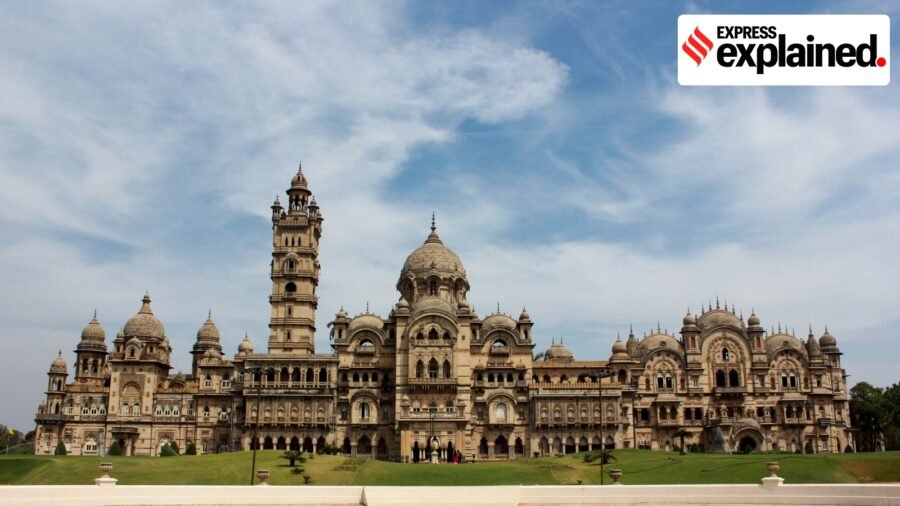
A prime piece of land that was part of the grand Lukshmi Vilas Palace estate in Vadodara till the 1950s has gone to a temple trust following a five-decade dispute. A Gujarat High Court verdict in June went against the titular Maharaja and occupants who had bought it from the erstwhile royal family decades ago.
On July 18, heavy machinery pulled down multi-storey blocks where people had been residing for at least six decades, while sparing the temple of the Yavteshwar Mahadev trust that has staked claim to the entire land.
The Vadodara District Collector, who is also an ex-officio trustee of the temple, had given the occupants a day to vacate before he directed the demolition of their homes.
The royal scion, Samarjitsinh Gaekwad, challenged the Collector’s orders on two grounds — the “wrong” law invoked for the demolition process and the allegedly excessive amount of land taken by the temple. Collector Anil Dhameliya was unavailable for comment.
Here’s the story of how the land dispute began, and how it stretched over five decades, and how it’s still continuing.
1971: When the legal battle began
The dispute revolves around land (Survey Numbers 9 and 10) that the royal family said was part of the palace estate.
In 1971, the then Collector, acting as administrator of the Shri Yavteshwar Mahadev Trust, approached the Assistant Charity Commissioner claiming that this land belonged to the Trust.
Story continues below this ad
In 1979, the Assistant Charity Commissioner held that approximately three bighas in Survey No. 10 and another 29 bighas in Survey No. 9, known as Sitaram Bapu Garden, belonged to the Trust.
In 1985, the Joint Charity Commissioner upheld that finding and directed the Collector to mutate the Trust’s name and obtain possession by following “necessary proper and legal steps”. Mutation refers to the process of updating ownership details in official records.
The dispute subsequently went to the district court and then the High Court (in 1991).
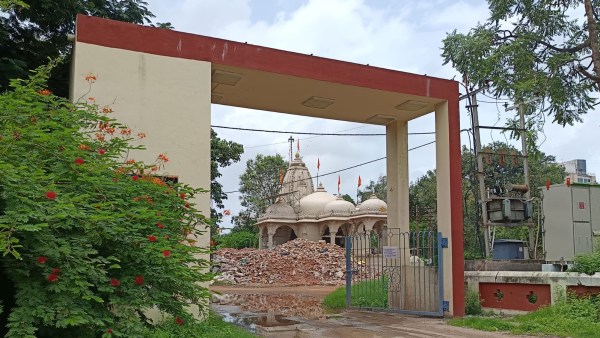 The temple of the Yavteshwar Mahadev trust that staked claim to the land.
The petition by the then titular Maharaja of Baroda, Fatehsinhrao Gaekwad, had contended that the disputed land, Survey Nos. 9 and 10, was his private property, forming part of the Lukshmi Vilas Palace under the title and possession granted under the Accession Agreement executed when the erstwhile State of Baroda merged with the Indian Union.
Story continues below this ad
Fatehsinhrao, the uncle of Samarjitsinh Gaekwad, was a Congress MP and cabinet minister in the Gujarat government and died in 1988.
The residents of the land, who also moved court, said they were genuine buyers who had relied on a 1956 revenue record showing the Maharaja as the owner of the land.
What the court ruled
In the 1991 appeal adjudicated on June 17 this year, Justice J C Doshi upheld the Assistant Charity Commissioner’s 1979 order, awarding around 32 bighas (around 51,800 sq metres) to the temple trust.
Story continues below this ad
The HC upheld concurrent findings that Survey No. 10 had “consistently remained in the name of Shri Yavteshwar Mahadev Trust” until 1956; that Survey No. 9, though registered differently, was land dedicated by Maharaja Govindrao for the temple’s maintenance and never reverted as private property; that the 1956 mutation was based on a misread Executive Engineer’s letter concerning unrelated property; and that the merger inventory omitted the temple entirely, confirming it was never the Maharaja’s private property.
The latest controversy
Following the High Court’s decision, Vadodara District Collector Dhameliya issued a notice on July 17, citing Section 79A of the Gujarat Land Revenue Code, which confers on the collector the power to summarily evict any person found in “wrongful possession” of land. The demolitions took place the very next day, July 18.
The royal family, along with one of the residents, has filed petitions in the High Court against the Collector’s eviction order and the subsequent demolition. Both petitions argue that possession of the disputed land could only be recovered under the Gujarat Public Trust Act, not the Gujarat Land Revenue Code.
The petition filed by the resident, Khevina Patel, called the July 18 demolitions as “illegal” and “conducted without due process”. Patel also sought contempt proceedings against the collector.
Story continues below this ad
Gaekwad’s petition says structures were pulled down “without giving due notice and following legal procedure”. Gaekwad’s counsel Himanshu Desai told that Section 79A permits the Collector to evict someone unauthorisedly occupying or wrongfully possessing land under the Land Revenue Code, but “the underlying dispute here was not decided under the Land Revenue Code at all. It arose under the Gujarat Public Trust Act, and the Collector’s notice and the process for taking possession ought to have been done under the Public Trusts Act”.
The royal family’s petition also alleges that the district administration stretched the June HC judgment concerning to “take possession” of land that was around three times the size of the roughly 32 bighas due.
It also claims two of the plots covered by the collector’s July 17 eviction notice are in possession of the Gujarat High Court itself.
Story continues below this ad
In an interim order on August 24, Justice A P Mayee of the Gujarat High Court issued notice to the Gujarat government and other respondents while staying the district collector’s July order until the next hearing on September 7.

Silver lining: on the Samarkand Chess Olympiad and India
By Sohail Khan · 29 Sep
State of anticipation: on Jammu and Kashmir and Statehood
By Sohail Khan · 29 Sep