Guneet Monga in Screen Academy Masterclass: ‘Producing is all about hustle’
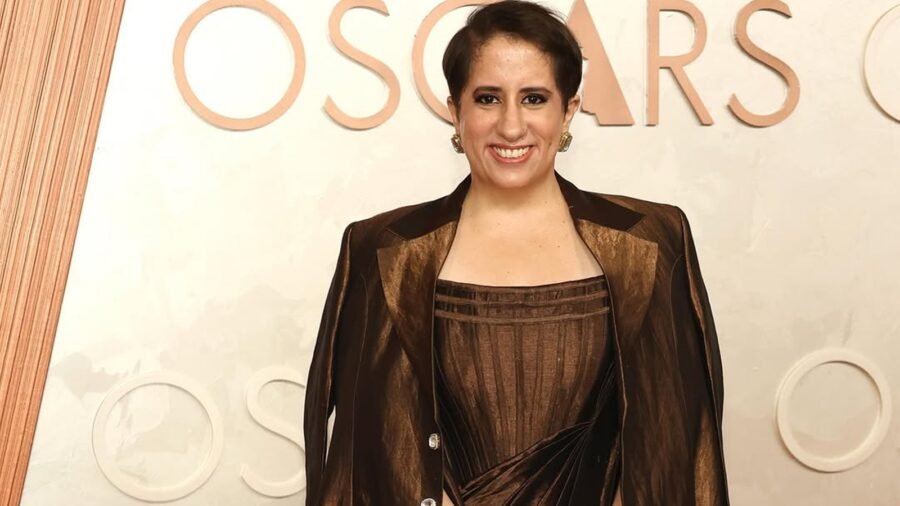
“Producing is all about hustle. Hustling is not a bad thing,” said two-time Oscar-winning Indian producer Guneet Monga Kapoor, while asking film students at Whistling Woods International, Mumbai to “own your hustle” during a masterclass organized by Screen Academy, a non-profit initiative launched by Group to identify, support, and mentor the next generation of filmmakers and creative voices in India. Guneet, who won the Academy Awards for co-producing short documentary Period. End of Sentence in 2019, and backing documentary feature The Elephant Whisperers (2023), has over 45 films to the credit of her production house Sikhya Entertainment.
“Given in India, we largely come from family-run businesses, there’s an understanding that the one who puts in the money is the producer,” pointed out Guneet, before reminding the students that she doesn’t come from money. During childhood, she lived with her parents in the suburbs of Delhi in a rented apartment with Rs 5,000 as rent. Even after relocating to Mumbai after some progress in her production career, she shared an apartment with five other girls during her period of struggle. “Money for survival was also tough, forget money for investment,” she recalled.
“I sit in front of you here after two decades with the resume I have and with a global footprint because I understand what producing is,” said Guneet. “A producer needs to find solutions. Your locations will always not be available. You’ll always lose your sun. You’ll never get that magic shot that you wanted to. Life will always be without lunch breaks. It won’t be ideal. But a producer would be like, ‘What best can we make of this’, given all the odds are stacked against you?,'” she argued.
Story continues below.
Subscribe to see fewer ads.
After growing slowly and surely within the production departments of international films shot in India, Guneet decided at 21 that it was time to be a producer. She borrowed Rs 50 lakh from her neighbour, and invested it in Subhash Kapoor’s 2007 sports drama, Say Salaam India. An underdog story that revolved around cricket, it released at what would conventionally be the most appropriate time — during the ICC World Cup tournament. However, as soon as India was eliminated from the race to the finish, theatre owners also wanted the cricket film out of the cinemas.
But that didn’t stop Guneet from giving up on her hustle. She resigned from her high-paying job of a line producer on Ghajini, and relocated to Delhi in order to earn back the lost money. She convinced the principal of her school to send a batch of students for a special screening, earning Rs 40,000 from the attempt. Once the students took to the film, she began pitching to other schools. That unique self-distribution model eventually led to her earning back all the money through over 350 shows.
“My father used to sell bricks, then carpets, and then properties. We never had enough money, but he was selling something every day. My childhood was all about how to survive. So, when 10 doors are shut in your face, then you figure out what next. That’s what led me to crowdfunding and international co-production treaties. Those solutions become necessities. India-France treaty was signed in 1985. I was the first one to use it in 2011,” she added.


Sonakshi Sinha, Shahid Kapoor’s driver opened a momo shop, Tukaram Mundhe shut it down
By Sohail Khan · 6 Oct