Gadkari says ‘got 92% of votes in areas linked to underworld’. Then came a disclaimer
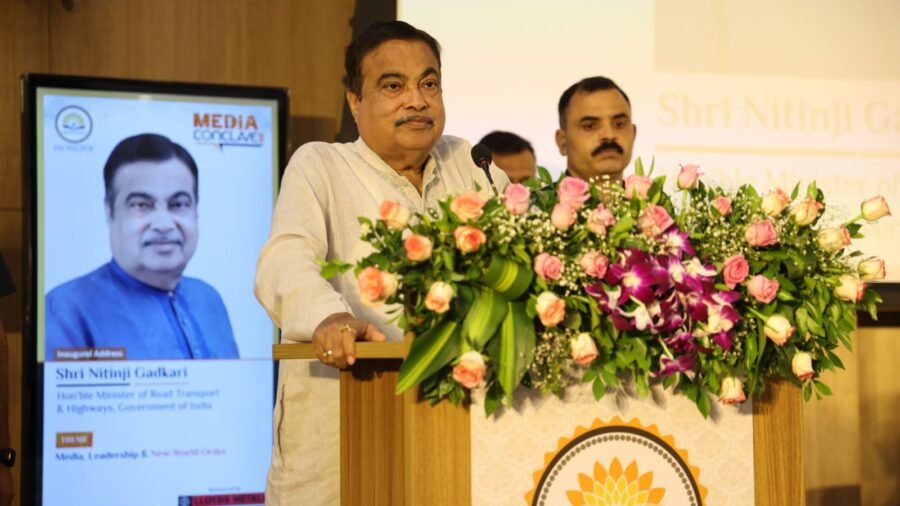
Union Minister Nitin Gadkari on Saturday reflected on his political journey while addressing the inaugural session of the IIM Nagpur Media Conclave 2026, emphasising that credibility ultimately determines success in public life.
“I have done everything in politics. I have done good things and bad things, and I have relationships with people across the spectrum,” Nitin Gadkari said, adding that despite his ideological position, he received substantial support even in areas he described as having an “underworld” or criminal presence in Nagpur.
Gadkari said that while he received around 70-75 per cent of the vote in some highly educated areas, his vote share was as high as 92 per cent in areas he described as being associated with the criminal underworld. Then came a disclaimer.
“Do not infer from this that I have very close relations with them. I have built roads there and done social work,” he said.
Gadkari said the experience underlined the importance of creating awareness among citizens about democracy, democratic values and fostering their commitment to them. “Education of the masses is the greatest necessity,” he said, adding that “credibility wins” in a democracy.
Gadkari said that he was an HSC student in 1975 when it was imposed. “I am a product of Emergency,” he said, adding that his studies suffered because of his involvement in politics. “Ideological differences are not the problem. Ideological emptiness is the problem,” Gadkari said.
Recalling his interactions with AB Bardhan during labour protests in Nagpur, Gadkari said he respected the Communist leader for his scholarship and honesty, despite their ideological differences. He said the political leaders of that era were committed to their respective ideologies as well as democracy, regardless of their differences.
Story continues below this ad
Gadkari argued that the biggest problem facing democracy was not political parties or leaders but the electorate itself. He said citizens needed to be educated on social, economic and educational issues and should vote beyond caste, religion, sect and language, but added that he also experimented with caste-based politics earlier in his career.
As a political party president, Gadkari said he created caste-based cells to secure votes, but, he concluded, the strategy only created a nuisance without delivering the intended political gains.

Dhule: Guardian Minister Rawal Inspects Drought-Hit Farms, Assures Farmers Of Aid
By Sohail Khan · 30 Sep