Four killings, one capture bid — then the tigress died
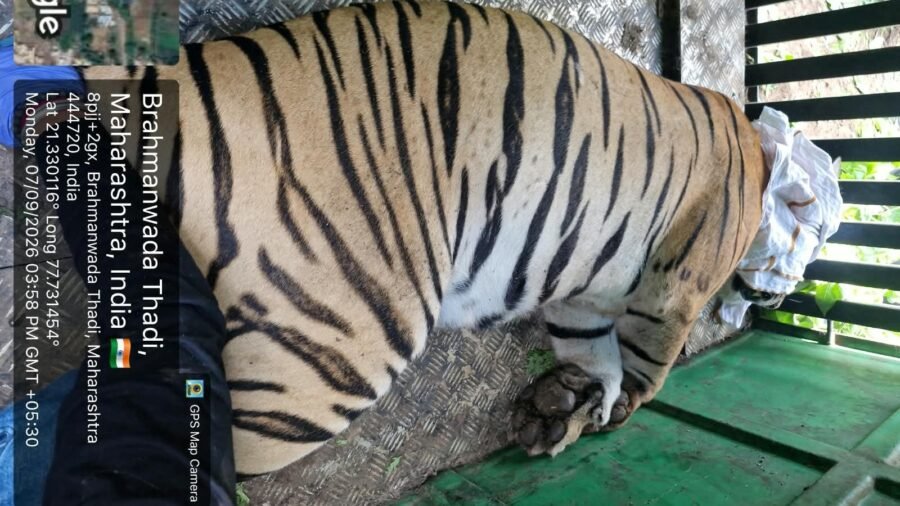
A day after a tigress suspected of killing four people in Amravati and Wardha died during an attempt to capture her alive, questions have emerged over the tranquilisation process, including the administration of multiple doses of sedatives and the availability of reversal medication.
Sources familiar with the operation said the tigress, located in Shirajgaon Kasba village in Amravati’s Chandur Bazar taluka on Monday, was first darted twice with a combination of Xylazine and Ketamine after she continued moving following the first dose. A Pune rescue team that arrived later administered Medetomidine, after which the tigress was immobilised. Her condition subsequently deteriorated and she died during treatment.
The Forest Department has not confirmed an overdose as the cause of death. A preliminary post-mortem has cited “cardio-respiratory failure” as the prima facie cause, while samples of the tigress’s organs have been sent for histopathological and toxicological examinations to establish the exact cause.
Talking to , Chief Conservator of Forests, Amravati, Jyoti Banerjee said, “The tigress was on a killing spree and the department was continuously monitoring its movement. The tigress was very elusive. This was the first time that we called for reinforcement. Our team was exhausted, so we reached out to all the teams. The Pune team responded quickly and was eager to help.”
The tigress had been on the move across Wardha and Amravati for around three weeks and was suspected of killing four people which had triggered anger among residents and mounting pressure on the Forest Department to capture the animal.
Sources said drug dosage during chemical immobilisation has to be calculated based on an animal’s estimated weight and other factors. They alleged that the cumulative dosage administered to the tigress may have been higher than required. Banerjee said, “There must be a reason for the multiple darts used by the team, only a subject expert would be able to comment on this.” She added that officials would get to the bottom of this issue after the report arrives.
Questions were raised over the immediate availability of reversal medication, which is considered critical during chemical immobilisation operations. Sources claimed that while the Pune team had Medetomidine, there were questions over whether adequate quantities of Atipamezole, the reversal drug, were available immediately.
Story continues below this ad
The Forest Department said the operation was conducted in accordance with the National Tiger Conservation Authority’s Standard Operating Procedure and involved personnel from Amravati and Akola forest divisions, Melghat Tiger Reserve, Wardha, Paratwada and Pune, along with police and district administration officials.
Deputy Conservator of Forests (Territorial), Amravati, Arjuna K.R., said the exact cause of death would be known only after the forensic examination.
“Samples of the organs of the tigress are being sent to a forensic laboratory for histopathological and toxicological examinations,” he said.
Official sources, speaking on condition of anonymity, told this newspaper that had the tigress not been captured, authorities were nearing a decision to order her shooting. “With the mob gathered during the tigress capture, the team still tried to revive her. Even if she had lived, we don’t know if she would have ever been released into the wild,” officials said.