‘Filmmaking may change in 3-4 years due to AI’: Kiran Das on turning director with Unmadham
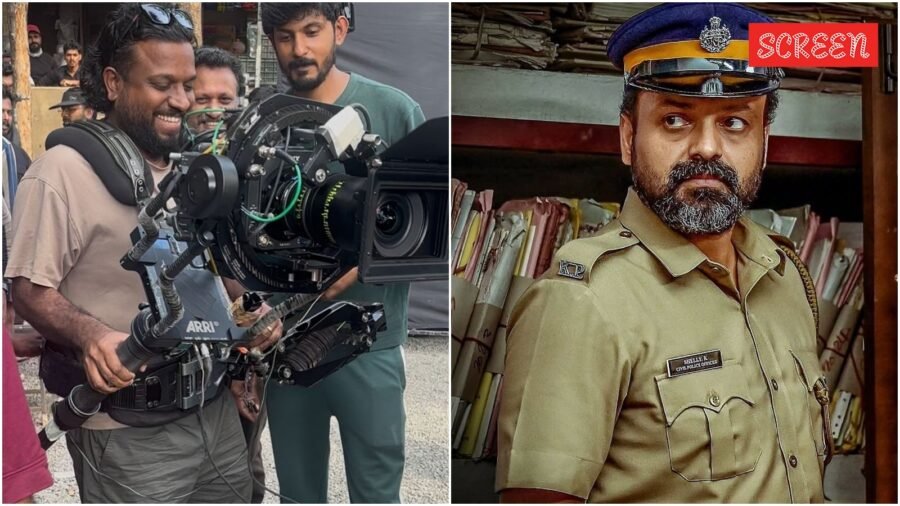
Although Unmadham also has a police officer at its centre, it differs significantly from the other scripts writer-director Shahi Kabir has penned so far. Unlike the realistic, slow-burn police procedurals he is best known for, Unmadham features surrealism and fantasy, along with psychological layers, making it quite unique. In fact, during the movie’s promotion, he named it as his favourite script to date. Hence, entrusting Kiran Das with helming it not only underscored their camaraderie but also his trust in the editor-turned-director.
However, Kiran attests that film direction wasn’t on his to-do list or even his wish list until recently. Yet, a serious contemplation about the future of cinema made him want to try his hand at it. So why Unmadham specifically? The answer is simple. “Unmadham is difficult to execute and convince the audience,” he tells SCREEN during an exclusive interview.
Memories of Blunder | Mohanlal masterfully played MGR in Iruvar, then went on to look like his photocopy in a dud
Kiran Das pivoted to film direction over AI fear?
“I wasn’t someone who wanted to direct a movie, ever. But, at one point, it hit me: the nature of filmmaking may not be the same 3-4 years later, particularly with the influence of AI. So I wanted to make a movie the way I’ve worked for 10 years,” he shares, adding that that’s when he started scouting for stories.
Shahi and Kiran Das have been friends and colleagues for over a decade and often engage in creative discussions. He knew Shahi had this challenging and genre-busting idea. And as discussions progressed, they zeroed in on it as his debut directorial venture.
Edited excerpts:
You’re a technician, an editor; it’s a very meticulous process. So, did you prepare extensively as a director too?
Yes, I did. Even before becoming Unmadham’s director, I was supposed to be this film’s editor. So I was involved in it from the scripting stage itself. Then, when I decided to direct it, I followed the usual processes. Once we finalised the casting, we tweaked the script accordingly and took the movie forward.
Story continues below this ad
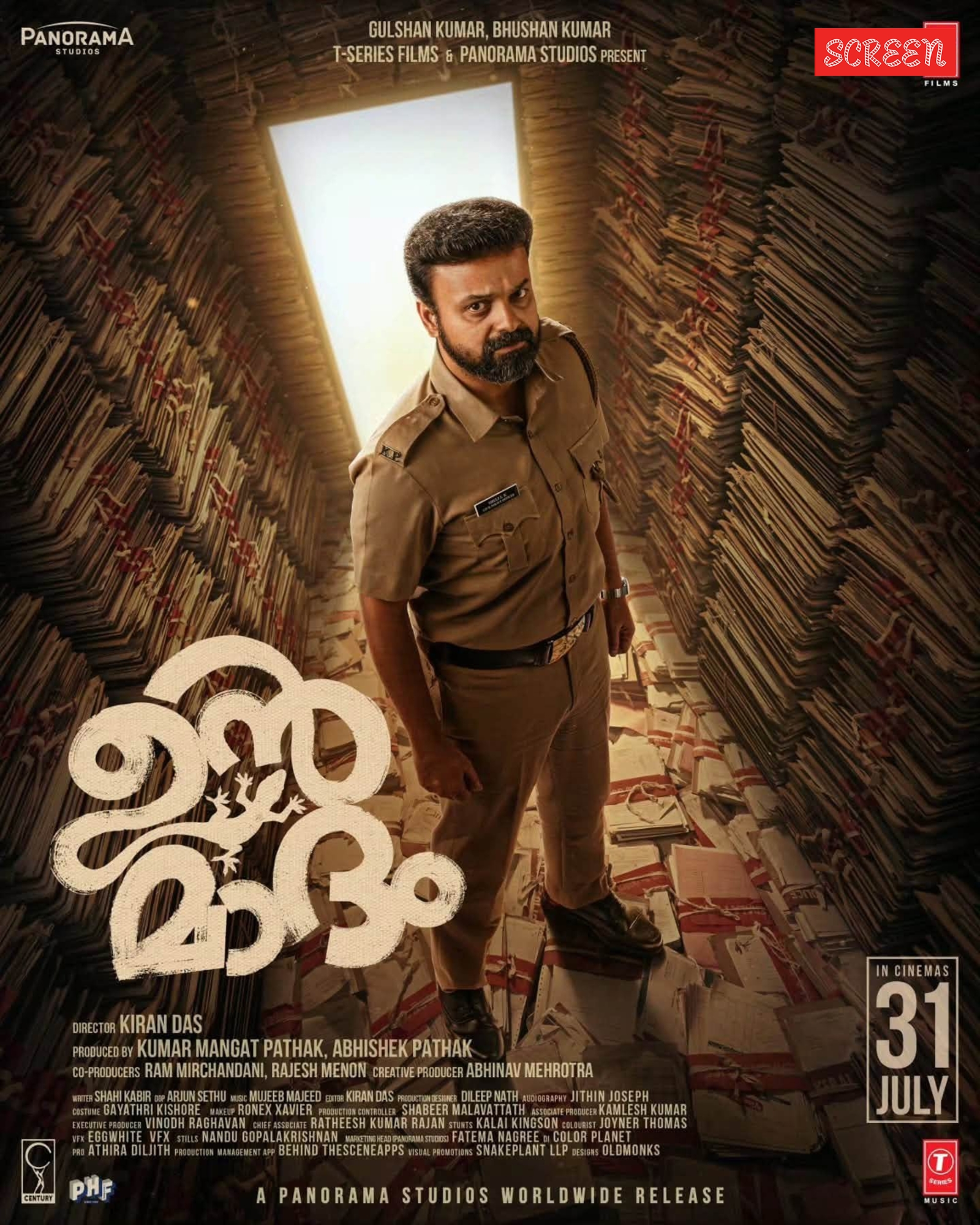 Unmadham marks editor Kiran Das’ directorial debut. (Credit: Facebook/@KunchackoBoban)
Unmadham features a long scene where Kunchacko Boban experiences hallucinations and hysteria. Did you have a clear idea of how the entire sequence should play out, or did you flesh out the specifics during the shoot?
No, I had a clear idea. In fact, I’ve approached the whole movie that way: following the old-school style of planning the shots and dividing them to shoot like an edited movie. In the old days, when they shot on film, makers didn’t have the luxury of capturing many angles or doing multiple takes. We followed that tradition, shooting only what we wanted, and the same was the case with the montages.
Do you feel Unmadham deserved a better theatrical run?
A movie will only achieve the success it deserves. If a film didn’t get a good theatrical run, it’s the makers’ failure. We should understand today’s audience and give them what they can enjoy. We’ve said what we wanted to say in the movie; maybe people will accept it someday. That doesn’t mean that our film was ahead of its time. People make movies for today’s theatre audience. If they didn’t like it, the makers should rethink their approach.
But there have also been movies like Devadoothan (2000) that were overlooked during their theatrical run but were later celebrated. So, movies also have a shelf life, right?
Story continues below this ad
Absolutely! That angle is also valid. However, we make movies for the theatre-going audience of their era. If Unmadham — or any other movie that underperformed in theatres, for that matter — eventually becomes a cult classic, what good does it do for the director or producer who could only make that one film? Besides, movies like Devadoothan and Thoovanathumbikal (1987) are known as cult classics associated with Lalettan (Mohanlal) and Padmarajan sir. There is a difference.
When was the first time you realised that there was such a thing as editing in cinema?
I think I started noticing it when I saw Kaakha Kaakha (2003). I studied in Tamil Nadu. During that period, I slowly learned how to read Tamil and used to read words on movie posters. One day, I saw Kaakha Kaakha’s poster and asked my friends who the actor in it was. They said he (Suriya) appeared alongside Vijay in the Tamil remake of director Siddique’s Friends (2001). So, I went to see that movie, and it offered a new experience. As I thought about why it felt so fresh, I realised it followed a different editing pattern. Movies like Vettaiyaadu Vilaiyaadu (2006) helped me understand it better.
Did you realise then that this would become your career?
Story continues below this ad
No, never! I came into it accidentally. In my final year of engineering, I got a job as a VFX artist in an editing studio. This was the period when movies were being converted from analog to digital — from Beta U-matic cassettes to DVCams. That’s how they archived old Malayalam classics into digital format. The studio I worked at did this extensively.
They needed someone for quality control (QC). So, in my free time, I went there to watch the playback. During that era, I used to watch about five Malayalam classics a day. Since these were old movies, they had glitches. My job was to capture those glitches, cut them out, and add a new scope. That was my first job as an editor. For almost a year, I watched movies and became crazy about them. Then I decided to stick with this job.
People often say that actors should be good observers, while writers should be good listeners. What’s one quality every editor should possess?
You need to see good visuals. In essence, everything (mentioned above) is the same: see good visuals, interact with good people, watch good movies, and read good books.
Story continues below this ad
When it comes to editing, I personally believe that the reaction shots we include at a juncture are our decision. We cut a shot when we feel bored. It’s not like we should cut it exactly at one and a half seconds or after 40 frames; it’s our decision based on our vision.
Cinema Anatomy | How Mammootty stole the screen from Rajinikanth with subtlety, quiet authority in Thalapathi
It’s a manual process. That decision — that lag — comes from our vision, experience, travels, conversations, and the movies we’ve seen. It’s the same in everything. As we say: observe, adapt, and improvise.
You have been an editor for 10 years. Can you say that a movie has gone wrong and is beyond repair just from watching the rushes?
Story continues below this ad
(Laughs out loud) Yes, we can. We can tell when it’s beyond repair. In fact, we can tell from the very first shot.
But can an editor save a film?
It’s not fully impossible. Some movies have been salvaged at the editing table. However, an editor can’t save a film that’s completely beyond repair. In such cases, we can only pacify ourselves by telling ourselves that’s the movie’s fate.
Then there are some movies that leave us confused — even after watching the whole thing — about whether people will enjoy them. That’s a very interesting process.
SCREEN Exclusive | ‘They thought he caught the killer’: Shahi Kabir breaks down real story, climax of Unmadham
Story continues below this ad
There are also movies like Jan.E.Man (2021). The speciality of Jan.E.Man was that the editing notes were also in the script. It was the first comedy film I edited, and I knew it would be a hit the moment I read the script. Since the editing notes were already included, I didn’t have much to do. It was shot exactly as it was written. We just had to put together the visuals like the yesteryear editors.
In a recent interview, you said that Shahi Kabir initially offered you a script, but you set it aside because it was a big project. Will that be your next directorial venture?
No, Shahi has other plans for that. I decided to direct Unmadham because there was a break in my editing work last year. Some films I had committed to were cancelled, and some were postponed to this year. So, there was a gap. Hence, I decided to try directing. Now I have the postponed movies to complete. Since I’m not a writer, if I get some good ideas, I’d develop them and execute them.
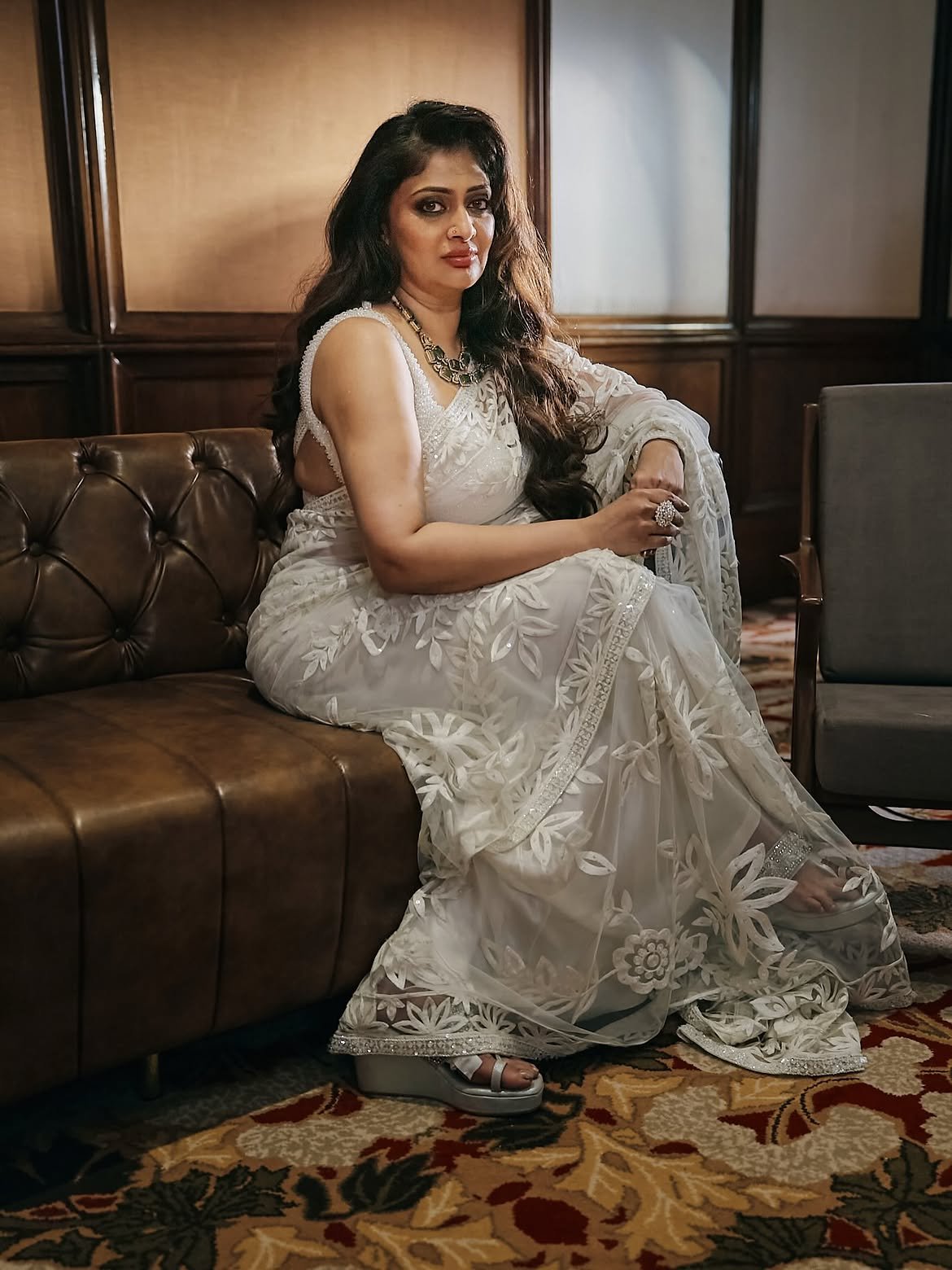 Geetu Mohandas directed movies such as Moothon and Toxic. (Credit: Instagram/@geetu_mohandas)
You served as an editor on Moothon (2019), directed by Geetu Mohandas, who recently helmed the Yash-starrer Toxic. How would you describe her as a director?
Story continues below this ad
Geetu Mohandas is very ambitious and creative. Working on Moothon was a great experience. She’s fearless in trying new approaches. During the production of Moothon, she was brave enough to explore ideas that others might shy away from. I haven’t seen Toxic, so I can’t comment on that film.
However, I know that executing Moothon was very challenging. She faced numerous difficulties, with many crew members leaving and new ones joining midway. During the pre-production and post-production, she put in an immense amount of hard work. She remained dedicated to the film through it all and took it to the Sundance Film Festival. I am confident she will come back even stronger. She’s not someone who’s afraid of anything.
How an IIT Bombay student went from TVF Rowdies to Panchayat and a Rs 69 cr fantasy film
By Sohail Khan · 2 Oct
Erling Haaland sues Norwegian Air over World Cup ad featuring his ponytail
By Sohail Khan · 2 Oct