Chinese Warships Are Cruising Too Close for Comfort Off Japan’s Shores
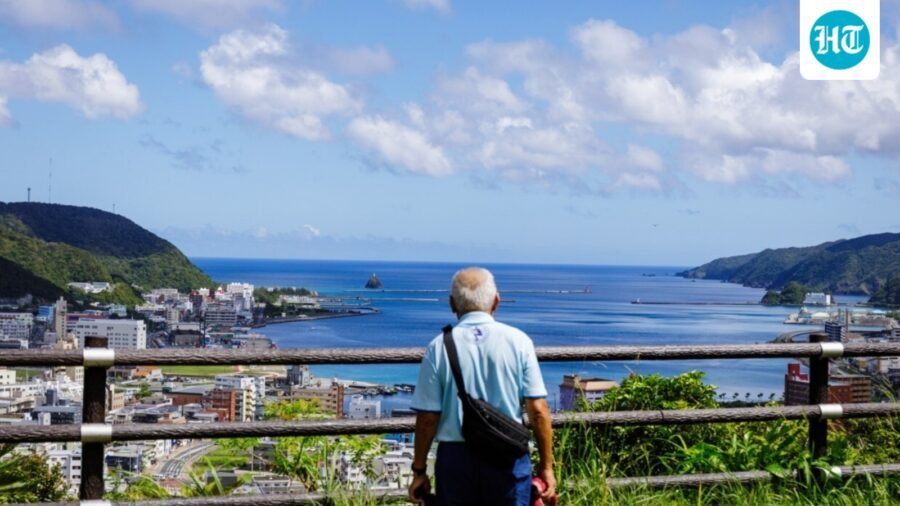
“It’s a provocation for sure” as Japan faces its most severe security environment since World War II.
Published on: Sep 3, 2026, 17:42:20 IST
Prefer HTon Google
Share via
Copy link
SETOUCHI, Japan—The Chinese warships that sail close to the Japanese island of Amami-Oshima make Naruhito Kamada nervous.
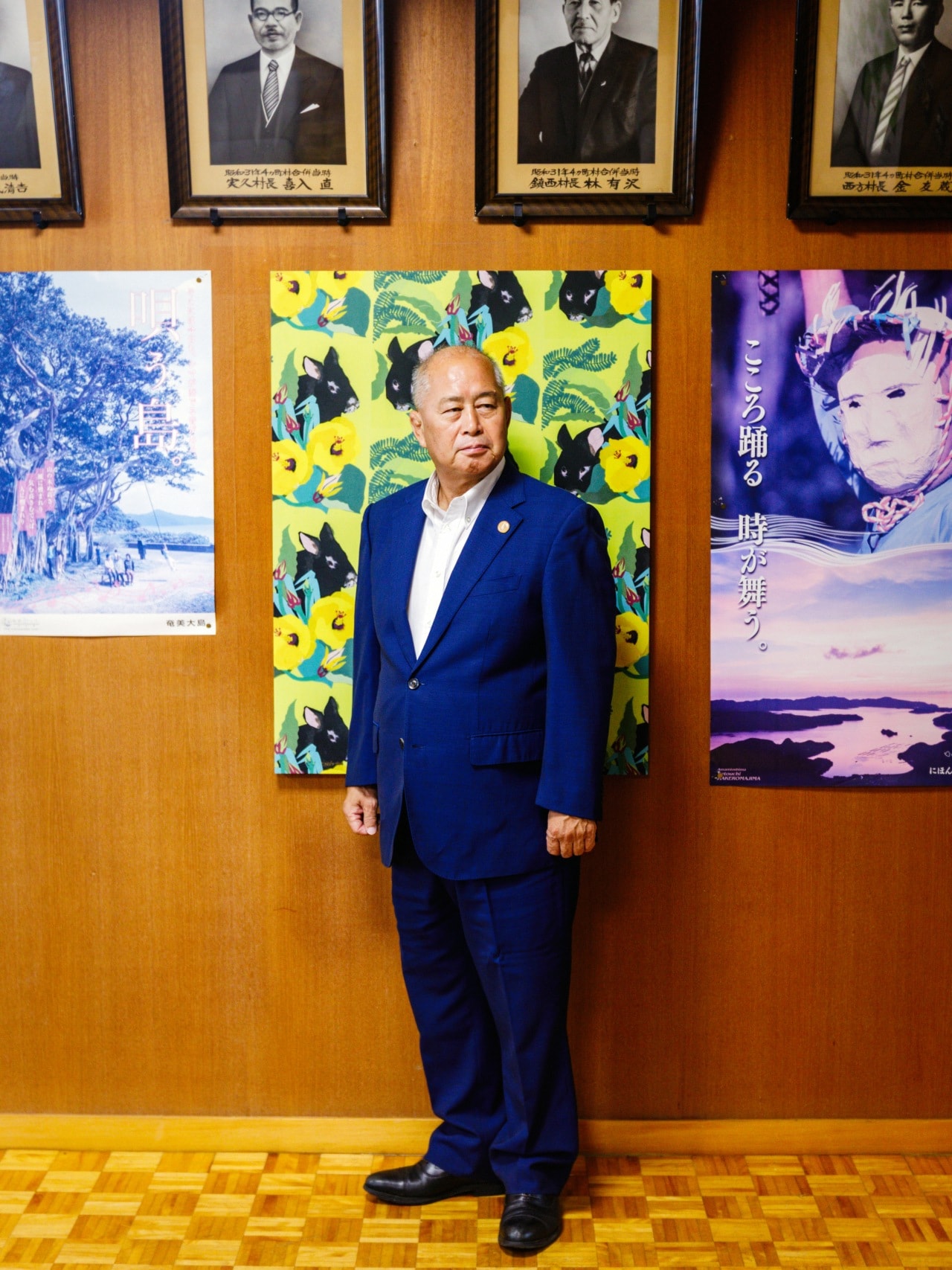
A stocky former sumo wrestler, the mayor of this small city here worries there might be a collision one day in the narrow channel that connects the East China Sea with the Pacific Ocean.
“I feel a sense of crisis,” Kamada said in an interview, his office a few hundred yards from the docks where fishing boats and whale-watching expeditions put out to sea.
Japanese surveillance has recorded Chinese destroyers passing through the strait near Amami-Oshima at least 10 times this year. That follows zero such transits in 2025 and is on pace to exceed the 15 recorded in 2024.
“It’s a provocation for sure,” said Takuya Matsuda, an international security scholar at Aoyama Gakuin University in Tokyo.
Japan is facing what officials describe as the most severe security environment since World War II.
China is flexing its growing military might, pressing its maritime claims across eastern Asia and pushing deeper into the Western Pacific, where the U.S. has held sway for years.
Deepening alliances among Japan’s near neighbors—China, North Korea and Russia—have raised questions about the nation’s security, as well as the security of vital sea lanes that connect its economy to the U.S. and beyond.
In recent years, North Korea has increased its focus on shorter-range missiles designed to threaten neighboring Japan and South Korea. That weaponry includes tactical nukes. Japanese officials said the Russian military has expanded its movements in the sea and air around Japan—including by performing live missile drills near the southern Kuril Islands, which are claimed by both Russia and Japan.
At the same time, the countries have stepped up rhetoric disparaging Japan’s militaristic past, saying that the country’s efforts to strengthen its defenses are similar to its World War II aggression.
Japan’s U.S. alliance, meanwhile, has come under pressure. President Trump has railed against those he perceives as freeloading off the U.S. security umbrella, most recently criticizing countries including Japan for failing to send warships to help the U.S. reopen the Strait of Hormuz. He has sown doubts in Asian capitals over his willingness to come to their aid, questioning whether America should defend Taiwan. Trump has downsized planned U.S. drills with South Korea’s military, and redeployed the Japan-based USS George Washington to the Middle East.
Still, the U.S. demonstrated in a giant international maritime drill in the Pacific this summer that it is working closely with Asian allies on military planning, with another three-way exercise between the U.S., South Korea and Japan planned for this month. It has also expanded its military presence in the Philippines, as part of Washington’s strategy to scatter U.S. forces across the Pacific.
The worsening security backdrop is hastening a Japanese defense buildup championed by Prime Minister Sanae Takaichi. She has doubled Japan’s defense budget to 2% of gross domestic product and loosened the shackles of a postwar commitment to pacifism that prevented Japan from selling arms abroad or maintaining a clandestine intelligence agency.


Defense planners are also recasting the country’s security priorities to prepare Japan for a prolonged defense in the event of any conflict, a lesson absorbed from the drawn-out war in Ukraine.
On Monday, the Japanese defense ministry asked the government for a record $56 billion to finance spending on missiles, drones and other priorities over the next fiscal year, citing the need to boost deterrence and the ability to withstand a protracted conflict.
A spokesperson for China’s Ministry of Foreign Affairs said the Chinese military has always complied with international law and international practice. “We urge the Japanese side to stop seeking any excuses for military buildup, earnestly learn lessons from history, reflect deeply on itself, and refrain from going further down the wrong path,” the spokesperson said.
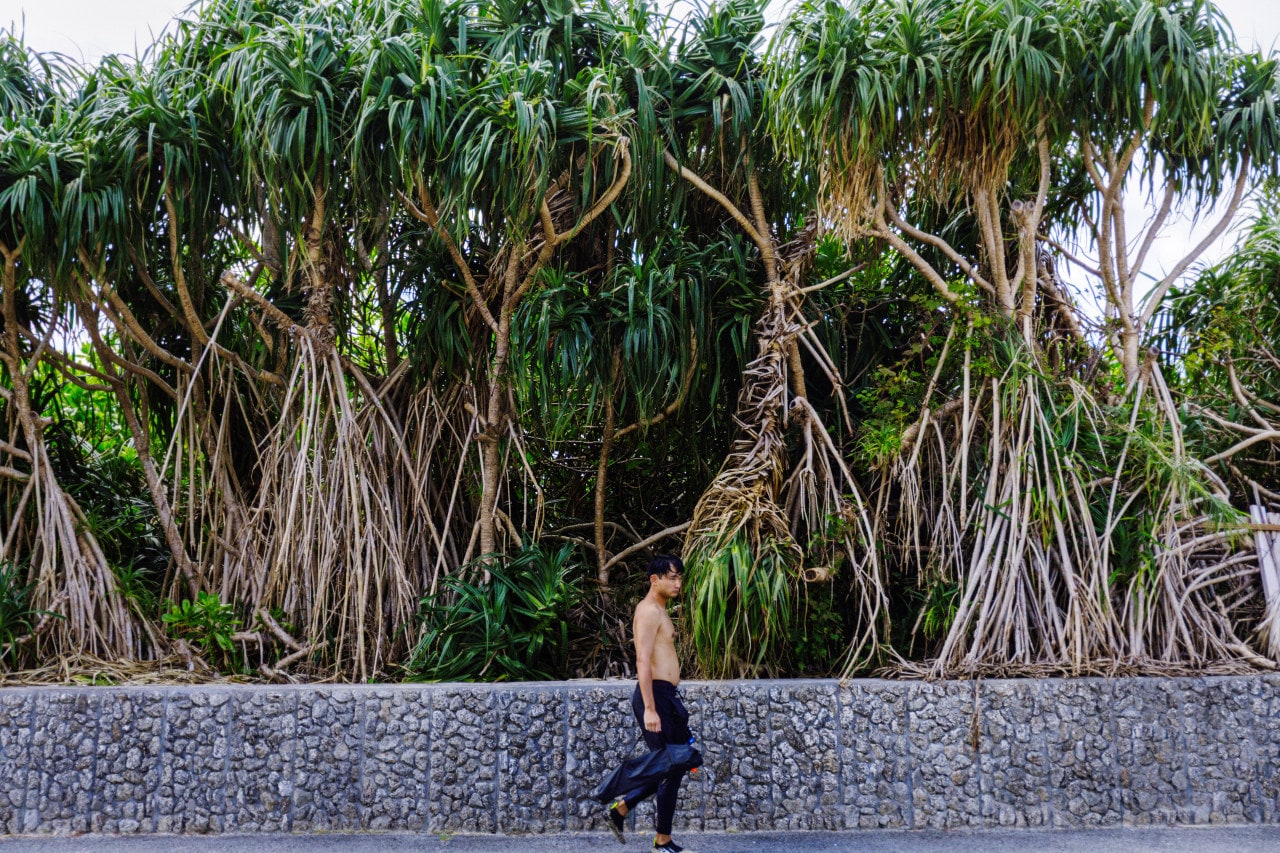
Mangroves and military ruins
The urgency is felt in places such as Amami-Oshima. Kamada, the mayor of Setouchi, said he would like to see a bigger military presence on the island to deter the Chinese and is working with other local officials on an evacuation plan for the island’s 60,000 inhabitants, just in case they need one. “It’s necessary that we start thinking about this,” Kamada said.
These days, hikers flock to the island’s mangrove forests and divers to its coral reefs, teeming with turtles and pufferfish. Farmers grow passion fruit, pomegranates and tangerines, and islanders relish a fiery shochu liquor made with brown sugar.
But the small island—just 275 square miles—has played a strategic role in Japan’s defense before. Its landscape is dotted with ruins of 19th-century fortresses and munitions dumps, from a time when Japan was waging war on China and Russia.
On an adjacent island facing Setouchi are small disused bases that launched shinyo suicide motorboat attacks on Allied forces in World War II.
The U.S. occupied Amami-Oshima after the war, returning it to Japanese control in 1953.
Residents of Amami-Oshima carry a strain of pacifism rooted in that painful wartime legacy, in which islanders felt they were abandoned to their fate by fanatical generals in distant Tokyo. Similar feelings are strong on other islands of Japan’s southwest, such as Okinawa, Ishigaki and Yonaguni.
“Military expansion inevitably leads to an arms race,” said Masayuki Seki, a retired electrical engineer who worked for the local government in Amami City for 30 years.
Seki, who often carries with him a pocket-size copy of Japan’s pacifist constitution, is opposed to the presence of Japan’s Self-Defense Forces on Amami-Oshima, which was declared a World Heritage site in 2021 for its natural beauty and unique wildlife.
The army has two bases on the island with a total of about 600 troops, including a missile unit to defend against ships and aircraft.


Japan’s navy, the Maritime Self-Defense Force, has a base, too, which is currently being rebuilt and expanded to handle bigger military vessels and serve as a logistics hub for supplying outlying islands.
“The people on this island have been living in peace for hundreds of years,” Seki said. The growing military presence means that in the event of conflict, “Amami could become a target.”
Other islanders said they felt reassured by the defense forces’ presence.
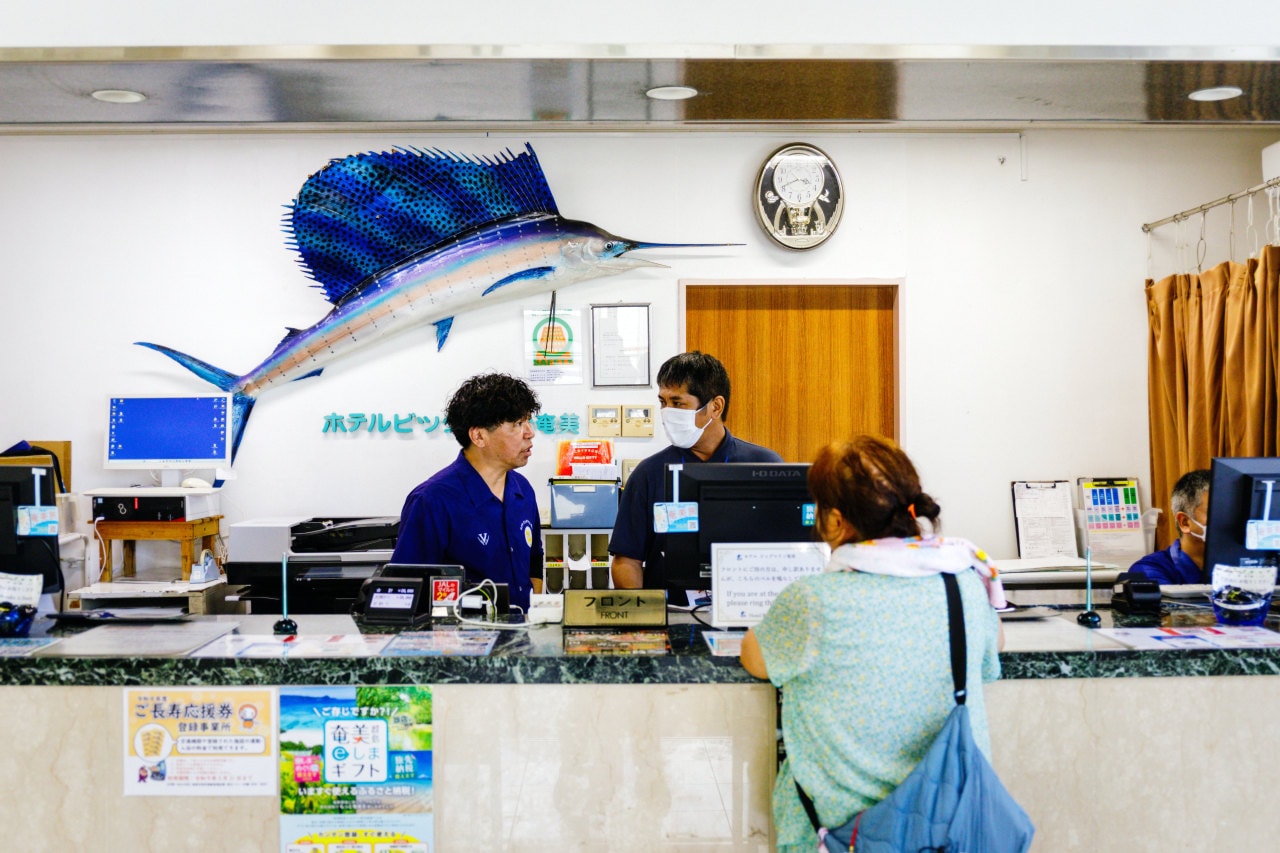
“If there is a Taiwan contingency, Amami would inevitably get caught up in it,” said Keiichiro Tabata, who runs Hotel Bigmarine Amami, a family hotel in Amami City that started 30 years ago as a shop selling fishing gear. He said the bases ease local anxieties.
And despite friction with China, Tabata said he’s still happy to welcome Chinese tourists, who have been frequent visitors to his hotel over the years.
That is provided they don’t try to steal the island’s prized fauna. Last year, three Chinese nationals who had stayed at his hotel were fined and deported after illegally harvesting protected crabs native to Amami-Oshima. Staff at Tabata’s hotel heard scratching in the visitors’ suitcases. Police found more than 5,000 live crabs inside. The crabs’ vivid colors mean they can fetch a high price—the equivalent of $125 for a large one—from collectors and pet stores.
Defense ‘vacuum’
China has been using the narrow strait between Amami-Oshima and the rocky Japanese outcrop of Yokoate in an effort to learn about an area where it might one day face combat, Japanese naval experts say.
A span of international waters runs through the strait but perilous shallows mean the navigable channel is a winding route just 7 miles wide. That makes it riskier than the much wider gaps connecting the East China Sea and the Pacific elsewhere along the 1,900-mile Japanese archipelago. The Miyako Strait to the south, for instance, is more than 150 miles across.
Commercial fleets and tankers tend to avoid the Amami-Oshima strait. China’s use of it and other channels is seen as an effort to understand Japan’s defenses and the topography of the seas and ocean floor around the so-called First Island Chain, a string of islands the U.S. and China consider to be a barrier to Chinese naval expansion.
Japanese defense planners are also looking east, to the country’s Pacific side, where a jumble of tiny Japanese islands and outcrops lie more or less undefended.
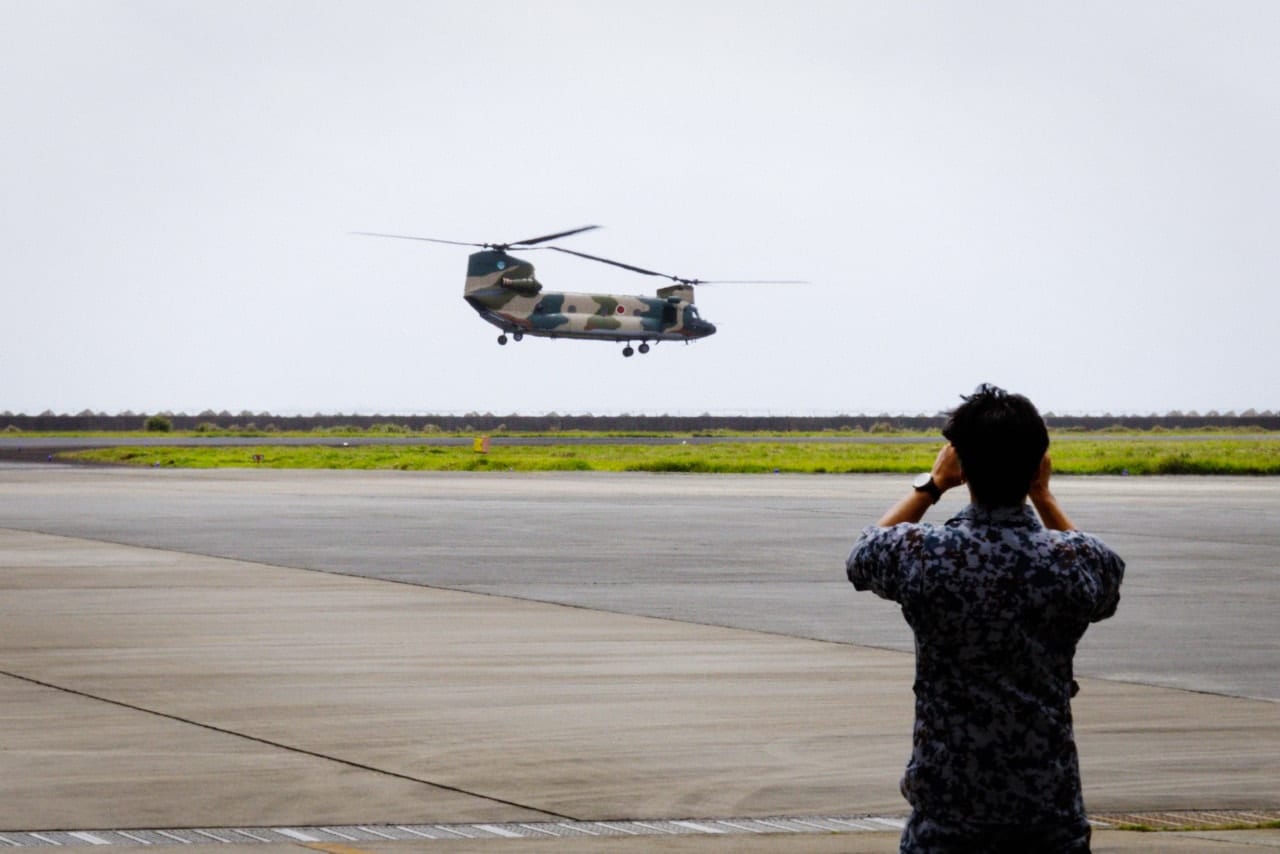
“At present, it cannot necessarily be said that our capabilities are sufficient,” said Defense Minister Shinjiro Koizumi in an April visit to Iwoto, an island most Americans know as Iwo Jima. “Large swaths of the Pacific side are effectively a vacuum in our defenses.”
Japan announced plans to put military radar on the remote island of Kitadaitojima, to the southeast of Amami-Oshima, to better monitor naval activity.
Officials in Tokyo are also working on plans to create stockpiles of energy, critical minerals, ammunition, food and medicines to show Japan is prepared to dig in if the region tips into crisis—a lesson learned from the extended fighting in Ukraine. Japan’s dependence on imported energy from the Middle East has also been made plain by the closure of the Strait of Hormuz and the ongoing conflict in Iran.
“We are trying to be ready for a prolonged war,” a senior government official said. Before Ukraine, “we didn’t think about it.”
But Tomohisa Takei, a retired admiral in Japan’s navy who is now a senior fellow at the Sasakawa Peace Foundation in Tokyo, cited the weakness of Japan’s defense-industrial base and other thorny problems, including persistent recruitment difficulties for the military in Japan’s aging society, saying: “Japan is not ready to fight a protracted war.”


Charges of militarism
Beijing—and, increasingly, Moscow and Pyongyang—has characterized Japan’s defense buildup as a rekindling of the militarism that led to Imperial Japan’s brutal march across Asia and its defeat in World War II.
China was angered by Prime Minister Takaichi’s remark late last year that Japan could get dragged into any conflict over Taiwan.
In response, Beijing throttled tourist flights to Japan from China and squeezed Japanese firms’ access to Chinese rare earths, critical components in manufacturing. China also stepped up naval and coast guard activity around disputed nearby islands, known as the Senkakus in Japanese and Diaoyu in Chinese, and portrayed Takaichi in Imperial Japanese uniform in state propaganda.
Russia took a similar position, with a spokesman from the foreign ministry saying “the current remilitarization course runs counter to the Japanese people’s interests.”
He spoke just prior to Russian President Vladimir Putin’s first official visit to the southern Kuril Islands, which were seized by Russia from Japan at the close of World War II and which Japan still claims.
North Korean leader Kim Jong Un’s sister, Kim Yo Jong, meanwhile, has accused Washington of being behind Tokyo’s “dangerous military moves.”
Koizumi, Japan’s defense minister, has expressed bafflement at the charge of militarism. “Nothing could be further from the truth,” he told a recent gathering of security officials in Singapore. He said China is the one with strategic bombers and nuclear weapons, not Japan, saying China has been outspending Japan and other countries on its military for years.
Tokyo hopes that by beefing up its capabilities—in areas such as missile defense, naval power and drones—it can strengthen U.S. commitments to the region’s defense, Japanese officials say.
In Europe, the presence of two nuclear-armed states, France and the U.K., gives the region a greater shot at strategic autonomy from the U.S., which has dismayed the region with Trump’s designs on Greenland and criticism of NATO.
But in Asia, officials see no alternative to sheltering under the U.S. nuclear umbrella and relying on U.S. power for their security, even if they are uneasy about Trump’s apparent ambivalence about defending Asia.
Hiroshi Ota, a former missile-unit commander who now leads trekking tours on Amami-Oshima, wishes people in Japan would be more aware of the security risks the country faces.
“Surrounded by such countries, Japan is extremely vulnerable” he said, referring to China, Russia and North Korea. “We must realize that without the U.S. military and the United States’ backing, Japan cannot survive.”
Write to Jason Douglas at jason.douglas@wsj.com and Junko Fukutome at junko.fukutome@wsj.com
See Less