Border tensions in Arunachal, economic issues set to dominate Modi-Xi bilateral

Prime Minister Narendra Modi will meet Chinese President Xi Jinping on Saturday (September 12, 2026), with a view to improving trade and people-to-people relations, while border tensions continue to play out in the background. Although Mr. Xi has visited India on two other occasions, to Goa for BRICS in 2016 and Mamallapuram for a high-level retreat, this will be his first visit to Delhi since 2014, and many of the concerns from that visit still remain. Neither leader has made a bilateral visit since 2020, however. As a result, experts say that while it is too early to declare an India-China “reset”, they hope the third meeting between the two leaders in three years will yield more open conversations on resolving differences.
“Episodic summitry between India and China must move towards a steady and sustained process of stabilisation both on the military/political front and from the angle of economic relations,” former Foreign Secretary and Ambassador to China and the United States Nirupama Menon Rao told .
The main concern for New Delhi is the continuing tensions at the Line of Actual Control, despite the disengagement from “all friction points” by the militaries, announced in October 2024. Since then, the two sides have come to agreements on patrolling arrangements in nearly all sectors of the confrontation as well as keeping buffer zones in some areas. However, while the Western Sector, where clashes at Pangong Tso lake and Galwan had sparked off the last standoff in 2020, the situation in the Eastern Sector in Arunachal Pradesh is more recently in focus. According to local reports as well as a number of government, military and security officials who spoke to , Indian Army and PLA forces remain at forward positions at the LAC in Taksing- with the PLA forces pitching tents at high positions, while Indian forces have mobilised more patrolling forces to the area after a brief confrontation in July.
Officials from the Ministry of External Affairs (MEA) did not confirm whether India would raise the immediate situation during talks, but both sides have been meeting at increasingly higher levels in order to resolve the situation. Last week, they held two Corps Commander-level meeting in the Eastern Sector. This came after NSA Ajit Doval’s visit to Beijing and Special Representatives (SR) talks with Chinese Foreign Minister Wang Yi, where they agreed to increase border personnel meeting points (BPM) from the present five points. This was a significant expansion of the mechanism given that Border commanders have thus far met in Eastern Ladakh at the Chushul-Moldo border meeting point and these were last held after the deadly June 2020 clash at Galwan.
The two leaders are however expected to take stock of the SR talks in terms of the boundary resolution process now underway, to delimit, delineate and demarcate the Line of Actual Control, where at present they don’t have an agreed common definition. Another issue with increased salience is transboundary rivers — after the flash floods caused by glacial collapse on the China-Nepal border last month that left thousands death, disaster management experts have called for more information sharing, and greater scrutiny of dams and river water management upstream.
Trade, export controls and investment issues will also be high on the agenda.
Since 2014, India and China have doubled bilateral trade, from $70 billion to about $150 billion last year. However India’s trade deficit with China has trebled, from $38 billion to $113 billion in the same period. In addition, China’s recent on-again, off-again export bans on critical minerals and heavy infrastructure equipment. Despite India’s decision to ease security restrictions on Chinese Foreign Direct Investment (FDI) that were introduced in 2020, Beijing has been raising what it sees as discriminatory treatment of its businesses in India.
After India’s Serious Frauds Investigation Office recommended an investigation against Chinese telecom major Xiaomi last week, China’s Foreign Ministry spokesperson Guo Jiakun said that China hoped India would provide a “fair, just, transparent and non-discriminatory business environment” for companies from all countries.
“A strategic dialogue would be welcome, provided it addresses reciprocity: on India’s trade imbalance, market access for Indian companies, investment and visa restrictions, and transboundary river data. The meeting cannot be sold as a reset, but it could provide a framework for competitive coexistence that manages differences candidly with a steadying hand while increasing the tally of convergent interests,” Ms. Menon Rao said.
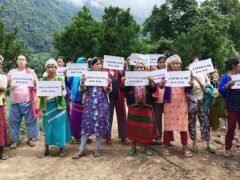
Anti-dam protests: Withdraw forces from Siang belt, demands Arunachal youth body
By Sohail Khan · 6 Oct
YSRCP leader accuses government of misleading BCs over 34% quota
By Sohail Khan · 6 Oct