Atif Aslam says Coke Studio Pakistan has ‘magic’ that Indian version lacks, regrets singing ‘Tere Liye’
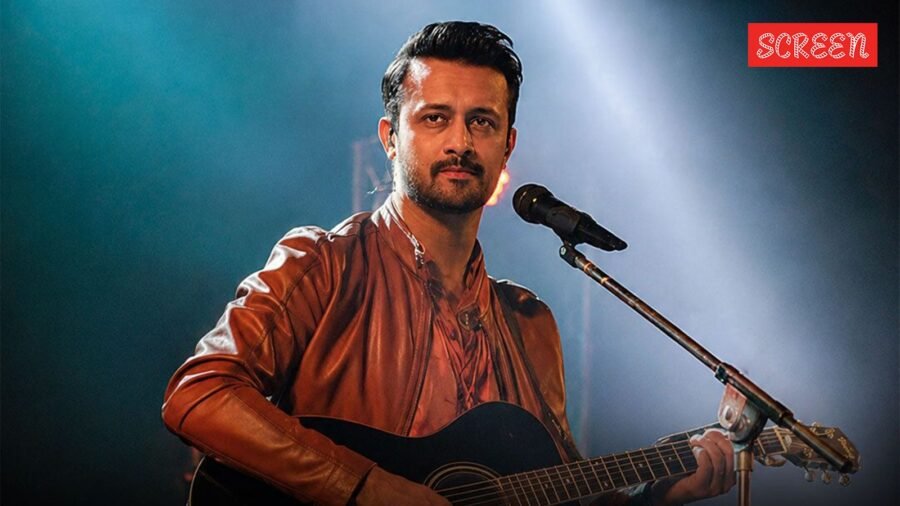
Pakistani singer Atif Aslam is making headlines after he opened up about the creative differences between Coke Studio Pakistan and Coke Studio Bharat, offering his perspective on why he feels the Pakistani edition has a distinct edge. According to Atif, the key difference comes down to the musical roots and creative freedom given to artists.
Speaking about the two versions, Atif said that while the compositions on both sides are good, he feels the deeper roots of the music are missing from the Indian version.
“Jaadu. Compositions jo hain, wo dono taraf ki achhi hain, lekin jo hamara music hai, uski jo roots hain, I think wo missing hain (Magic. The compositions on both sides are good, but I think what’s missing is the roots of our music),” he shared in an interview with .
Story continues below this ad
He said he believes Coke Studio Bharat places greater emphasis on commercial appeal, whereas the Pakistani edition prioritises original music and the distinct styles of individual artists. Atif also explained that the Pakistani format allows several people to work together on a composition while still giving singers room to bring their individual style to the performance.
Atif Aslam reveals the song he wishes someone else had sung
During the same conversation, Atif was also asked whether there was a song he had performed but secretly wished another singer had recorded. He immediately named ‘Tere Liye’, his 2007 song from Prince, which he performed alongside Shreya Ghoshal and which featured Vivek Oberoi.
Atif candidly admitted that he wished Tere Liye had been sung by someone else, making the revelation one of the more unexpected moments of the conversation.
Sachin Gupta hits back at Atif Aslam over ‘Tere Liye’ remark
Composer Sachin Gupta has responded to Atif Aslam’s comments about Tere Liye from the 2010 film Prince. After Atif had said he wished the song had been sung by someone else, Sachin Gupta reacted by reminding Atif that it was that very song that made him popular in India.
Story continues below this ad
Tere Liye, composed by Gupta and sung by Atif Aslam and Shreya Ghoshal, was part of the Prince soundtrack and remains one of the better-known songs associated with both the composer’s and singer’s Bollywood careers.
Sachin Gupta hits back at Atif Aslam who was demeaning his song Tere Liye from Prince movie.
It shows these Pakistanis are salty about not getting work in India. pic.twitter.com/os5PklYwct— Abhishek (@vicharabhio) September 2, 2026
Sachin Gupta responded by asking Atif Aslam, “Were you forced to come to the studio and sing the song?” He further said that if Atif was specifically targeting ‘Tere Liye’, the audience should also know how excited he was for the song and used to say, “Wow, let’s do this, Sachin.”
Atif Aslam on whether AI can replace singers
The singer also shared his view on the use of artificial intelligence (AI) and its impact on the music industry. When asked whether AI could eventually replace singers, Atif gave a straightforward response, saying that singing itself could be replaced. “Of course it is replaceable,” he said.
The singer also appeared to agree with the host’s suggestion that AI tools such as ChatGPT could potentially be used to help write song lyrics.
Atif Aslam’s India connection
Pakistani singer Atif Aslam has enjoyed a strong connection with Indian listeners since his early days with Jal and later through several popular Bollywood songs, including Woh Lamhe, Pehli Nazar Mein, Tu Jaane Na and Dil Diyan Gallan. Atif Aslam’s social media account has been restricted in India following a legal request amid escalating tensions between India and Pakistan.
Atif aslam ❤️
pic.twitter.com/aGKVXWmRAL— Naeem (@self_less1) August 29, 2026
Following heightened political tensions and terror attacks, including the 2016 Uri attack and 2019 Pulwama attack, Pakistani artists and bands faced official restrictions in India, affecting their ability to perform, release music and work in the Indian entertainment industry.

Rihanna, Jennifer Lawrence and a Paris runway full of bras: Dior comes undone in mist
By Sohail Khan · 30 Sep

Ayushmann Khurrana: Stardom used to be an exclusive club, but not anymore
By Sohail Khan · 29 Sep