Around Town: Inside Nepali Tales, a cloud kitchen in Thane that failed twice before Prajakta Koli called it ‘the best momos in India’
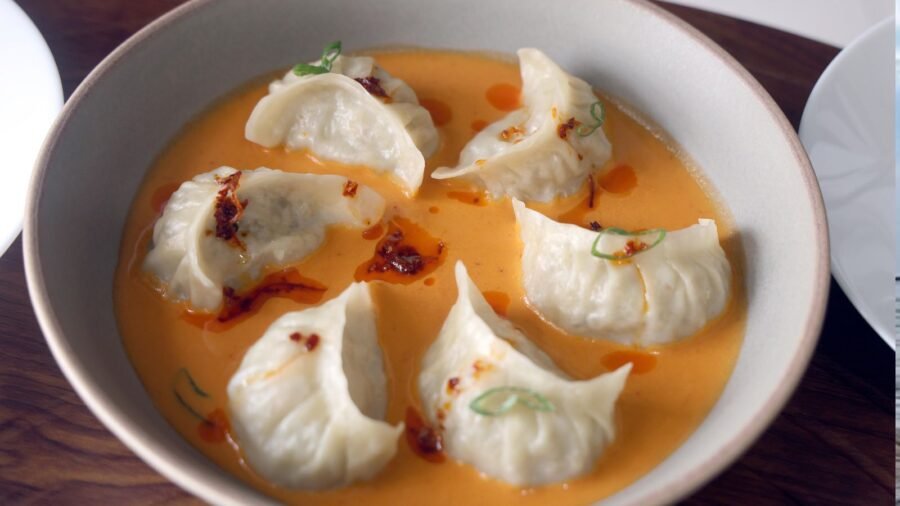
If you have been on Instagram in the past week, chances are high that you have stumbled upon a reel where content creator-actor Prajakta Koli (@mostlysane) spoke about a brand in Thane that, according to her, made “the best momos I have eaten in India.”
Koli was talking about Nepali Tales, a barely nine-month-old cloud kitchen in Kasarvadavali, Thane, serving a handful of momo variants made fresh from scratch every day in a home kitchen, delivered via porter service, and strictly available on pre-order.
Coming from Koli, who is married to a Nepali, this was a big compliment.
“It has flooded our Instagram DMs and WhatsApp,” said the duo behind it, Ashika, 27, and Dipesh Pradhan, 32.
The couple hails from Jaigaon, a town in West Bengal on the Indo-Bhutan border. Ashika, who always wanted to be a chef and has a diploma from Bangalore’s Whitecaps International School of Pastry, is the heart of this venture; Dipesh, who manages to run it alongside a 9-to-5 corporate job, and has his roots in Nepal, is its backbone.
The duo begins work at 6 am — sourcing vegetables, making a fresh batch of veg (onion, cabbage and soya) and non-veg stuffing (chicken and onion), two kinds of chutney (peanut and spicy red), a thick jhol paste that’s diluted and heated as needed, and kneading dough, among other prep. To get it consistently right, they measure everything: 7 gm of dough per momo, two forkfuls of stuffing, and so on. Their now-viral chilli oil is prepared fortnightly in a big batch — they don’t sell it separately for now, though the demand has them considering it if they can find the resources to manage both.
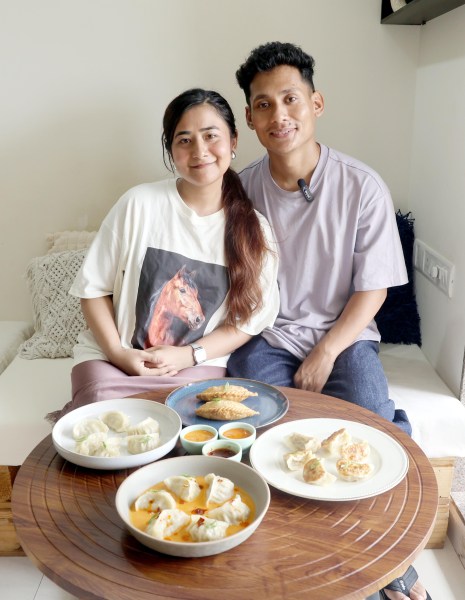 Ashika and Dipesh Pradhan co-founded Nepali Tales in January 2026 as a cloud kitchen.
Nepali Tales offers five kinds of veg momos and four non-veg — steamed, jhol (with a mildly spiced peanut-sesame gravy), shaphaley (deep-fried, gujiya-shaped, with pan-fried stuffing), kothey (pan-seared at the base), in vegetarian and chicken variants, plus a simple fried veg momo.
Story continues below this ad
They take orders a day in advance, with a cut-off of 8 am for next-day delivery. They’re now doing 25–30 orders a day, working out to roughly 70–80 plates a day, up from about 50 just a few weeks ago, and close to the maximum this home kitchen can handle. It takes their whole day, with help from Ashika’s sister, who moved to the city for her graduation and pitches in from 2 pm to 9 pm. After that, they wrap up and eat their only meal of the day — usually dal-rice and sabzi, or datshi, a quick Bhutanese stew.
They failed plenty before finding success
Please note: This is anything but an overnight success. Ashika has been cooking since the age of seven or eight. She moved into a PG in class 2 — the commute between her village and school meant crossing several rivers, an impossible task during monsoon. The PG owner insisted she cook, and by class 7 she had fallen in love with it. She wanted to attend culinary school, but her father wasn’t convinced, and the family couldn’t afford it either, so she pursued her graduation and an interior designing course in Kolkata instead. During the lockdown, she moved back to Jaigaon, where she met Dipesh — who chased her on Instagram until she agreed to reply — and who, it turned out, loved cooking too.
Once restrictions eased, she convinced her father to let her do a pastry diploma in Bangalore. Unknown to their families, Dipesh moved with her, cooking all her meals while she studied, and later while she did a two-month patisserie internship that she eventually quit — she’d wanted to work on baking and fondant, but kept getting put on customer service instead. Away from home, the couple missed momos, a dish central to how their families bond, everyone gathering in the kitchen to make them together, and disliked what they found in the city, so they began making their own.
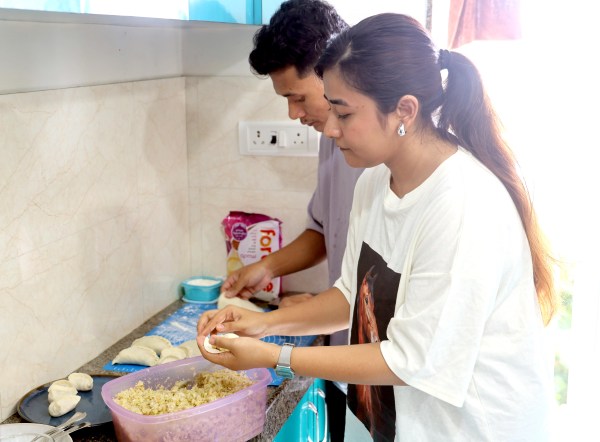 Ashika, who always wanted to be a chef and has a diploma from Bangalore’s Whitecaps International School of Pastry, is the heart of this venture; Dipesh, who manages to run it alongside a 9-to-5 corporate job, and has his roots in Nepal, is its backbone.
In 2022, they started a cloud kitchen called Momo Ghar. Buoyed by the response, they took a loan of Rs 3 lakh and rented a small shop in Bangalore’s Banashankari. “But we failed miserably,” said Ashika. The best decision they made after three months, Dipesh added, was shutting shop and taking a trip with what money was left — a week in Gokarna to properly switch off. When they returned, they started an Instagram page, Cook with Ashi and Dipesh, toward the end of 2022, which took off, followed by a YouTube channel in December 2023.
Story continues below this ad
Over the years, the two have also tried a chicken pickle business, a clothing line, a supper club that put their momos centre stage, and MasterChef India’s couple edition last year, where they were eliminated after three rounds. “Ashika didn’t get out of bed for two days,” Dipesh recalled.
That’s when they gave Momo Ghar another shot, rebranded as Nepali Tales. Its logo is built around kancha-kanchi, meaning “the two of us.” In January, they sold just 3-4 plates a day, often over-preparing and wasting the surplus rather than serving leftovers. It picked up steadily through the year, and then Koli’s shoutout sent things into overdrive. They are now turning away customers daily and looking, so far unsuccessfully, for help to expand — a situation they clearly hate being in. The duo is now scouting a shop in Hiranandani Estate, Thane, for a dedicated outlet serving authentic Nepali-style momos — no fusion, stuffing continued to be kept free of spices, with flavour built through chutneys and chilli oil instead. Eventually, they hope to open a full restaurant built around Nepali cuisine, including staples like sel roti.