Architect and designer Kulapat Yantrasast: ‘Objects from all over India (at Yuge Yugeen museum), we need to ensure they sing’
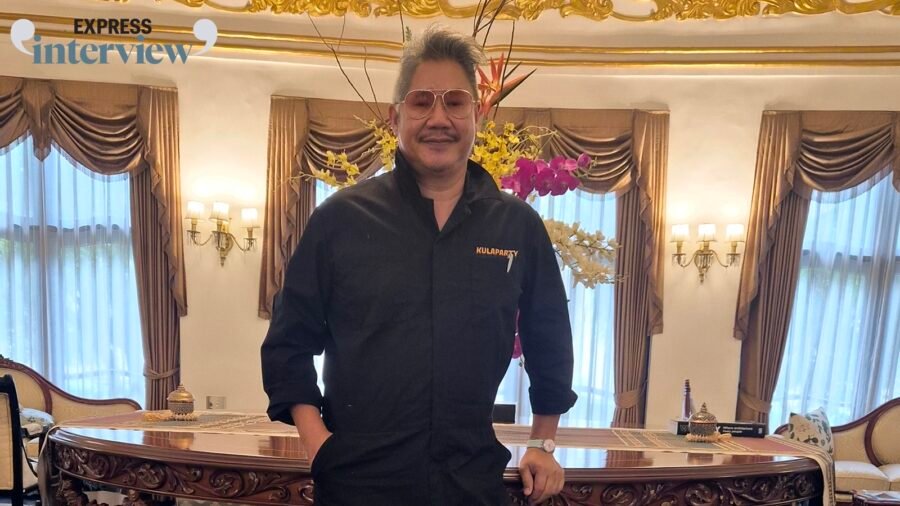
After leading the renovation of New York’s MET Museum in 2025, and a museographic overhaul at the Louvre in Paris, architect and designer Kulapat Yantrasast is spearheading the transformation of the iconic North Block and South Block buildings in the heart of New Delhi into the Yuge Yugeen Bharat Museum, billed to be the largest museum in the world.
The Thailand-born and Los Angeles-based Yantrasast, who is in his late 50s, speaks about marrying the grandness of the buildings with the largeness of India, to invoke not just the past but to inspire generations to come.
In an exclusive interview with during his recent trip to New Delhi, Yantrasast, who heads the consortium selected by the Ministry of Culture to design the museum after a public tender last year, also speaks about the role of museums in the age of the Internet, and about involving artistes from all parts of the country to make every visitor feel at home. Excerpts:
When you first got the project, what did you think about what needs to be done and how you would be able to do it?
The most important part to me was making it (the museum) feel accessible and welcome. When you walk into the building, you see the rotunda, the motifs, the courtyard, and you are in awe of this grandness. So the grandness will stay, but on a human level, we want people to feel that there is something that engages them.
The Ministry of Culture is bringing artisans and craftsmen from all over India to work on the interiors of the building — be it the furniture, woodwork, stone, metal — as much as possible. We want all the voices of artisans from around India to be in the building. Even if you come from Tamil Nadu, you find something that reminds you of home. We are trying to make sure all of India is represented and involved in the project.
What do you think of the role of museums in today’s Internet age? Can they just be there to offer historical knowledge?
Story continues below this ad
With projects like this all over the world — the Louvre, the MET, the Getty in Los Angeles, and many museums in Saudi – what is interesting is how technology is now very important.
Museums used to be a place of information, right? Like you go to the National Museum here, or other Indian museums, you go to learn, you go to get information about objects and about your own culture. But now, with technology, we can get so much information at home. You don’t have to leave home, you can actually learn so much about culture from a YouTube video. So I tell my clients all over the world… museums are no longer in the business of information. We are in the business of inspiration. You cannot get inspiration from a YouTube video.
What is the ‘inspiration’ you are hoping for Yuge Yugeen to provide?
The presence of art objects, storytelling, beauty, everything that a screen cannot give you, that’s what we are (looking at). So when we move in objects from all over India, we need to make sure the objects sing. Whether it’s textiles, costumes, adornments, architecture, very difficult stories about coins and currencies, or even languages – somehow we need to find a way to make this object really inspiring and sing. How we do that within a building is the fundamental task of this museum.
Story continues below this ad
You have been looking at collections at various museums across the country. How do you assess what to display?
Well, this is not my idea (alone), but also comes from the Ministry of Culture. We are not going to display the work by chronology or by region. We are going to exhibit the art objects based on crucial themes that are relevant to Indian civilization, especially the aspect that it (goes back) 5,000 years and that there are certain themes that continue, be it adornment or architecture, astrology, cosmology, which is about the sense of self in connection to the universe.
What are the challenges in creating a space which has to equally inspire foreigners who are not familiar with Indian culture, as well as the locals and, especially, the youngsters?
Younger people do not know enough of their own roots. Because, of course, we all want to look forward. But this is not looking backward per se, but understanding that you are part of an ongoing evolution from 5,000 years ago. Till today, everything, the food you are eating, the languages you are speaking, the clothes you are putting on, the psychology you are dealing with, the house, everything, really go back thousands of years. And it’s maybe the only civilization I know of that has been uninterrupted.
Story continues below this ad
I cannot imagine other such places in the world. We want to bring that eternal spirit of India. But this is not to celebrate the past alone, but use it as a kind of a launch-off point, because the advancement in technology and engineering today in India is rooted in mathematics, the way of thinking. So all of this just did not randomly happen. It is the cultural foundation that supports the success of India as a country today.
What were your first thoughts when you saw the North and South Blocks up close a year ago on getting the project?
It was a time capsule. I took so many photographs because the transformation is so inspirational when you think about the fact that the British built it. And then the Indian government, the bureaucrats have been using this for decades. You can see how it was converted into offices and so many floors and things like that.
And so we, in a way, clean it up and transform it into a museum. But the fact that it’s such a big part of Indian history, that many people will come to see the buildings because they have never seen the insides… it’s very important that the museum experience is also very architectural. We have beautiful frescoes and motifs that we will keep. We will keep the benches from before. There are many historic rooms in the building that we will keep as period rooms, to tell people the story of how the buildings were used.
Story continues below this ad
What are your views on the retrofitting of heritage buildings?
The Louvre used to be a palace as well, as well as the seat of government and ministers. It’s a very similar story, they (the ministries) keep moving out, and as they keep moving out, certain parts of the building become available to the Louvre to renovate. It took the Louvre hundreds of years to renovate into what it is today.
It’s very common for historic nations to have their national museums in historic buildings. I think it makes sense because you can build a whole big building, but then it’s too much about today rather than about the past.
If you want to talk about evolution, the continuity of culture, this is the right place. But then you also want to make sure that you are not just focused on the past. That is why, for this museum, we bring in amenities, and 21st-century museum technology.
CEC Gyanesh Kumar postpones 2-day Chhattisgarh visit
By Sohail Khan · 7 Oct
Rahul, Priyanka Gandhi detained after hours-long anti-CEC protest, released later
By Sohail Khan · 6 Oct
4.9 Magnitude earthquake hits Uttarakhand, tremors felt in Delhi-NCR
By Sohail Khan · 6 Oct