Action against 5 more madrasas in Uttarakhand as new education regime takes shape; tally reaches 20
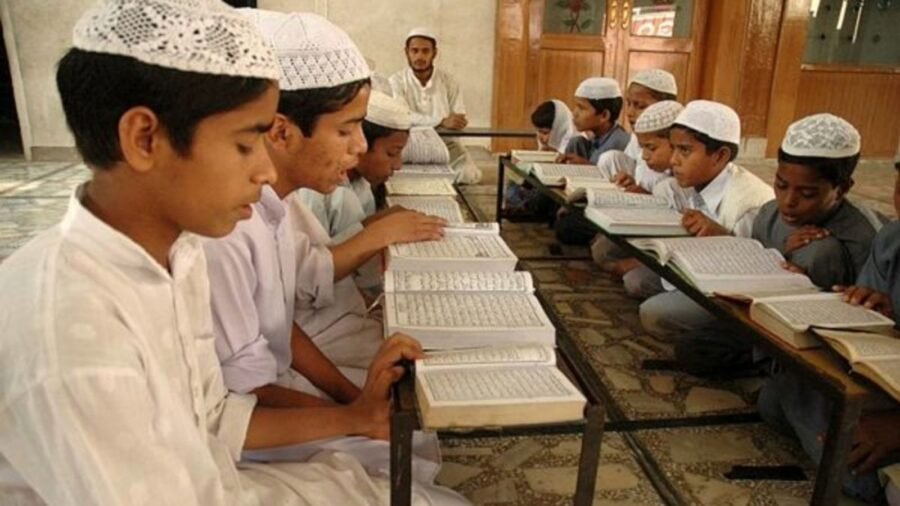
Nearly two months after Uttarakhand abolished its statutory Madrasa Board and replaced it with a new authority governing minority educational institutions, the state government said Saturday that action against unrecognised madrasas continues, with five more institutions in Dehradun and Haldwani sealed or shut down.
The latest action takes the number of madrasas shut down across the state to 20, the government said. Of these, 17 have been sealed, while the managements of three have submitted written confirmations that they have stopped operations.
“The state government’s action against madrasas not complying with prescribed recognition requirements and educational standards is continuing,” Minority Affairs Secretary Dr Parag Madhukar Dhakate said in a statement. “No educational institution in the state will be allowed to operate without complying with prescribed rules and recognition requirements,” Chief Minister Pushkar Singh Dhami said.
In Dehradun, action was taken against three madrasas. Madrasa Jamia-tus-Salam Al-Islamia in Azad Colony was sealed, while the managements of Madrasa Dar-e-Arqam in Azad Colony, Majra, and Madrasa Darul Uloom Rahimia submitted written undertakings saying they had stopped operating, the government said.
In Haldwani, two more madrasas — Madrasa Jamia Nooria Barkate Amina on Shani Bazaar Road in Gauja Jali North and an unrecognised madrasa in Indira Nagar, Banbhoolpura — were sealed after their managements failed to produce the required recognition documents, according to Haldwani City Magistrate A B Vajpayee.
The action comes against the backdrop of a broader overhaul of the state’s minority education system. In July, Uttarakhand became the first state in the country to abolish its statutory Madrasa Board, replacing it with the Uttarakhand State Authority for Minority Education (USAME), which is intended to regulate educational institutions run by all six notified minority communities — Muslims, Christians, Sikhs, Parsis, Jains and Buddhists.
The new system replaced the Uttarakhand Madrasa Education Board Act, 2016, and the Uttarakhand Non-Government Arabic and Persian Madrasa Recognition Rules, 2019. In their place are the Minority Education Act, 2025, and the Uttarakhand Minority Educational Institutions Recognition Rules, 2026.
Story continues below this ad
Before the change, the state had 452 registered madrasas recognised by the Madrasa Board. The new framework followed the government’s earlier crackdown on madrasas that had not sought recognition, during which more than 200 institutions were sealed, according to the state.
The move comes more than a year after the implementation of the Uniform Civil Code, which made Uttarakhand the first state to implement it.
The legal position on the regulation of minority educational institutions was also examined by the Supreme Court in 2024, when it overturned an Allahabad High Court ruling and upheld the constitutional validity of the Uttar Pradesh Board of Madarsa Education Act, 2004. The judgment, however, concerned Uttar Pradesh’s law and not Uttarakhand’s new minority education framework.
“The (UP) Madrasa Act regulates the standard of education in Madarsa as recognised by the Board for imparting Madarsa education … [and] is consistent with the positive obligation of the state to ensure that students studying in recognised Madrasas attain a level of competency which will allow them to effectively participate in society and earn a living,” the CJI said while reading out the verdict. “Article 21A (of the Constitution) and the Right to Education (RTE) Act have to be read consistently with the right of religious and linguistic minorities to establish and administer educational institutions of their choice.”
Story continues below this ad
The court said the right of religious minorities to establish and administer both religious and secular education is protected by Article 30.
“The Board and the state government have sufficient regulatory powers to prescribe and regulate standards of education for the Madrasas,” it said, adding that while madrasas do impart religious instruction, “their primary aim is education”.
At the same time, the court held that the right of minorities to administer educational institutions is not absolute, and that the state could impose regulations on minority institutions as a condition for grant of aid or recognition. “The constitutional scheme allows the state to strike a balance between the two objectives of … ensuring the standard of excellence of minority educational institutions, and … preserving the right of the minority to establish and administer its educational institutions.”


Four killed in blast at factory in Andhra Pradesh’s Sri City near Tirupati
By Sohail Khan · 3 Oct