A potential Trump-Xi-Putin summit is casting a shadow over BRICS
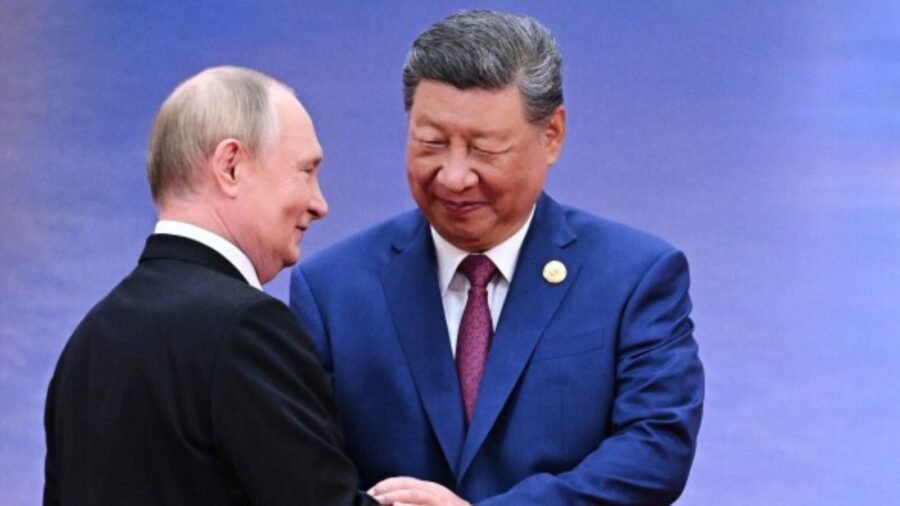
When its leaders meet in Delhi this week, BRICS will add more layers of cooperation, ranging from agriculture and health to digitalisation. While BRICS moves slowly, the larger political world around it is changing fast. Even as the forum seeks to counter American domination of the world, its principal driving forces, Russia and China, are exploring separate and joint accommodations with the United States.
International interest in the BRICS summit is less about the lengthy declaration it will produce. The last summit, in Rio de Janeiro, issued a declaration of 126 paragraphs but did not set the world on fire. In Delhi, the focus will be on the presence of leaders such as China’s Xi Jinping, Russia’s Vladimir Putin and Iran’s Masoud Pezeshkian.
Advertisement
The Indian media will focus on Prime Minister Narendra Modi’s bilateral meetings. Expect particular attention to his potential meeting with Xi, who is visiting India for the first time since 2019. The two leaders are expected to stabilise the boundary situation and reset economic relations.
BRICS may be the god of small things, but its problems with big issues are becoming harder. Its expansion has made it less coherent. The Iran war has opened a sharp divide between Tehran and Abu Dhabi, now fellow members of BRICS. Iran wants the grouping to condemn American and Israeli military action. The UAE, which has suffered Iranian attacks and disruption to commerce through the Strait of Hormuz, stresses sovereignty, the protection of civilian infrastructure and freedom of navigation. Their differences prevented the BRICS foreign ministers from issuing a consensual joint statement in Delhi in May.
Meanwhile, engagement among the US, China and Russia is entering a new phase and casting a shadow over BRICS. US President Donald Trump has long believed that good personal relations with Putin and Xi could reduce global strategic tensions and produce major political and economic deals.
Advertisement
That instinct has repeatedly encountered resistance from the American foreign-policy establishment, Congress and US allies. The Europeans worry that an accommodation with Moscow could be made at their expense. Asian allies fear that a bargain with Beijing could weaken American commitments to regional security. Trump has not yet transformed either relationship, but his preference for leader-driven diplomacy keeps the possibility of movement open.
Putin has reasons to explore a deal. Four-and-a-half years of war have not produced a decisive victory. The front remains costly and difficult to move. The latest shuttle diplomacy by American envoys between Moscow and Kyiv has reopened the diplomatic channel, but it is not clear whether the fundamental differences between Russia and Ukraine are narrowing. While supporting Trump’s new peace initiative, both Moscow and Kyiv are also preparing for escalation.
Unlike Putin, Xi approaches Washington from a stronger position. His diplomatic journey from the Shanghai Cooperation Organisation summit in Bishkek, through Cairo and Delhi, and then to the White House later this month will help present China simultaneously as the leader of the Global South and a co-equal manager of the international order.
At their second summit this year, Trump and Xi could emphasise an extension of the trade truce, additional Chinese purchases from the US and negotiations over technology restrictions. Yet their differences remain structural. Washington accuses China of relying on subsidised exports and industrial overcapacity. Beijing uses rare earths, market access and its control of important supply chains as leverage. Xi will continue to press Trump to reduce American support for Taiwan. Trump might be tempted to treat Asian security questions as part of a larger bargain with Xi.
Meanwhile, the Kremlin has confirmed that Putin and Xi discussed a possible trilateral meeting with Trump at the APEC summit in Shenzhen in November. For many, the idea of a “G3” will seem outlandish. But Trump has shown interest in it and explored the possibility of such a meeting last summer, during the 80th anniversary of the end of World War II.
A G3 global directorate is not imminent. Russia and China are closer than ever and share concerns about the US. But both also seek a reasonable relationship with Washington. For all their anti-Western rhetoric, both claim a place at the high table with the US.
Russia was once part of the G8, the group of Western industrial states, and engaged directly with NATO. China now sees itself as America’s peer. Both Russia and China lay claim to shaping the global order established after 1945. A Trump-Xi-Putin summit could mark the beginning of triangular global leadership as a successor to the Yalta System that produced the UN Security Council and the five-power concert.
For an Indian strategic community that jumps at the thought of a G-2, the idea of a G-3 will generate even greater political anxiety. Despite promoting BRICS and celebrating multipolarity in partnership with Moscow and Beijing, Delhi might find itself excluded from the new three-cornered table.
There are three answers to a potential G3 world for India. The first is internal reform and accelerated economic development.
Second, Delhi should stop confusing multipolarity with anti-American bloc politics. Russia and China use BRICS to expand their diplomatic options while preserving the freedom to negotiate with Washington. India must approach the emerging order with the same realism.
Third, India must intensify its bilateral and minilateral cooperation with the Anglosphere, Brazil, Europe, Japan, Korea, and other middle powers that have no enthusiasm for a G3 world. As India’s work in BRICS continues, its place in the changing global architecture will depend on how rapidly it builds national power and how deeply it develops partnerships beyond BRICS.
The writer is a contributing editor on international affairs for . He is also associated with the Motwani Jadeja Institute of American Studies at the Jindal Global University and the Council on Strategic and Defense Research

40 years ago, October 1, 1986: First-ever Asiad gold for Usha
By Sohail Khan · 1 Oct
India’s elderly women need better social security cover
By Sohail Khan · 1 Oct