31.35% of Mumbai electors to get notices for being unmapped or having anomalies
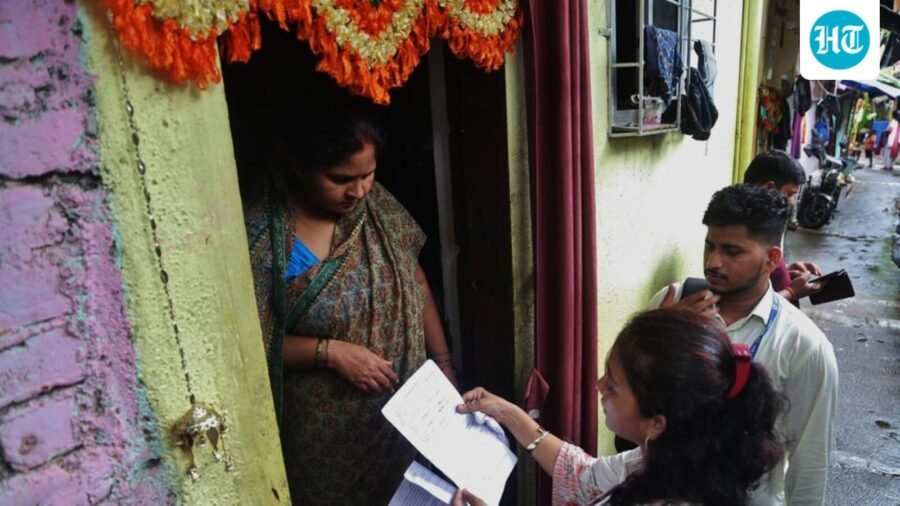
The draft electoral roll was released on August 31 after SIR in Maharashtra, and 20.68 million electors were dropped across the state
Updated on: Sep 4, 2026, 13:25:36 IST
Prefer HTon Google
Share via
Copy link
As many as 31.35%, or 2.12 million, of 6.78 million electors in Mumbai are expected to get notices as they were either unmapped or were found to have anomalies in their names, age, etc during the Special Intensive Revision (SIR). They face exclusion if they fail to submit the required documents.
The draft electoral roll was released on August 31 after SIR in Maharashtra, and 20.68 million electors, or 21.14%, were dropped across the state. In Mumbai, 34.75% of names were deleted.
Voters whose names are missing from the draft roll, those who require corrections, and others wanting to file objections have to do so by September 30 with supporting documents ahead of the publication of the final electoral roll on November 4.
Over 70 lakh voters permanently shifted
The state election office said 7.68 million voters were reported to have permanently shifted, 7.55 million were absent, 3.48 million were deceased, and 1.76 million were registered at more than one constituency. Another 223,000 refused to register despite being found at their addresses.
The Mumbai district electoral officer said 32,037 voters have anomalies in their details and need to rectify them to retain themselves on the electoral roll; 1.39 million were unmapped as they have not been able to produce their records from the 2004 SIR.
“These voters will get notices at their registered address or on WhatsApp asking them to submit documents to prove their nationality since their 2004 credentials when the last SIR was conducted are not available,” said an official.
The official added that documents will have to be provided for the anomalies in names and electoral details. He said 968 assistant electoral registration officers (710 in the suburbs and 258 in the city) will conduct the hearings.
Opposition parties have demanded an extension to the time for claims and objections. “We have also written to the authorities to publish the booth-wise details of anomalies and unmapped electors so that electors are aware of them. Authorities should also announce their categories and increase the number of officers and offices for the hearings,” said Mumbai Congress leader Sandesh Kondvilkar. He added more anomalies have been found in Muslim areas and they should be given fair opportunities.
The Election Commission of India (ECI) granted a second extension for the SIR enumeration process in Maharashtra until August 17, following a request from political parties and civil society groups. The process was originally scheduled to wrap up on July 29. The deadline was first extended until August 8.
In May, the ECI announced Phase 3 of SIR in Andhra Pradesh, Arunachal Pradesh, Chandigarh, Dadra and Nagar Haveli and Daman and Diu, Haryana, Jharkhand, Karnataka, Maharashtra, Manipur, Meghalaya, Mizoram, Nagaland, Delhi, Odisha, Punjab, Sikkim, Tripura, Telangana, and Uttarakhand.
Once the third phase is completed, the entire country except Himachal Pradesh, Jammu and Kashmir, and Ladakh will be covered. Around 400,000 Booth Level Officers were assigned to go house-to-house to 367.3 million electors ahead of the publication of draft electoral rolls from July 5 to October 21.
The first two phases of the SIR covered 13 states and Union Territories, and nearly 590 million electors. The latest SIR, an electoral roll cleansing drive, started with Bihar in June last year, to remove bogus, duplicate, and ineligible voters, including deceased individuals and “illegal immigrants”.
The SIR sparked criticism from the Opposition, which alleged that the exercise is a strategic voter roll clean-up drive by the poll body to benefit the ruling Bharatiya Janata Party (BJP).
The SIR in West Bengal was one of the most contentious in recent years. On April 10, ECI announced the deletion of nearly nine million from the electoral roll. Out of these, around 2.7 million deletions fell under the “logical discrepancy” category.
The difference in absolute votes the BJP and the Trinamool Congress (TMC) polled was similar to the total SIR deletions. The TMC has maintained that the deletions helped the BJP win West Bengal elections. The BJP, which swept to power in the state for the first time, winning 207 of 294 seats, has rejected this link.
See Less


For the first time, Jammu-Srinagar Vande Bharat hits 100 kmph on Chenab and Anji Bridges
By Sohail Khan · 2 Oct