‘With Awarapan 2, I wanted to reclaim the box office failure of the first film’: Vishesh Bhatt
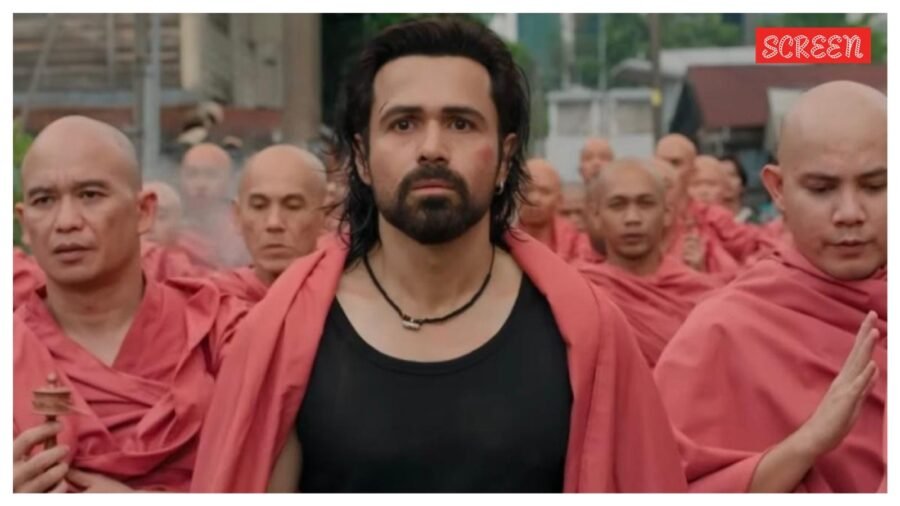
Nineteen years after Mohit Suri’s 2007 action romance Awarapan failed to make a dent at the box office, producer Vishesh Bhatt was confident that would change with the sequel, Awarapan 2. While Emraan Hashmi reprises his iconic role of Shivam Pandit, Bilal Siddiqi takes over from Shagufta Rafique as the screenwriter, and Nitin Kakkar from Mohit Suri as the director. In an exclusive interview with SCREEN, Vishesh discusses why he decided to make a sequel despite the first film’s failure, why Suri didn’t return to helm the film, and his terms with uncle and mentor Mahesh Bhatt despite the latter’s fallout with the former’s father, Mukesh Bhatt.
What made you continue the journey of Shivam Pandit although he was presumed dead at the end of the first film?
I felt there was a spiritual and emotional element to it. There was a voice within me, which asked me to tap more into that spiritual element. It’s great that today, because of the internet, people interpret so fast. They were able to see if Shivam is talking to God through “Tera Mera Rishta Purana” in the first part, now God is talking back to him in the sequel. That relationship is very important to someone as broken as Shivam. Emraan and I have experienced the heartache of the journey of Awarapan. We’d discussed that we’d take on this, and prove to ourselves that Awarapan was a good story and a good film to make. I wanted to reclaim the market and business side of Awarapan.
Did it take time for Emraan to slip into the shoes of Shivam?
Emraan told me Shivam’s character is in his silences, which is very true. Yes, he has deeply moving moments, but he doesn’t just come and tote his gun. Obviously in 2026, you see that it’s more externalized. We had a learning from part 1 that it’s different to watch a film on television for 19 years, and you understand what the silences mean. But in cinema hall, the silences come and go. There’s no rewind or pause. We knew that, but the whole character is still layered with those silences.
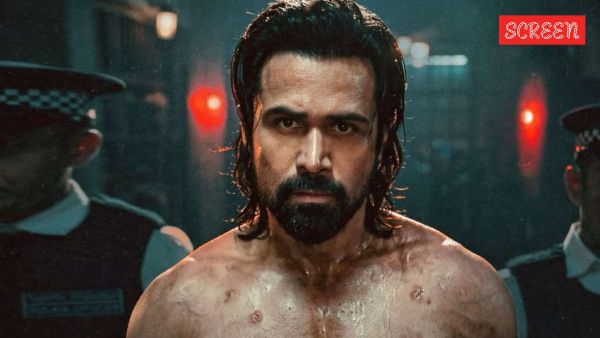 Emraan Hashmi as Shivam Pandit in Awarapan 2.
Bilal Siddiqi was in school when he watched Awarapan. Did his fandom help in correcting the first film with the sequel?
There were a lot of people on this film, including Bilal, who watched Awarapan as kids. They never got to go to the cinemas then, but watched it on TV. They became a part of the film’s crew. For me, it felt like yesterday, which was a good thing. But those crew members heaved a sigh after the first shot of the first day on set when they felt, “Shivam is back!” I said, “Okay, we’re in the correct zone.” The fact that I felt it as well as someone new felt it meant Emraan did it beautifully.
Story continues below this ad
Why did you never offer Mohit Suri to direct Awarapan 2?
It’s about timing. Mohit is my brother. My creative expression has always been with Mohit. Because we’ve grown up together, we have a great sync. But when we were going to start making the film, he was already into Saiyaara. There were also some conversations about Aashiqui 3. He’s a passionate filmmaker, but I felt his universe was in the Aashiqui and Saiyaara space. He gave Saiyaara all his heart, and you could see the results.
Was it important to get a fresh perspective because the first film failed at the box office?
We speak about Awarapan all the time, but Mohit never proposed we should make the sequel. It’s not like he proposed, and I said no. His calling was somewhere else. His heart was in Awarapan, but his heart was also broken. It was good that there were some of us, and there were some new energies, and the family grew bigger. We wanted to do something new because the old is already done. It’s different from a Dhurandhar, where part 1 and 2 happened six months apart, so you work with the same team for cost effectiveness.
Story continues below this ad
Shabana Azmi told me she did the special appearance in Awarapan 2 only because she knows you since you were born. How did you make the character of Nafisa worthy of her caliber?
If anything else, she’s more powerful in person than on screen. That’s her personality and depth. Whenever I’d discuss something, she’d listen respectfully, but she’d say, ‘I can still see only the little Vishesh in you.’ I told her, ‘I’m 40 years old!’ After working for so many years, I never had the privilege of working with her. The character has the layers and gravitas that required a legendary space, and would represent what a Shabana Azmi could play. Nitin and Bilal narrated the story to her. I was there, but I wanted to keep the personal out of it. She also asked them to narrate the full story, and not only her character. She’d ask questions about not just her character, but also the whole story.
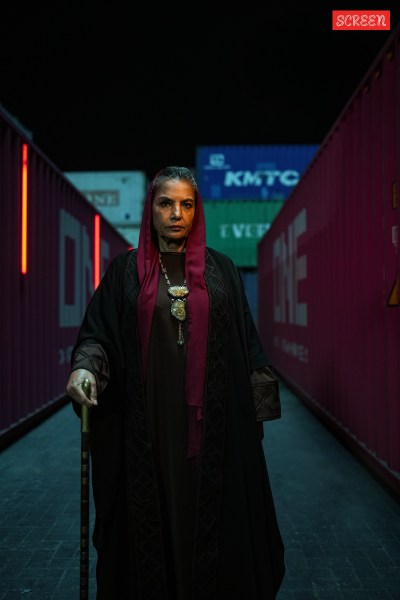 Shabana Azmi in Awarapan 2.
After you came onboard Vishesh Films, Mahesh Bhatt said you challenged him and Mukesh Bhatt’s filmmaking formulas. How did you do that?
They also built a platform that challenged the status quo. That’s been the DNA of this company. My father and uncle were never with the time. They always stood on their own by going against the tide. So, I have that in my DNA, and in the culture of this company. So, when I’d hear them repeating themselves, I would ask them, ‘Why are we doing this? What’s the reason? Is it money? Even if it is, let’s be true to it. Let’s not kid ourselves that it’s for a higher cause.’ We were also going from film to digital. From my experience of going to the top film school in New York University, I learnt that you can be yourself while not being in a bubble. These are two different things. You can challenge everything, but also challenge the bubble you live in.
Story continues below this ad
What kind of inputs did you bring to the table?
When I became more active from the time of Gangster (2006), I’d go to the radio and make them listen to the songs. Zeher (2005) was a small film, so we didn’t have budgets. I’d sit the whole day at the MTV office to make them listen to “Woh Lamhe Woh Baatein”. Because I knew they had an editorial space besides the paid space. We believed our songs were our stars, but how do we make them listen to the audience in the internet’s absence? Mohit and I’d remix even the soulful songs, to which Bhatt sahab and my father asked why we’re adding beats to such good lyrics and melody. But we did it so that one can celebrate the emotions at a party. From 2000, I was always trying to keep our identity, yet be relevant with the times. It doesn’t come easy to keep that balance.
Mahesh Bhatt is no longer a part of Vishesh Films after his fallout with your father. Since he was also your mentor, did you take his blessings before Awarapan 2?
He gives me his blessings all the time. A lot of times, people would tell me, “We don’t envy you.” Because I was the buffer between them and the outside world, but also between both the brothers. I’d get hammered from all sides. My relationship with him was that of a mentor. When you share that, it goes beyond family. They’re my sounding boards. In fact, they’d ask me, ‘You’re doing it right. Why are you asking us?’ But when you don’t seek external validation, the voice of the mentor has a different kind of importance. When the teaser came out, he pointed out exactly what I was trying to do with the film.
Why have you not directed after Murder 3 (2013)?
Story continues below this ad
I want to, but I’m such a hands-on producer. People ask me why I’m so invested in films I’m only producing, not directing. Maybe that’s never been me. I don’t seek the limelight. I actually like the journey of making the film. There’s been a warped understanding that only the director makes the film, and the producer cracks deals. But my father said a very good thing, ‘Both the jobs of the producer and the director are a 24-hour job each. Nobody can do 48 hours in one day, right?’ The two halves work together to make the film land.
Now that Awarapan 2 is out, is there a message to the fans of the first film who’ve been pining for a sequel for the past 19 years?
If this film succeeds, all us fans of Awarapan would succeed. Awarapan 2 wasn’t a cash grab. The market was asking why we’re making the sequel of an unsuccessful film. But we put our own money on a film that we’ve already lost money on. If you like films like Awarapan, go, support it, and give it everything. Tell me, and the market, that we should keep making Awarapan. Otherwise I’d be forced to make what the market will ask me to make because Awarapan fans didn’t come out to support me, but were crying somewhere and typing some nonsense on the keyboard. The love for Awarapan was a little too late. This is the second chance to love and support Awarapan.

Radha files complaint against sister Ambika, brother alleging ₹50 crore cheque fraud
By Sohail Khan · 21 Sep
Shah Rukh Khan, Suhana Khan and Gauri Khan visit Lalbaugcha Raja, watch
By Sohail Khan · 21 Sep