Why India versus Pakistan is no longer a competitive rivalry in hockey
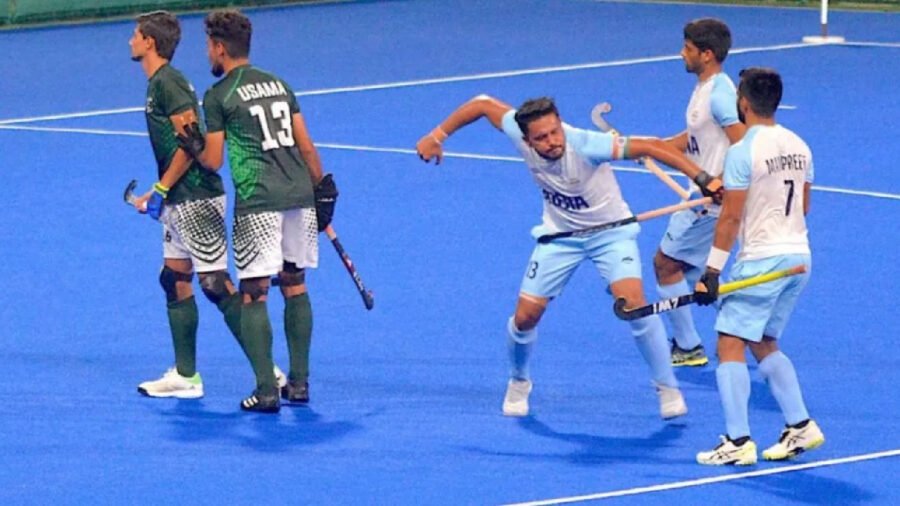
Last Saturday, play in the middle of a World Cup match had to be stopped because Pakistan’s players had forgotten their kitbag, which contained protective gear, in the changing room. A few months earlier, during the Pro League tour in Australia, they were scrambling for money to pay for their hotel stay.
In another era, both incidents would have been unthinkable.
Pakistan were once hockey’s trendsetters. They won four World Cups, three Olympic gold medals and produced artists who changed how the game was played. They weren’t merely India’s greatest rivals; for long periods, the Green Shirts were India’s tormentors.
On Wednesday, when the neighbours meet in a do-or-die Pool Stage finale for both, the contest will still carry all the familiar emotions. But the balance of power has shifted so dramatically that the fixture now feels less like the renewal of a rivalry and more like a reminder of what has been lost.
The numbers tell the story.
Before 2000, India and Pakistan played 92 matches. Pakistan won exactly half of them, 46, India won only 30, while 16 ended in draws, according to The Hockey Museum.
Since January 1, 2000, they have played 93 times. India have won 43, including a 7-1 hammering most recently in June. Pakistan have won 38. Twelve have been draws.
The transformation becomes even starker when viewed through the prism of recent history. India’s longest winless run against Pakistan lasted eight matches between 1988 and 1989. Pakistan haven’t beaten India consistently for a decade. Their current winless streak against their neighbours stands at 20 matches and counting, a run dating back to April 2016.
The overall head-to-head record still favours Pakistan — 84 wins to India’s 73, with 28 draws. But the gap is shrinking rapidly.
And the reasons have little to do with talent.
Story continues below this ad
There was a time when Pakistan showed a willingness to stay ahead of the curve. At the 2004 Athens Olympics, as then coach Roelant Oltmans experienced, their all-foreign coaching staff included a video analyst, something that wasn’t commonplace in international hockey, especially in Asia. There was money, there was expertise and there was an understanding that the game was changing.
Signs of disconnect
Somewhere along the way, that momentum disappeared.
The financial troubles are well documented, but reducing Pakistan’s decline to a lack of funds would be simplistic. The bigger problem has been their inability to keep pace with a sport that has transformed dramatically over the last two decades.
The signs of that disconnect have surfaced in the unlikeliest of places. Training sessions have been affected by something as basic as a shortage of match-quality balls, as former Japan coach Siegfried Aikman experienced during his stint there. That might sound insignificant, but modern hockey is built on repetition and intensity. Coaches want multiple balls in circulation so that drills can continue without interruption. If players spend half the session collecting stray balls, the quality of training inevitably suffers.
The same story plays out elsewhere.
Story continues below this ad
Sports science, once considered an added advantage, is now a necessity. GPS trackers that monitor workload and recovery have become standard equipment across top teams. Video analysis has evolved from being an optional extra to an indispensable tool. Conditioning methods have become more sophisticated. Nutrition, recovery and data analysis are no longer supporting elements; they are central to performance.
Pakistan, however, have often appeared stuck between two eras. Perhaps nowhere is that more evident than in their style of play.
The breathtaking attacking instincts that once defined Pakistani hockey haven’t disappeared. Their players can still dribble out of tight spaces and produce moments of improvisation that few teams can replicate.
But modern hockey has become less forgiving of individualism.
Ironically, many of these criticisms could once have been directed at India, too. A little over a decade ago, Indian hockey was battling administrative chaos, financial uncertainty and questions over governance. But while India modernised, professionalised and embraced new ideas, Pakistan struggled to make the same transition.
Story continues below this ad
And that divergence is now reflected in everything, from infrastructure and results to the most telling statistic of all: the rivalry itself.
Wednesday’s contest will still be labelled an India-Pakistan clash. It will still be marketed as one of hockey’s great rivalries. And there will still be enough history between the two nations to ensure that the match matters.
But every India-Pakistan fixture now carries a lingering sense of melancholy. Because what was once a battle between equals has become a reminder of how one country adapted to the demands of modern hockey while the other slowly lost touch with them.
Yet, Harmanpreet Singh & Co. would be careful. India, one of the contenders to reach the World Cup semifinals, have everything to lose if they do not win. For Pakistan, the stakes aren’t as high. Which is when they can be the most unpredictable and dangerous, the decline and history notwithstanding.
CATCHING UP
India vs Pakistan head-to-head
Before 2000:
Played: 92; India won: 30; Pakistan won: 46; Draws: 16
Since 1 January 2000:
Played: 93; India won: 41; Pakistan won: 38; Draws: 12
Source: The Hockey Museum
10
Story continues below this ad
Number of years since India have lost to Pakistan. The two teams have played 20 times since the team’s last defeat to the neighbours – at South Asian Games in February 2016 – India have won 17 times, drawn twice while one was abandoned due to rain.
India vs Pakistan, 6.30pm, Live on Star Sports and JioHotstar

Chess Olympiad: Israel forfeit Rd 6 match after Netherlands, Bulgaria refuse to reschedule
By Sohail Khan · 21 Sep

Asian Games: Indian Rowers threaten to go on ‘strike’ after last-minute crew changes
By Sohail Khan · 21 Sep