Why Germany equalling Pakistan’s World Cup record should worry Indian hockey
For decades, hockey’s greatest numbers belonged to Asia.
India owned the most coveted record of them all: eight Olympic gold medals, including six in succession between 1928 and 1956. Pakistan, meanwhile, built an equally formidable legacy at the World Cup, winning four titles — in 1971, 1978, 1982 and 1994 — a record that had stood alone for 32 years. For decades, the neighbours defined world hockey.
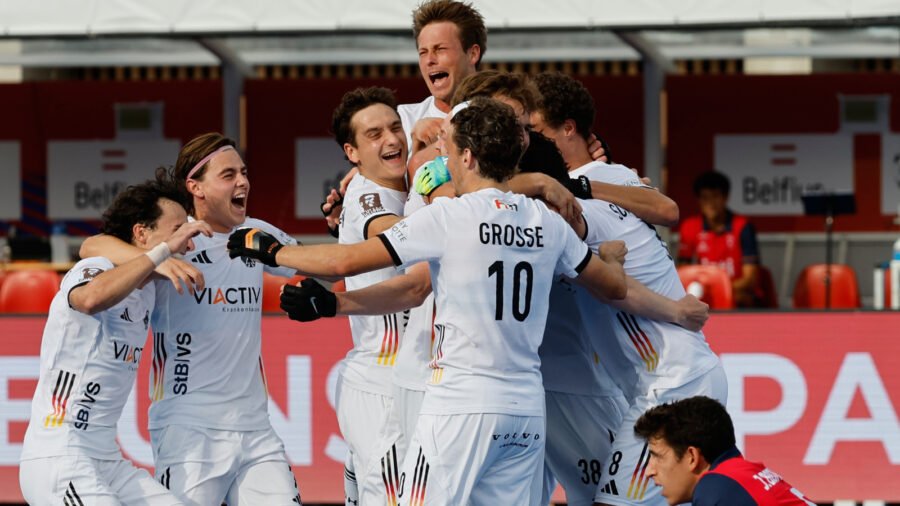
On Sunday, Germany changed that landscape.
By winning the 2026 World Cup, Germany equalled Pakistan’s record of four titles. It was a landmark achievement for a side that had already won the 2002, 2006 and 2023 editions, and it completed another chapter in the rise and rise of European hockey.
Story continues below this ad
The number four is what makes this more than another European victory.
For years, the World Cup record was one of the last great statistical monuments to Pakistan’s golden age. Now, it has company. And that should resonate particularly strongly in India.
There was a time when an India-Pakistan match was not simply one of the biggest fixtures in hockey. It was a contest between the sport’s two historical superpowers. India had their extraordinary Olympic dynasty; Pakistan developed a similarly imposing World Cup pedigree. Between them, they won five of the first eight World Cups — India’s only World Cup triumph came four years later in 1975, when they beat Pakistan 2-1 in Kuala Lumpur in a final that remains one of the defining moments in Indian hockey history.
Today, that rivalry is already fragile, with India not losing to their arch rivals in a decade. The global dominance, meanwhile, has long waned. For both.
Story continues below this ad
Pakistan have not won the World Cup since 1994 and were knocked out early in Belgium and the Netherlands this time. India, despite remaining Asia’s strongest men’s side and winning Olympic bronze medals at Tokyo and Paris, arrived at this World Cup chasing a second title 51 years after the first. They leave after finishing eighth.
India can still beat Pakistan. They did so at this World Cup. But beating your traditional rival is no longer the same as being among the teams that decide who wins the World Cup.
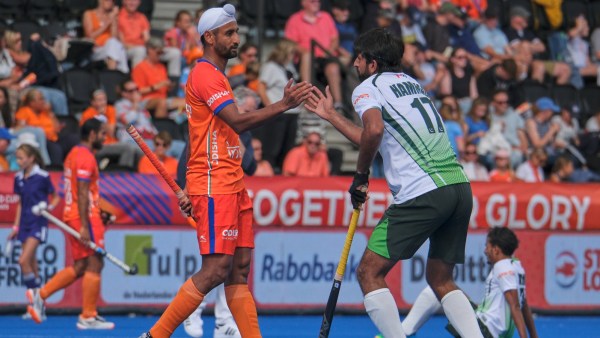 India have won FIH Hockey World Cup once in 1975 whereas Pakistan have won it four times.
Look at the World Cup’s history and the geographical movement becomes clear. Asia has five titles — four for Pakistan and one for India. Europe now has seven, with Germany’s fourth taking the continent further ahead. Australia, meanwhile, have three.
The sport’s centre of gravity has moved.
There is nothing inevitable about that. European hockey did not inherit dominance simply because time passed. It built systems capable of sustaining it: stronger domestic competitions, professional structures, deeper player pathways, sophisticated coaching and a wider pool of nations capable of producing elite teams.
Story continues below this ad
Asia has struggled to maintain the same momentum. Pakistan’s decline is the most dramatic example. A country that once produced hockey heroes almost as a matter of national identity now finds itself trying to rebuild the foundations of its game. India’s story is different. The resources, talent and public interest remain vastly greater, and the national team is still capable of winning major medals. But the gap between being the best team in Asia and being the best team in the world has become increasingly obvious.
That makes the timing of Germany’s achievement particularly interesting.
In less than three weeks, the Asian Games begin in Aichi-Nagoya, with hockey competition starting on September 18, a day before the opening ceremony. For decades, the Asian Games were another stage on which India and Pakistan could measure their supremacy. India will still be among the favourites. They should still expect to win gold. But the tournament can no longer be viewed simply through the old prism of Asian supremacy.
The real challenge for India is what happens when the Asian Games end.
Story continues below this ad
Germany have now equalled Pakistan. The Netherlands remain Olympic champions. Belgium have won a World Cup and the Olympics within the last decade. Australia remain a perennial power. Spain, the surprise finalists in this World Cup, are showing that the European pool continues to deepen.
The warning for India is therefore not that Germany, or the Netherlands, are about to win eight Olympic golds. That would be missing the point. India’s eight Olympic titles remain an extraordinary outlier. No other nation comes close in the men’s competition. But records that look immortal are usually protected by ecosystems, not nostalgia.
Pakistan’s four World Cups once seemed inseparable from the country’s hockey identity. Today, Germany have four too.
India must be careful that its own most sacred number does not eventually become another historical monument admired from a distance.
Story continues below this ad
The Asian Games offer an immediate opportunity to reassert continental supremacy. But the bigger task is beyond Nagoya. If India does not strengthen the ecosystem that produced its extraordinary Olympic legacy, the rest of the world will keep coming for the records that once seemed untouchable.
And eight, for all its grandeur, is still just a number.

India win second gold medal of Asian Games: Suruchi, Kamaljeet storm to mixed team title
By Sohail Khan · 25 Sep
A passage to India and other international stories
By Sohail Khan · 25 Sep