Why Canada’s Booze Ban Is Such a Sore Point in Trade Talks
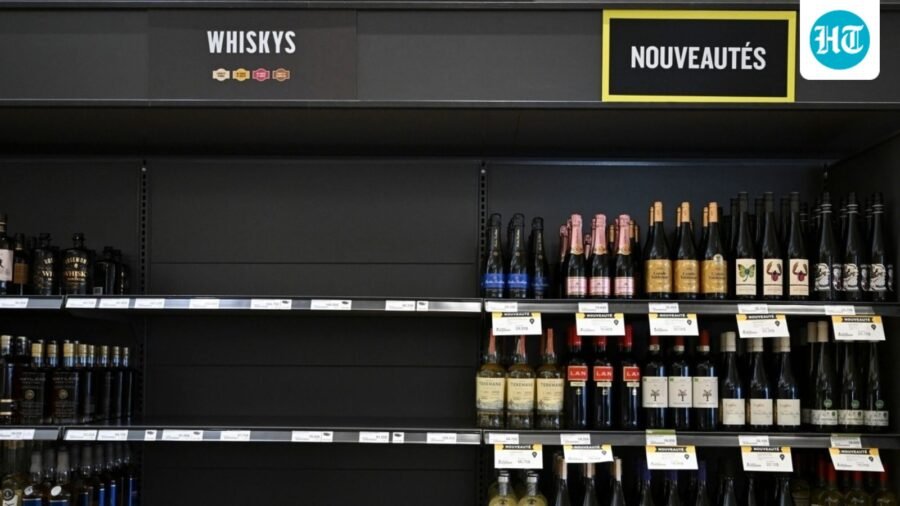
U.S. politicians are crying foul as California Merlots, Kentucky bourbons and Tennessee whiskeys disappear from Canadian shelves.
Published on: Aug 19, 2026, 20:03:41 IST
Prefer HTon Google
Share via
Copy link
TORONTO—California Merlots, Kentucky bourbons and Tennessee whiskeys are collecting dust in Canada as alcohol becomes a high-profile hostage of trade tensions with the U.S.
After President Trump imposed tariffs on Canadian goods last year, Canada’s provincial leaders hit back. The majority of provinces exercised their power over the distribution and sale of alcohol to pull U.S.-made wine, spirits and beer from most store shelves and stopped placing new orders.
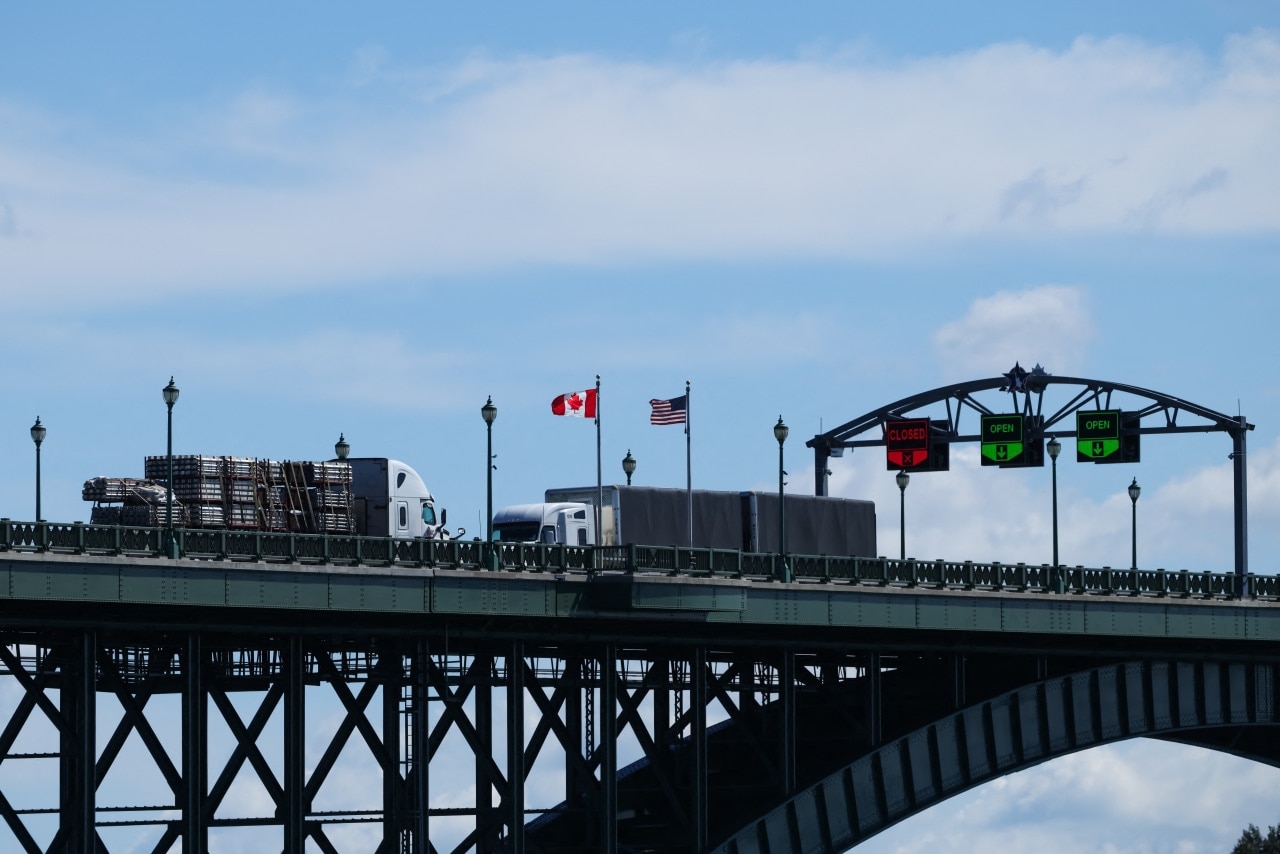
While alcohol accounts for a tiny portion of the nearly $900 billion in trade between Canada and the U.S., few aspects of Canada’s response to Trump’s economic aggression have gotten under the skin of U.S. officials—while drawing broad support from the Canadian public—quite like the booze bans.
Commerce Secretary Howard Lutnick called the bans “outrageous.” U.S. Ambassador to Canada Pete Hoekstra said they’re one reason Trump thinks Canada is “nasty.” And the White House cited them as one of several justifications for new tariffs of 50% to be levied on Canada just after midnight.
Canadian officials are racing to hammer out an interim deal to stave off the new tariffs, which would hit about $20 billion of Canadian goods, about 5% of the country’s U.S.-bound exports. They’ve proposed making concessions, including pushing the provincial premiers to return U.S. booze to shelves, if the new levies are dropped and existing levies on goods such as steel and autos are eased.
The stakes for U.S. alcohol producers are high.
For Crosby Roamann, a Napa Valley winery, Canada was becoming an increasingly important export market before the trade battles. The winery was shipping an average of 10% of the production of several wines to Ontario, and its founders were eager to pitch new products to Canadian buyers. Now, somewhere in Canada, 100 cases of Crosby Roamann wines are sitting in storage.
“It’s an incredibly disappointing position to be in,” said Sean McBride, who co-founded the winery with his wife, Juliana.
The hit to the U.S. alcohol industry from the bans has been significant.
The Distilled Spirits Council of the United States, an industry group, estimates that exports of U.S. distilled spirits to Canada plummeted 70% year-over-year, to $60 million for the months between March 2025, when many provinces began banning sales, and December 2025, compared with $203 million during the same months of 2024. U.S. wine exports to Canada, the largest buyer of U.S. wine, fell 77%, to $103 million in 2025 from $460 million in 2024, according to U.S. Department of Agriculture data.
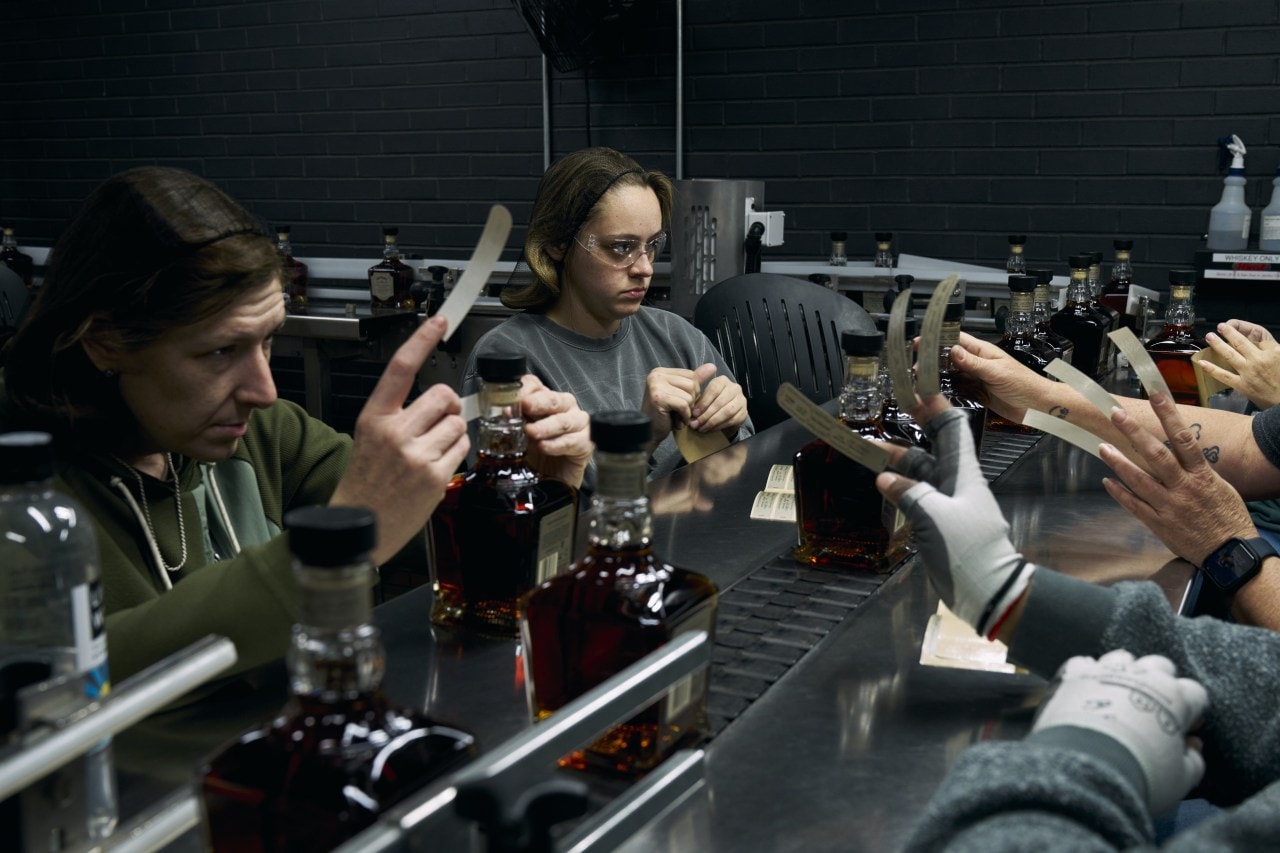
In a June earnings call, Lawson E. Whiting, the chief executive of Brown-Forman, the producer of brands including Jack Daniel’s whiskey, said net sales to Canada plunged 60% in 2025 and identified the U.S.-Canada trade dispute as a current headwind.
The steep declines have drawn bipartisan concern, and several Democratic lawmakers have prevailed upon their Canadian counterparts to reverse the bans.
“Canada’s boycott of California wine is causing devastating harm to winegrowers,” Sen. Adam Schiff (D., Calif.) wrote in a post on X last month. “I’m urging the Canadian government to recognize that California doesn’t agree with these tariff wars, to lift these restrictions and increase consumer options to strengthen both our economies.”
Support for the booze bans is high in Canada, where polls show people favor taking a more hardline approach in trade talks with the U.S. over rushing into a deal. A poll this month from Abacus Data found that nearly 70% of Canadians support keeping the bans in place.
“This is not simply about wine, beer or spirits,” David Coletto, the pollster’s chief executive, said in a statement. “This reflects a broader public instinct that Canada should not reward economic pressure with immediate concessions.”
Canada’s premiers argue that the bans give Canada rare leverage and they’ve backed them stridently in the face of Trump’s tariff threats. Prime Minister Mark Carney has said that the bans should be lifted only as part of a broader, bilateral deal with the U.S.
“There is not a chance in hell that U.S. alcohol is going back on the shelf in British Columbia,” David Eby, the province’s premier, said last month after Trump threatened the new levies. “I’m proud of that and I know British Columbians support that.”
As negotiators rush to secure a deal ahead of the deadline for the new tariffs, whether Canada’s federal government can convince the provinces to put American booze back on the shelves is likely to hinge on the fine print of an agreement.
If, for instance, auto tariffs aren’t eased significantly, Ontario Premier Doug Ford, whose economy relies heavily on the industry, is unlikely to budge. A deal without relief for the lumber sector could make it difficult for the premiers of British Columbia, New Brunswick and Quebec to lift their bans.
Laura Dawson, an expert on U.S.-Canada economic relations, said the booze bans are “double-edged sword” for Canada’s government.
“It’s been a helpful piece of leverage for the federal negotiators to have these provincial alcohol bans as a bargaining chip,” she said. “But it’s also an uncontrolled substance because they have no guarantee that the provinces will release them unilaterally.”
Then there’s the question of whether Canada’s taste for U.S. alcohol will return. A Nanos poll this month found that nearly three-quarters of Canadians say they’re unlikely to buy U.S. alcohol even if it’s put back on store shelves.
McBride, the co-founder of the Crosby Roamann winery, has tried to adapt amid trade uncertainty. He’s selling his wines to Japan, Europe and the Caribbean, but admitted that it’s hard to replace the Canadian market.
“I would encourage [Canada and the U.S.] to come back to the table and try and figure out something that doesn’t hurt small businesses like us who are really just caught in the crossfire,” he said.
Write to Amanda Coletta at amanda.coletta@wsj.com
See Less

Evacuations in Malibu after waves open sinkhole at Nicolas Cage’s house
By Sohail Khan · 10 Sep
Exclusive-Nepal puts climate justice at centre of global pitch for flood aid
By Sohail Khan · 10 Sep