Who was Sajjan Kumar, ex Congress MP and 1984 riots convict
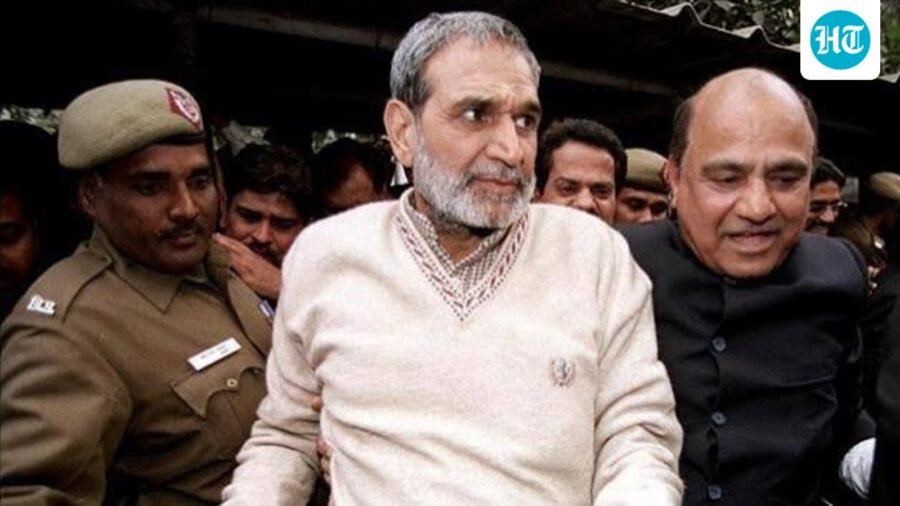
Sajjan Kumar, who was serving life imprisonment in Tihar jail, was taken to Safdarjung hospital, where the doctors declared him dead.
Updated on: Aug 20, 2026, 14:24:47 IST
Prefer HTon Google
Share via
Copy link
Former Congress MP Sajjan Kumar, who was convicted in cases linked to the 1984 anti-Sikh riots, died on Thursday while serving a life sentence in Tihar jail. He was taken to Safdarjung Hospital, where doctors declared him dead, news agency PTI reported.
From Delhi councillor to Lok Sabha MP
Sajjan Kumar began his political career in Delhi, winning the Municipal Corporation of Delhi election in 1977. He was sworn in as a councillor the same year and went on to emerge as an influential Congress politician in the capital.
More than two decades later, Kumar reached Parliament, winning the 2004 Lok Sabha election from Outer Delhi.
His political career, however, became closely associated with allegations surrounding the 1984 anti-Sikh riots, which erupted after the assassination of then-prime minister Indira Gandhi by her Sikh bodyguards on October 31, 1984.
Conviction in 1984 riots case
On December 17, 2018, the Delhi High Court convicted Kumar in connection with the killing of five Sikhs and the burning of a gurdwara during the riots. The court sentenced him to life imprisonment.
Following his conviction, Kumar resigned from the primary membership of the Congress.
His legal troubles continued decades after the violence. In February 2025, a Delhi court sentenced him to life imprisonment in another case involving the killing of two Sikh men during the 1984 riots.
Allegations of leading mobs
Witnesses accused Kumar of inciting mobs against members of the Sikh community on November 1, 1984, a day after Indira Gandhi was assassinated.
According to the allegations, Kumar told mobs to avenge the killing of the Congress leader, who was described as their “mother”.
Survivors also accused him of being a key organiser of the violence. Some alleged that he paid attackers ₹100 each and supplied them with a bottle of liquor.
A fact-finding report by the People's Union for Civil Liberties (PUCL) concluded that the violence was not simply a spontaneous reaction to Indira Gandhi's assassination, but involved a coordinated attack allegedly orchestrated by Congress politicians.
A political career overshadowed by 1984
The allegations and subsequent convictions transformed Kumar's public legacy. A politician who had risen from Delhi's municipal politics to the Lok Sabha became one of the most prominent Congress figures associated with the 1984 anti-Sikh riots.
In the aftermath of the violence, survivors staying in Sikh refugee camps reportedly refused relief offered by Kumar, accusing him of being among the key instigators of the attacks.
Kumar spent the final years of his life in prison after being convicted in the cases arising from one of the darkest episodes in India's political history.
See Less

Kerala Police arrest foreign women manufacturing MDMA in Delhi, bust drug network
By Sohail Khan · 22 Sep

Minister K.M. Shivalinge Gowda’s remark: Advocate files complaint with Karnataka Lokayukta
By Sohail Khan · 22 Sep