We need to stop talking about Other ‘Backward’ ‘Classes’
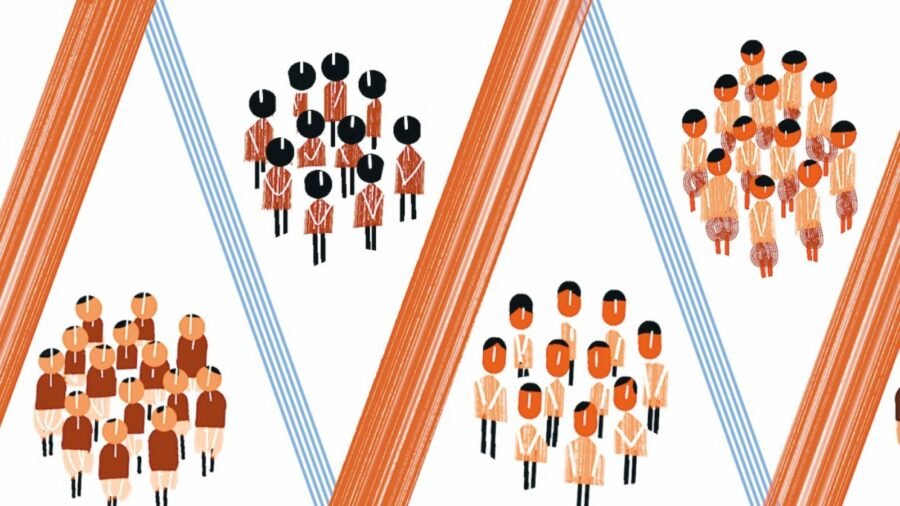
One of the most famous Malayalam novels, Thakazhi Sivasankara Pillai’s Kayar, chronicles social change in central Travancore over the 19th and early 20th centuries through the lives of several generations of characters. Primarily, these are Nair and Syrian Christian characters, but it does give some space to others, including Brahmins, Dalits and Muslims. Oddly, it devotes only a bare handful of pages to the Ezhavas, the most populous Hindu caste in Kerala. In one of those rare references, however, Thakazhi touches on one of the most important realities of caste. Some Nair characters are discussing prominent real-life Ezhava families. The patriarch of one such family, with the hereditary title of channar, is highly educated, extremely rich and very orthodox: If he encounters any “Shudra” (Nair) on the road, he will move aside, maintaining the distance prescribed for Ezhavas under the system of “unapproachability” — because, he says, he wants “Parayas and Pulayas” (Dalits) to keep moving aside for him.
If this channar were alive today, how would he be classified? OBC, being an Ezhava? But how “socially and educationally backward” is he? Creamy-layer? Very. Shudra? No — in south India, especially, the Shudras were often dominant castes, as seen above. “Untouchable”? Yes. Does that make him a Dalit? Probably not. Such examples demonstrate the incoherence of “backwardness” as a rubric to classify castes, as does, of course, the politically driven inclusion of dominant and even upper castes in various backward-class lists. When the definition of “backward” encompasses both former “untouchables” and former kings — for instance, the caste of the kings of Mysore is on the backward-class list in Karnataka — little survives of conceptual coherence, because there is no shared experience. Without shared experience, there can be no shared identity. And when income becomes the criterion, Trojan Horses such as quotas for “economically weaker sections” of the upper castes infiltrate the system.
Advertisement
There are at least three ongoing developments in India that should be of particular concern to OBCs. First, the sabotage of the caste count in the Census, in which the use of an open column to record caste will yield unusable data. Second, the government telling the Supreme Court that it is “reconsidering” the UGC Equity Regulations that had occasioned so much angst — one of the points of contention having been, indeed, the inclusion of OBCs among the protected groups. And third, the government pushing back on implementing a Supreme Court judgment against the mechanical consideration of parents’ salaries to identify and exclude creamy-layer candidates selected in the civil services examinations.
The question is, will any of this lead to an OBC reaction or mobilisation? Some activists may be trying to raise awareness, but a real response proportionate to the size and theoretical power of this demographic is unlikely. The lack of shared experience has meant that little solidarity has been built within the category across different regions and among different individual castes. It has not, and in its current form cannot, become anything more than an arbitrary bureaucratic category to extract benefits from the state.
Contrast this with Dalits. Among the latter, there is such a thing as the Ambedkarite movement; there is a shared identity and solidarity despite differences over questions like subcategorisation; there is awareness of and mobilisation against perceived dangers — as there was during the 2024 Lok Sabha election; there are Dalit intellectuals and there is serious internal debate. There may be intellectuals who happen to be OBC, but are there OBC intellectuals? Is it possible to be an OBC intellectual when the category itself is incoherent?
Advertisement
The way out of this conundrum is to recognise “backwardness” for what it is: A linguistic error, a category mistake. It includes within its capacious folds all sorts of factors that are unrelated to caste and serve only to confuse the issue. When one moves away from the language of backwardness towards that of caste oppression, the picture becomes much clearer. Then one can ask which groups are disadvantaged or discriminated against as a result of their caste and thus require quotas and special protections, and which groups are not. At the same time, as this is not about wealth or individual families’ status but caste (remember the channar: No amount of money can buy touchability) the creamy-layer barrier must be removed. The word “class” is another obfuscating factor that needs to go — “Other Backward Classes” must become “Other Oppressed Castes”. Of course, the sticking point will be removing powerful castes found to be ineligible, which seems politically impossible as things stand; they tend to make their way into the tent, not out of it.
There is one lingering question: What about those historically oppressed castes who have done quite well, materially and politically, in the past few decades — getting good jobs, making money in business, becoming chief ministers? Should they have their benefits taken away so that others, more disadvantaged, can climb the ladder in turn? One thing to remember is that money and even temporary political power in an electoral system are not the end. There are forms of institutional power gatekept by privilege and nepotism that have successfully fended off the “lower” castes so far, the higher judiciary above all. It’s time for the conversation to move on to reservation for such positions.
It’s also time to think of who is still setting the narrative intellectually and culturally. Think of academia, where removing the creamy-layer barrier may help fill up the many OBC faculty positions lying vacant — last year, the government told Parliament that around 80 per cent of professor posts for OBCs at central universities were vacant, compared to 64 per cent for SCs. Think also of areas such as arts and culture, where the blunt instrument of reservation can’t be the solution to the problem of underrepresentation. And indeed, English journalism.
The writer is senior assistant editor, . rohan.manoj@expressindia.com

Woman’s 18th child sparks talk of ‘pregnancy addiction’: Psychiatrist explains
By Sohail Khan · 26 Sep
From 100 to 75 kg: What experts think of content creator’s weight loss diet
By Sohail Khan · 26 Sep
First Agniveer batch set to return: How Uttarakhand is trying to help them find jobs
By Sohail Khan · 26 Sep