Vulcan understands the language of money: Harshil Mathur on Razorpay’s AI push
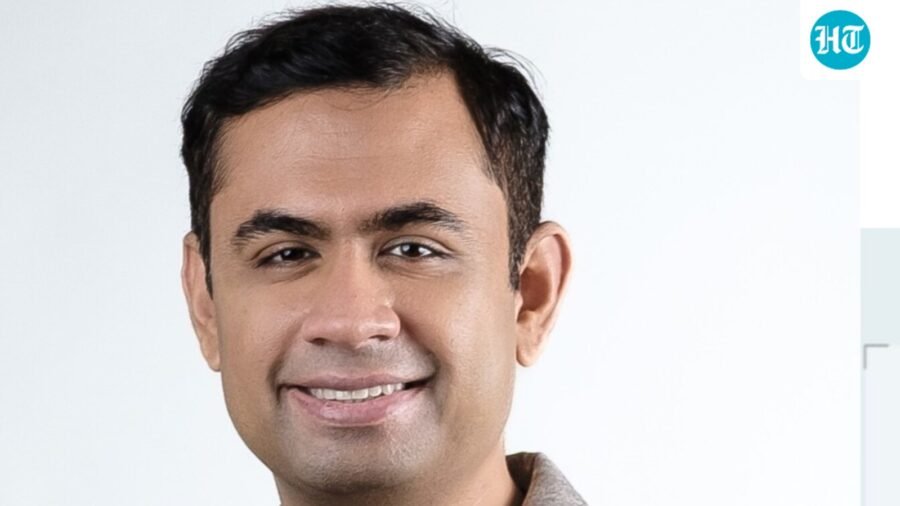
From having no pre-existing model that could be repurposed to building a shared brain for India’s digital payments, Razorpay will rebuild infrastructure with AI
Published on: Aug 18, 2026, 07:00:25 IST
Prefer HTon Google
Share via
Copy link
Even as India’s digital payments infrastructure handles close to 23 billion UPI transactions and around 590 million credit card payments every month, Indian payments company Razorpay believes artificial intelligence (AI) can be useful to plug persistent gaps. They have developed Razorpay Vulcan, India's first payments foundation model, in partnership with Nvidia and AWS. Early results with platforms including Blinkit, have been promising. “In the early data testing with more than 1.5 million transactions across more than 50,000 merchants, we have seen a massive lift in various perimeters. There has been an 8 to 10% improvement in payment success rates, and a 5x reduction in fraud, which those transactions blocked,” Harshil Mathur, CEO & founder of Razorpay, tells .
The Transformer architecture, designed by Google researchers in 2017, is a deep learning framework that processes sequential data in parallel using a self-attention mechanism. Unlike older sequential architectures that process step-by-step, this architecture evaluates connections between all tokens in a sequence simultaneously. Some large language models (LLMs) are built using this, but not all.
For the Vulcan, Razorpay has utilised Nvidia’s silicon clusters, and Mathur confirm to that this mostly includes the top-end H100 GPUs. AWS provided the scalable cloud infrastructure as well as architectural guidance that allowed the model to reliably handle enterprise transaction volumes.
Training the model on 3 trillion data points collected across 4 billion digital payments, doesn’t simply underline Razorpay’s advantage, but requires significant compute power as well.
In response to the question of why they developed a model from scratch, Mathur points out that they had only large language models to choose from among the open-source options. They excel at conversational tasks including coding, but they cannot model payment behaviour or transaction graphs. “There was no pre-existing foundational model for Indian payments that we could fine-tune,” he says.
The Indian payment gateway and processing market is fiercely competitive, where Razorpay finds competition from PhonePe PG, PayU, Pine Labs, Cashfree, and Juspay. Traditionally, competition in this space has been about pricing, checkout speeds, and merchant onboarding efficiency. Razorpay’s play with a proprietary foundation model, is a significant shift.
Razorpay details that privacy is one reason they avoided any third-party models. “We are compliant with RBI data localisation norms and the Digital Personal Data Protection (DPDP) Act,” Mathur says. Before any data reaches Vulcan, all personally identifiable information is removed from transaction details—this is true for individual as well as merchant data. Secondly, Vulcan is hosted and executed entirely within Razorpay’s private infrastructure located in India.
Vulcan’s broad mandate
There were two main reasons to build a proprietary model for digital payments. First, payments data behaves fundamentally differently from natural language and no public datasets are available at this scale. Secondly, India’s dynamic landscape has over 100 payment instruments, nuanced regulatory workflows (such as dynamic OTPs and tokenisation), and distinct behavioural variations across Tier 1, Tier 2, and Tier 3 demographics.
Mathur explains that the Razorpay Vulcan is proprietary, with training data including 3 trillion metrics from 4 billion payments, across Razorpay’s infrastructure. Better routing should help solve real-world problems, including OTPs or one-time passwords that arrive after a delay, whereas the security layer will prevent compromised payments not just for users, but also merchants.
“LLMs understand text. This model understands the language of the movement of money,” says Mathur. “Traditional rule-based ML models cannot dynamically capture these shifting patterns. Vulcan’s self-learning architecture allows it to understand these nuances automatically.”
In terms of a broad mandate, the model is supposed to deliver on three key pillars—precise routing of payments, fraud detection and risk intelligence, each offering overlapping benefits for merchants as well as customers. Razorpay data suggests that common friction points, irrespective of the type of store or location, typically include failed transactions, drop-offs, and processing delays.
“The primary thing a lot of payment companies like us have to do is consistently use data intuitions to optimise payment flows in various directions. Over the years, we built separate machine learning (ML) models for each of these problems. The challenge with traditional ML models is that they are single-purpose,” Mathur explains
The Razorpay Vulcan at the merchant’s end, will be able to flag a stolen or compromised card if it is being used to pay for an order, and flag risky Cash on Delivery orders before the checkout process is complete. Predictive personalisation, as a customer completes checkout, will recommend payment methods most likely to succeed.
Early experiments, and regulatory momentum
Razorpay customers such as Blinkit, who have deployed this model, are reporting up to a 10% improvement in payment success rates, 8x more international card fraud detections which were stopped, and 5x more fraudulent or disputed transactions identified. For instance, if a particular bank’s gateway is experiencing delays or failure in processing payments, the AI model will be able to dynamically reroute the transaction through an alternative.
It is a similar trajectory with RedBus and Bachatt as well, among other retailers.
For customers, as many as 40% more shoppers could access their preferred UPI app on Razorpay Magic Checkout, which helped complete as many as 2 lakh more purchases every month. “There has been a significant increase in personalised checkouts, which means customers have to spend less time choosing the payment instrument that they typically use. The best value of a foundation model is that it is essentially a shared brain for all payments and learns from every single payment,” he says.
If the model can consistently underline an improvement in success rates, this will directly impact a merchant's bottom line, shifting conversation from pricing to improved revenue realisation.
This foundation model arrives at a time when there is regulatory push too. The Reserve Bank of India (RBI) has announced that stricter guidelines against digital payment frauds take effect in 2027, as a one year pilot. The Ministry of Finance has also directed all Indian commercial banks to implement MuleHunter.AI, a specialised real-time fraud detection tool.
Razorpay’s claim of stopping 8x more international card fraud directly tries to solve this urgent regulatory mandate.
AI’s intensive funding requirements
To the question of how Razorpay intends to fund what will inevitably be significant investments in building with Vulcan, Mathur confirms that this development is being funded internally. The Vulcan proposition strengthens the company’s core payments gateway business. The AI infusion widens scope alongside success rate and reliability, leading to more revenue for merchants. Secondly, there can be more value-added monetisation streams.
Vulcan can be adapted to new use cases without retraining the base architecture. That would open up scope for products such as real-time underwriting and credit evaluation in the coming months. There is also a potential for offering advanced fraud prevention and custom risk intelligence as premium capabilities to merchants. Mathur confirms that several monetisable product layers for Vulcan will be introduced in the coming months.
See Less
Forex inflows rise to USD 143.6 billion
By Sohail Khan · 21 Sep
Presley Gerber’s final words before his death
By Sohail Khan · 21 Sep
Government dissolves 37-year-old DCC
By Sohail Khan · 21 Sep