Tittakudi’s Wellington reservoir rehabilitation work gathers pace
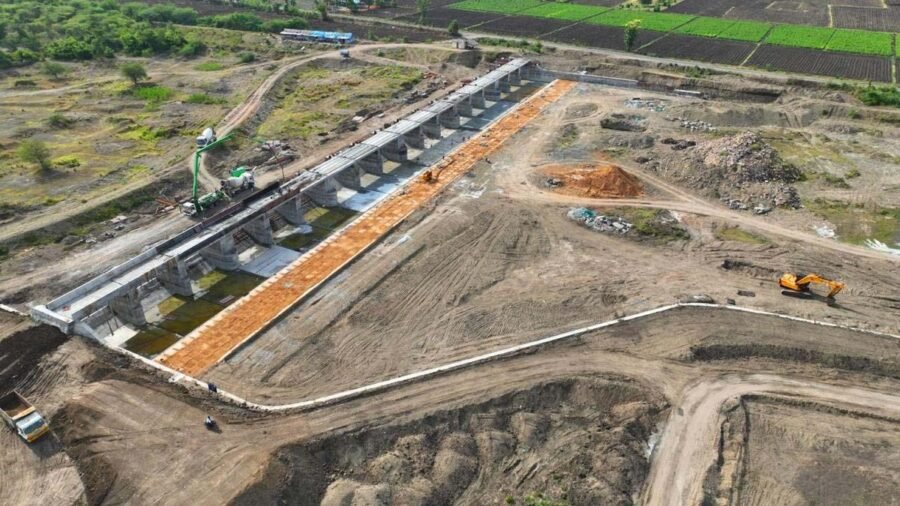
Work to strengthen the bunds of Wellington reservoir, a major waterbody in Tittakudi taluk in Cuddalore district has gathered pace. The work, including rehabilitation of the reservoir bund, improvement of its main canal and reconstruction of the century-old surplus regulator is being taken up at a cost of ₹130 crore.
Over 60% of the rehabilitation work has been completed and the remaining work is expected to be completed in the next three months, an official said.
Located at Keelacheruvai village in Tittakudi taluk, the Wellington reservoir was built in 1923 to store floodwaters from the Vellar River. It irrigates an ayacut of 9,737 hectares or 24,059 acres, covering 63 villages in Thittakudi and Vriddhachalam taluks.
Official sources said the reservoir bund had suffered recurring distress owing to subsurface conditions and soil characteristics. In 1996, when the reservoir’s bund suffered erosion, it was repaired at a cost of ₹5 crore with World Bank assistance, following a dam-safety committee’s recommendation.
However, since the bund kept suffering from erosion during every monsoon, a team from the Water Resources Department (WRD) inspected the reservoir in 2008 and submitted a detailed report to the Government. Following this, the bund was rebuilt at a cost of ₹29.71 crore in 2010 as an immediate measure.
According to an official, “The main canal of the reservoir has suffered damage to both its banks, particularly during the monsoon, with the side slops collapsing inward at several places. Rapid growth of vegetation inside the canal has further obstructed the flow of water. As a result, when water is released for irrigation every year, it cannot move freely through the canal. This resulted in occasional breaches, allowing the water to flood nearby farmlands and damage crops.”
This also prevented the full supply of irrigated water from reaching the tail-end areas, affecting farmers who are dependent on the reservoir for cultivation. As a result, the structure remained weakened and inadequate to safely handle the present flood requirement. As problems persisted, the WRD proposed rehabilitation and strengthening of the earthen bund along with improvements to the reservoir main canal.
According to A. Venkatesan, Assistant Engineer of WRD (Vellar Basin), “When a new distress was noted on the bund upstream side of Longitudinal Section 1570 metre to L.S. 1,600 metre in 2017, a temporary earthen embankment was constructed at a cost of ₹1.78 crore and water was released for irrigation. However, since factors likely to cause repeated erosion were observed, it was decided to strengthen the bund and rebuilding work is now underway at a cost of ₹130 crore.”
The WRD has adopted a new technology and built a concrete wall to a depth of 11 feet, and poured liquid concrete to prevent water seepage. The Department is also strengthening the bund up to a height of 11 metres. In addition, the existing surplus gates each three metres wide, are being widened to eight metres, so that each bund can release water at a rate of 32,000 cubic feet per second. A 900-metre-long concrete wall is also being built along the water drainage channels to ensure the dam’s safety for the next 100 years, Mr. Venkatesan said.

Music studio set up in 100-year-old home craved by builders in Belagavi
By Sohail Khan · 21 Sep
Over 81,000 Ganesh idols immersed across Cyberabad in six days
By Sohail Khan · 21 Sep
City cycle project out of track in Kozhikode
By Sohail Khan · 21 Sep