The constable’s son who built an empire: How Chiranjeevi shaped India’s top film family
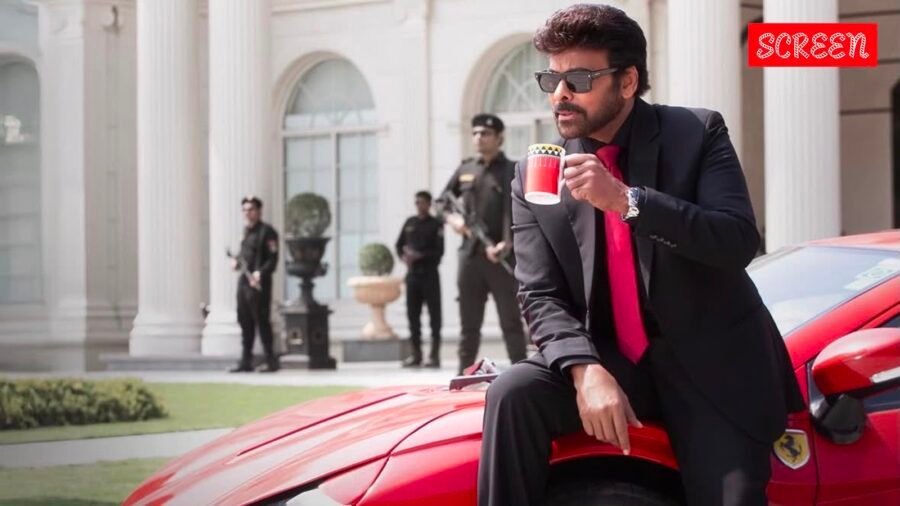
Try counting the Konidela-Allu family on your fingers, and you’ll quickly run out of them. Two pan-India superstars, a Deputy Chief Minister, one of South India’s biggest producers, several other actors across the current generation, multiple production houses and connection to one of India’s largest hospital chains. Now trace all of it back to where it started. While Allu family existed before everything, you will arrive at the same place every time: a young man with a commerce degree, a police constable for a father and not a single connection to the film industry. That young man was Chiranjeevi. And what he built over the next five decades is unlike anything any other self-made star in Indian cinema has managed.
When Konidela Siva Sankara Vara Prasad boarded a train to Madras in 1976 to join the Madras Film Institute, he carried with him a commerce degree from Narsapuram and whatever money his father, a police constable named Venkat Rao, could spare. His mother Anjana Devi was a homemaker. Nobody in his family had ever been near a film set.
Two years later, in 1978, his first film Pranam Khareedu released when he was 23. He played supporting roles and villains for the next few years, taking whatever came his way. There was no launch, no production house backing him, no family name opening doors.
Story continues below this ad
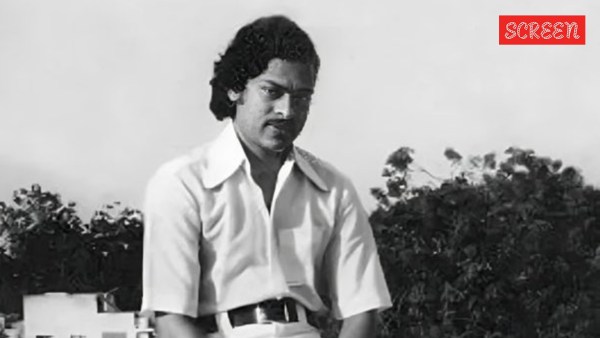 A young Chiranjeevi on the sets of Punadhirallu.
Then came Khaidi in 1983, and everything changed. The raw, intense action film turned him into a mass hero overnight. What followed was one of the most dominant runs any Indian actor has ever had. Through the 1980s and 1990s, Chiranjeevi delivered blockbuster after blockbuster: Vijetha, Swayam Krushi, Jagadeka Veerudu Atiloka Sundari, Gharana Mogudu, Aapadbandhavudu, Hitler, Indra, Tagore. He danced like no one in Indian cinema had seen before. He fought with a physicality that was entirely his own. Gharana Mogudu became the first South Indian film to collect over Rs 10 crore at the box office. By the mid-1990s, his fee exceeded Rs 1.25 crore per film, surpassing even Amitabh Bachchan’s remuneration at the time.
All of it earned. None of it inherited. And it is from this foundation, built by one man from a constable’s family, that Telugu cinema’s most powerful dynasty was constructed.
The loyal fan base of Konidela
Chiranjeevi’s fan base is not something that happened to him. He built it, brick by brick, over four decades, from a starting point of absolute zero. In the early 1980s, when he was still finding his footing with supporting roles and villain parts, there were no fan clubs, no “Mega” prefix, no political rallies disguised as audio launches. All of that came later, and all of it came from the screen. Through the rest of the 1980s and the entirety of the 1990s, Chiranjeevi’s hold on Telugu audiences was unlike anything the industry had seen before or has seen since. Fans did not just watch his films: They celebrated them, burst crackers at first-day-first-shows, poured milk on cutouts, formed fan associations that functioned like political units, with district presidents, mandal conveners and volunteer networks that could mobilise thousands of people for a single event.
Story continues below this ad
By the mid-1990s, the Chiranjeevi fan base turned into an organisation. It had structure, hierarchy and a loyalty that did not depend on whether his last film was a hit or a flop. When he danced, young men across Andhra Pradesh learned the steps within a week. When he wore a particular style of shirt or sunglasses, the product sold out across markets in the state. When he spoke, people listened, not because he was saying anything particularly profound, but because he was Chiranjeevi, and that was enough. That kind of fandom, the kind that is not tied to a single film or a single phase but to the person himself, is what made everything else possible.
No amount of production money, marketing spend or industry connections can manufacture what Chiranjeevi’s fan base provided his family: a guaranteed opening-day audience, a willingness to forgive early failures, and a built-in emotional investment that most newcomers spend entire careers trying to earn and never do.
The marriage that merged two families
On February 20, 1980, still early in his career and years away from the superstardom that would follow, Chiranjeevi married Surekha, the daughter of Allu Ramalingaiah. Ramalingaiah was a legendary Telugu actor and comedian who had appeared in over 1,000 films. The marriage connected the young, upcoming Chiranjeevi to a family that already had deep roots in the film industry.
Story continues below this ad
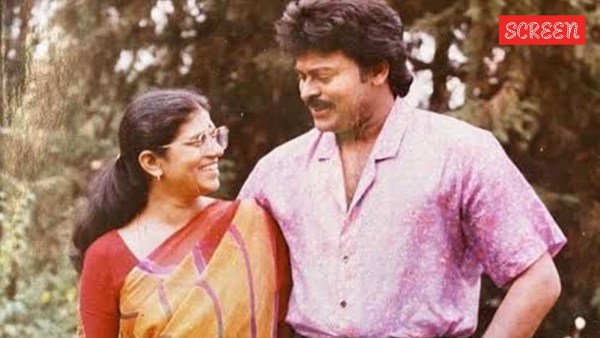 Chiranjeevi with his wife Surekha
Surekha’s brother, Allu Aravind, would go on to become one of Telugu cinema’s most powerful producers, founding Geetha Arts, a banner that has backed some of Tollywood’s biggest films over four decades. The marriage effectively merged the Konidela name with the Allu name, creating a combined family unit that would expand, over the next 45 years, to dominate almost every corner of the Telugu entertainment industry.
The sons who became superstars
Chiranjeevi and Surekha have three children: elder daughter Sushmita, son Ram Charan and younger daughter Sreeja. Ram Charan debuted in 2007 with Chirutha and became a star with Magadheera. Rangasthalam established him as one of Telugu cinema’s finest actors, and RRR made him a global name, with the film winning the Academy Award for Best Original Song. He is now among the highest-paid actors in Indian cinema. He also established the Konidela Production Company, which produced Chiranjeevi’s comeback film Khaidi No. 150 after the patriarch’s decade-long break for politics. His marriage to Upasana Kamineni in 2012 added another layer to the family’s influence, connecting the Konidelas to the Apollo Hospitals empire founded by Dr Prathap C Reddy.
 Allu-Konidela family tree
On the Allu side, Allu Aravind’s son Allu Arjun debuted in 2003 with Gangotri and steadily grew into one of Indian cinema’s most commercially powerful stars. Pushpa: The Rise turned him into a pan-India phenomenon. Its sequel, Pushpa 2: The Rule. grossed over Rs 1,800 crore worldwide, making it the highest-grossing Indian film at the time. He became the first Telugu actor to win the National Film Award for Best Actor. His younger brother Allu Sirish also works in Telugu cinema.
Story continues below this ad
Sushmita Konidela works as a film producer and costume designer through Gold Box Entertainment, having worked on films like Rangasthalam. Sreeja Konidela has been involved in production and family ventures.
The brothers who followed
Chiranjeevi’s two younger brothers each carved out their own significant presence in the industry.
Nagendra Babu became an actor and producer. His son Varun Tej debuted in 2014 and has since appeared in films like Fidaa and the National Award-winning war drama Kanche. His daughter Niharika Konidela worked as an actress before stepping into production.
Pawan Kalyan, the youngest of the three brothers, became a superstar in his own right with blockbusters like Tholi Prema, Gabbar Singh and Attarintiki Daredi. But his impact extends well beyond cinema. He founded the Jana Sena Party in 2014, allied with the BJP and TDP ahead of the 2024 Andhra Pradesh elections, and currently serves as the Deputy Chief Minister of Andhra Pradesh under Chief Minister N. Chandrababu Naidu. He is the only member of the family to hold a constitutional post, making the Konidela-Allu family’s reach extend from box office records to state governance.
Story continues below this ad
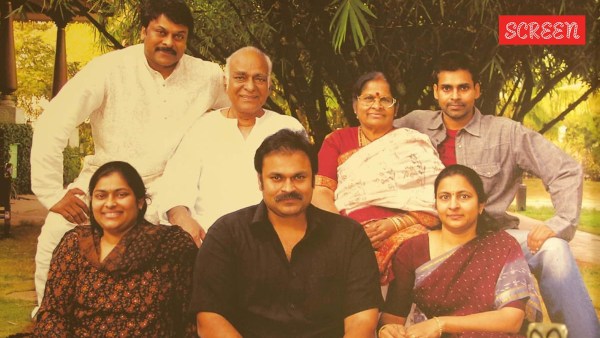 Chiranjeevi with his parents Venkat Rao and Anjana Devi, along with his siblings.
Chiranjeevi’s sister Vijaya Durga’s sons have also entered the industry. Sai Dharam Tej debuted in 2014 and delivered hits like Supreme and Chitralahari. His younger brother Panja Vaishnav Tej debuted with Uppena (2021), a surprise blockbuster that crossed Rs 100 crore.
Beyond cinema
The family’s influence now stretches far beyond film sets. Geetha Arts remains one of Telugu cinema’s most established production houses. Allu Aravind co-founded Aha, a Telugu OTT streaming platform launched in 2020, positioning the family in the digital space. Konidela Production Company and Anjana Productions, associated with Nagendra Babu, have backed multiple projects. Through the Kamineni connection, the family’s network reaches into healthcare and corporate India. Through Pawan Kalyan, it reaches into the corridors of state power.
Step back and look at the full picture. From one man who arrived in Madras in 1976 with a commerce degree and no connections, the Konidela-Allu family now includes two of the top five highest-paid actors in Indian cinema, the Deputy Chief Minister of Andhra Pradesh, one of Telugu cinema’s most powerful producers, several other working actors across the current generation, a streaming platform, multiple production houses and a connection to one of India’s largest hospital chains.
Story continues below this ad
Chiranjeevi did not just become a star, he became a foundation for a new legacy that couldn’t break. Every member of the Konidela-Allu family who has stepped in front of a camera, behind a producer’s desk or into a political office in the last four decades has stood on ground that he cleared first. The name, the goodwill, the fan base, the industry relationships, the political capital, all of it traces back to a constable’s son from Mogalthur who wanted to act.

‘Why experiment?’: Priyadarshan breaks silence on Haiwaan earning 1/8th of Rs 130 cr budget
By Sohail Khan · 28 Sep