Supreme Court Cancels Bail Of Two In Murder Case, Says Serious Offences Require Justifiable Reasons
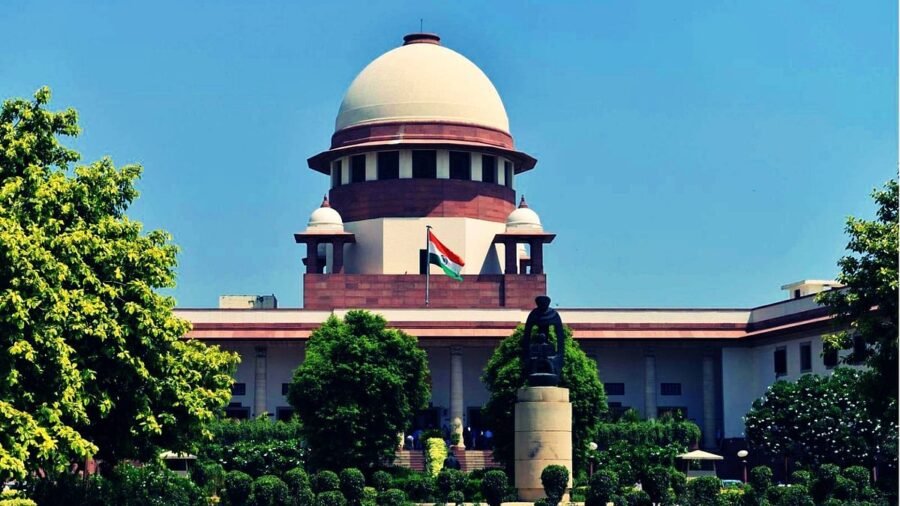
The Supreme Court cancelled bail granted to two murder case suspects, saying courts must record justifiable reasons before granting relief in serious offences. A Bench of Justices Vikram Nath and Sandeep Mehta said lower courts ignored vital evidence. The court noted that bail cannot be granted mechanically and must reflect proper application of mind in grave criminal cases.

Supreme Court of India |
The Supreme Court has set aside bail granted to two suspects in a murder case, holding that courts must record justifiable reasons while granting bail in serious offences such as murder.
A Bench of Justice Vikram Nath and Justice Sandeep Mehta said the lower courts had failed to consider vital evidence that prima facie indicated the suspects' involvement in the crime. The ruling underlines that bail cannot be granted mechanically, particularly when allegations involve a grave and violent offence, Live Law reports.
Bail Orders Must Show Application Of Mind
“The law in regard to grant or refusal of bail is very well settled. The court granting bail should exercise its discretion in a judicious manner and not as a matter of course,” the Supreme Court said, quoting with approval its 2004 judgment in Kalyan Chandra Sarkar v Rajesh Ranjan.
`;
The court said that while a detailed examination of evidence was not necessary at the bail stage, judges must indicate why they had prima facie concluded that bail should be granted, particularly when a person was charged with a serious offence.
“Any order devoid of such reasons would suffer from non-application of mind,” it said.
Referring to previous judgments, the court observed that “in serious offences like murder, the order granting bail must reflect proper application of mind to the facts of the case and justifiable reasons have to be recorded before bail is granted to such an accused”.
The court also referred to Shabeen Ahmed v State of UP, 2025 LiveLaw (SC) 278, on the principles governing the grant and cancellation of bail.
“The reasons assigned by the High Court for granting bail are flimsy and untenable in the eyes of law,” the court observed.
What Happened On The Night Of The Attack
According to the allegations, at around 10.22 pm, the complainant's wife called him and said four people, including suspect No. 1 and three unidentified accomplices, had arrived at their residence. They allegedly demanded that the couple's son, Prajwal, apologise over a dispute during his wedding.
The four allegedly kicked the door violently and threatened not to spare the family. When the complainant returned home, the assailants allegedly approached him, kicked and punched him and threatened to kill him.
Suspect No. 1 allegedly took a can of petrol from the vehicle and poured it over the complainant while the other three held him down. He was then allegedly set on fire with a matchstick.
The complainant was rushed to hospital but succumbed to his injuries.
Bail Granted On Ground Of Parity
The case before the Supreme Court arose after suspect No. 4, Jyotiraditya Ajitsinh Jadhav, was granted bail. Suspect No. 3, Pruthviraj Rajendra Shinde, was subsequently granted bail on the principle of parity with Jadhav.
After the High Court upheld the grant of bail, the State of Maharashtra approached the Supreme Court.
Setting aside the orders, the judgment authored by Justice Mehta held that the High Court and the trial court had erred by ignoring grave and significant circumstances against the two suspects. The Supreme Court also referred to Ashok Dhankad v State of NCT of Delhi, 2025 LiveLaw (SC) 797.
“The High Court and the learned trial Court completely ignored the preceding facts where all the four accused persons continuously attacked the house of the complainant party threatening that they would not spare the complainant party in case Prajwal failed to apologize,” the court said.
Petrol Can Pointed To Prior Preparation
The Supreme Court considered the presence of the petrol can in the vehicle an important circumstance indicating alleged prior preparation for the attack.
“The fact that the accused persons were prepared well in advance to commit some grave offence is prima facie borne out from the fact that the can containing petrol was carried in the vehicle in which all four accused persons had arrived at the crime scene,” the court observed.
It said the timing of the incident, alleged prior preparation and repeated threats were “significant and grave circumstances” which, when considered together, indicated the premeditated nature of the attack.
The court said relevant factors, including the gravity of the offence and the impact of the crime, had not been properly considered while granting bail. The observations make clear that parity cannot be applied in isolation when material circumstances bearing on the seriousness of an alleged crime have been overlooked.
Supreme Court Cancels Bail
Allowing the Maharashtra Government's appeals, the Supreme Court set aside the Nov 12, 2025 High Court order granting bail to Jadhav and the Jan 13, 2026 trial court order granting bail to Shinde.
“The bail granted to these accused persons is cancelled. They shall surrender within a period of three weeks from today, failing which the learned trial Court shall take appropriate steps to arrest these accused persons and bring them to trial,” the Supreme Court ordered.
The ruling reinforces the requirement that judicial discretion in bail matters must be supported by reasons, particularly when courts are dealing with allegations of serious offences such as murder.

Add As a
Trusted Source