Smart glasses are everywhere: How a new wave of apps make it easier to spot them
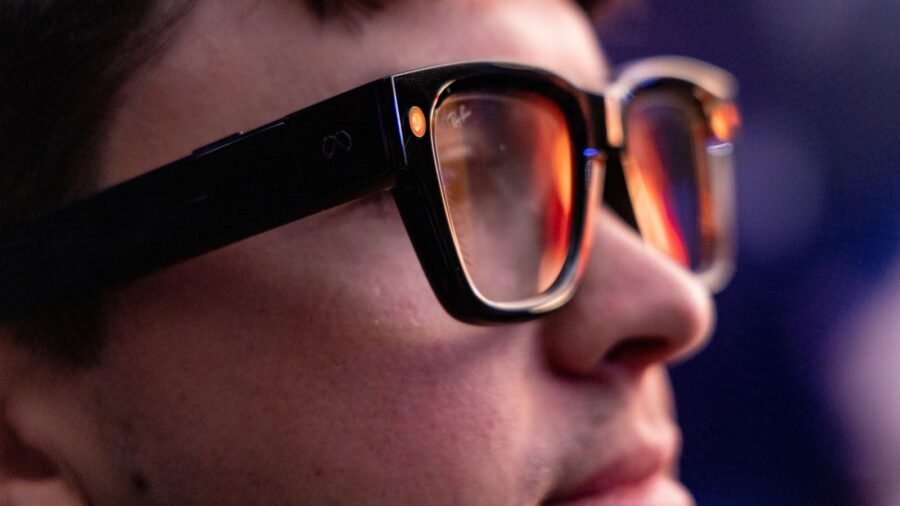
The growing use of camera-equipped, AI-powered smart glasses raises a host of new and familiar privacy issues, but some developers are looking to address an immediate concern first: letting people know when they are being recorded by smart glasses.
An iOS app called ‘Zuckoff’ has quietly been gaining traction over the past few weeks. The free-to-download app claims to serve as a detection tool to spot nearby Ray-Ban Meta glasses, Snap Spectacles, or similar hardware. It lets the user know when someone wearing smart glasses walks into the room and how close the device is to them. It cannot provide information about whether someone is actively recording or using AI via the smart glasses.
Taking a subtle dig at the CEO of Meta, Zuckoff is among a small but growing ecosystem of apps offering similar functionality, such as Antizuck Smart Glasses Scanner and Nearby Glasses. The recent surge in popularity of apps like Zuckoff come as public backlash against camera-equipped AI wearables seems to be building up again, particularly against popular devices such as the Ray Ban-Meta AI glasses whose potential surveillance capabilities have even led some to deride them as ‘pervert glasses’.
Story continues below this ad
Present-day smart glasses can record, stream and process video without alerting anyone around them. Lately, social media feeds are flooded with videos of people wearing smart glasses who use it to record pranks or harass women with pickup lines – without their consent. “These days, everybody feels entitled to post everything. There was not even a blur involved to try to censor them, to give them some sort of feeling of privacy,” Pawel Szydlowski, the developer behind Zuckoff, was quoted as saying by CNET.
A few devices come with an in-built recording indicator. Despite these efforts to make smart glasses more privacy friendly, users have reportedly come up with hacks that let them disable the tiny LED indicators either by bypassing the capture LEDs or by patching software to suppress system notifications.
How do smart glasses detection apps work?
Apps like Zuckoff essentially leverage Bluetooth technology that can detect nearby devices, and apply it to smart glasses. To detect device proximity, the app sweeps local Bluetooth frequencies and locates vendor IDs, system identifiers, and other hardware signatures associated with smart glasses.
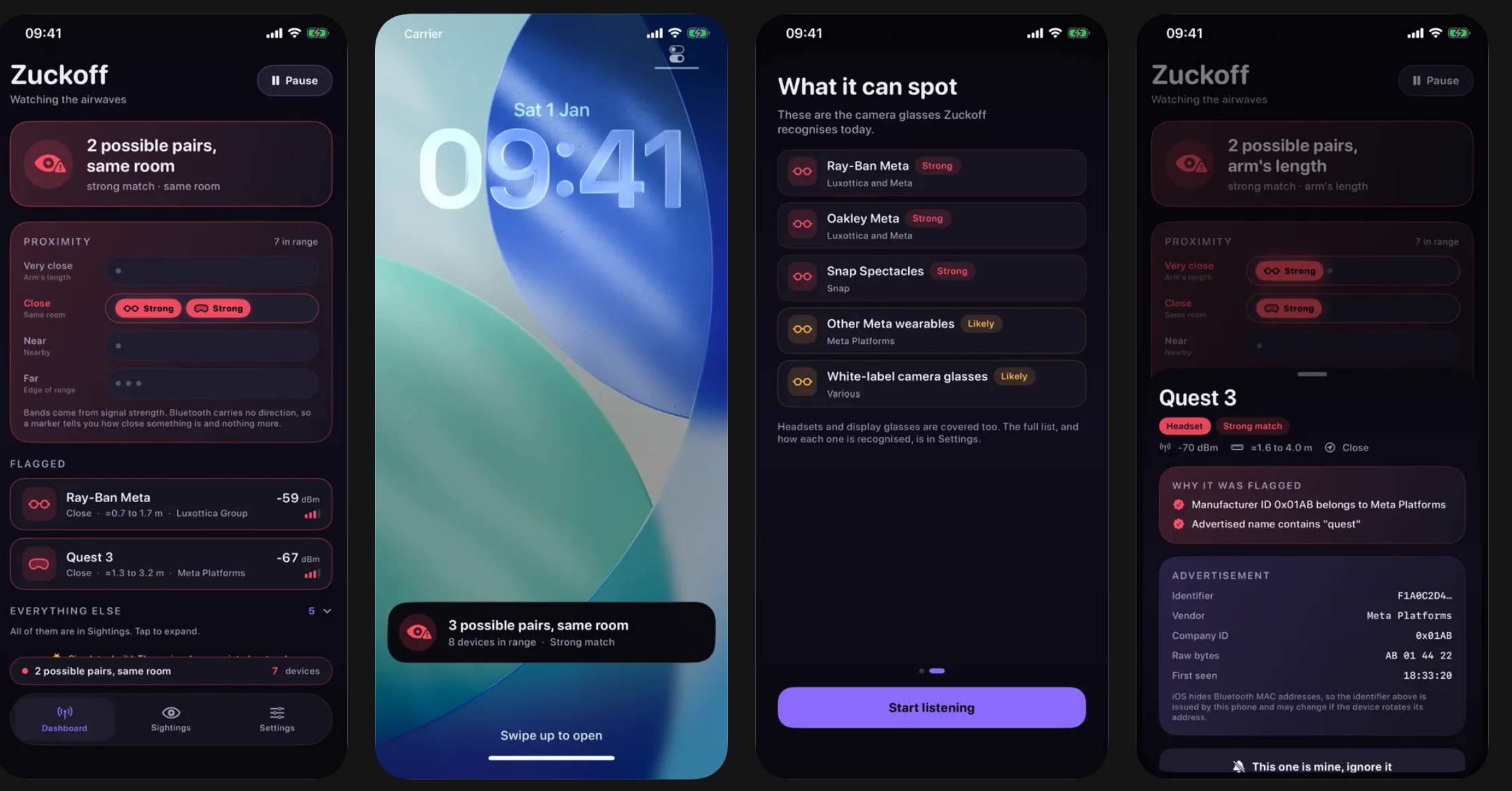 The free iOS app has witnessed more than 2,000 sign-ups in the past few weeks. (Screenshot: App Store)
However, the signal strength only gives a rough distance and no specific direction to where the smart glasses are located. Additionally, smart glasses’ Bluetooth frequencies are loudest when powering on, pairing or being taken out of the case. This means that the device can go silent at other times, even if they are being used to record someone, as per Zuckoff’s official website.
Story continues below this ad
Another downside of such detection apps is that they only send alerts that smart glasses are nearby. It is unclear what those who want to safeguard their privacy can do with that information, besides leaving the location.
But the limitations of the app have not stopped people from downloading Zuckoff. Since its release in August this year, the free iOS app has witnessed more than 2,000 sign-ups. It also offers a $10 annual paid subscription, where the app runs continuous detection checks in the background even when it is not in use.
Privacy-friendly smart glasses
Beyond software solutions, hardware makers are also exploring alternative versions of smart glasses to ease users’ growing privacy concerns. For instance, the G2 smart glasses launched by Even Realities last year does not come with in-built cameras or speakers. It only looks to make the wearer more productive through a monochrome heads-up display that shows text and information in green.
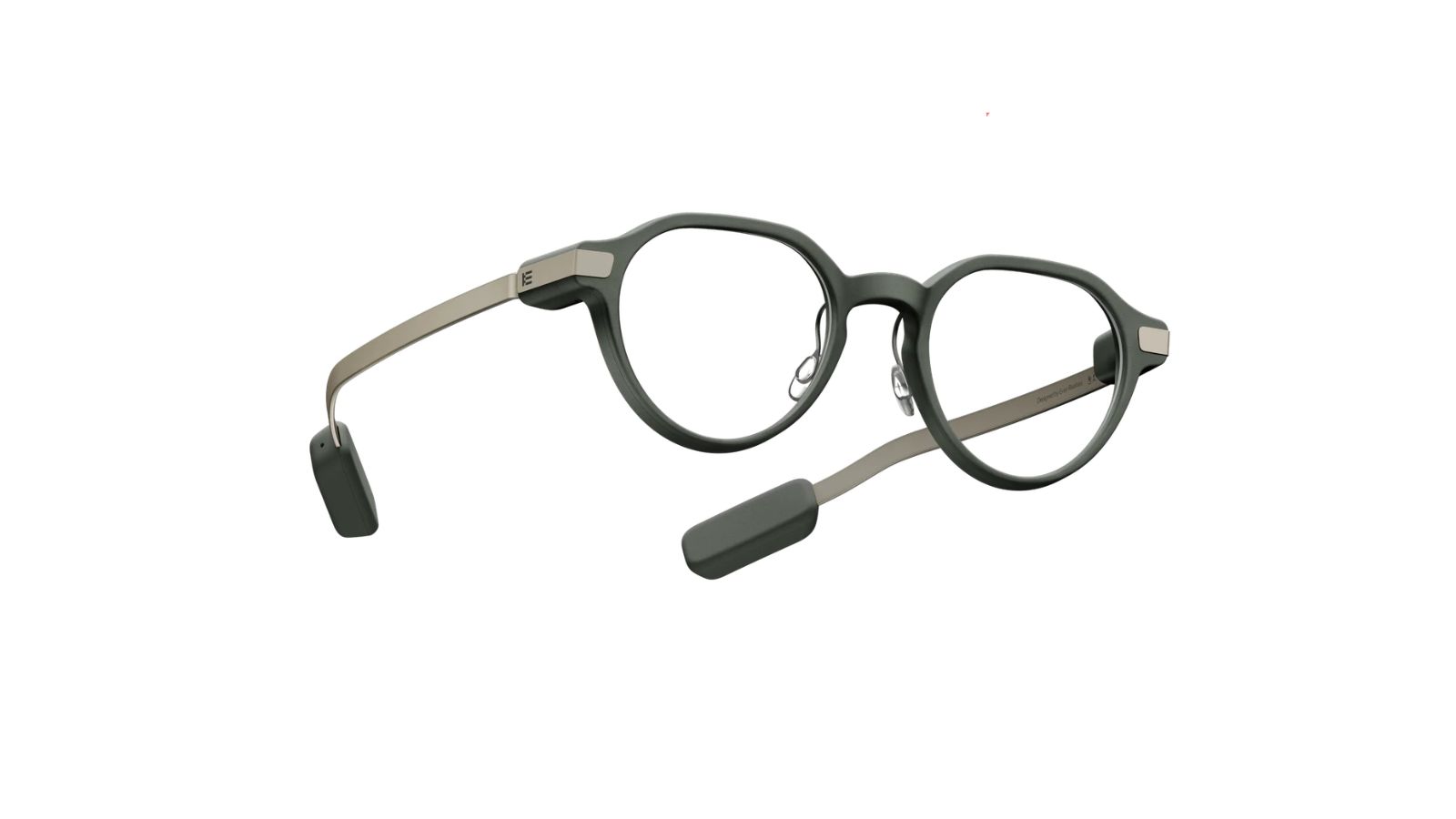 Even G2 smart glasses.
More companies are jumping into the fray, including Apple. The iPhone-maker has been working on smart glasses for years, but its launch timeline was pushed back again due to privacy-related concerns, according to a Bloomberg report.
Story continues below this ad
Apple has consistently positioned itself as a privacy-focused tech company so it will be interesting to see if it can pull off smart glasses that are not a constant privacy threat. That may prove harder than it sounds as recently leaked videos reportedly confirm that Apple is preparing to release AirPods with cameras in them.

What is a kill switch, and why is it hard to build one for AI systems?
By Sohail Khan · 20 Sep
A smartwatch should fit your routine, not interrupt it. These five models go the extra mile
By Sohail Khan · 20 Sep
Nike Alphafly 4: 5 things (including the science) behind new marathon shoes
By Sohail Khan · 20 Sep